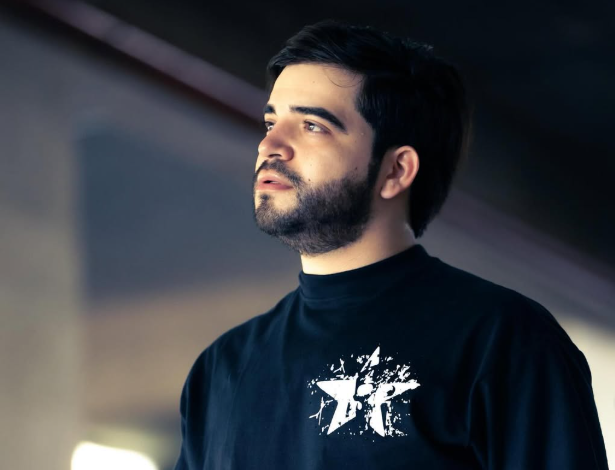
A prominent Mexican social media personality has become the latest victim of Mexico's ongoing criminal violence, shot dead while broadcasting to thousands of viewers. Cesar Gastelum, a 25-year-old TikTok creator known for comedy content and with nearly 600,000 followers, was killed on Tuesday in an attack outside a fast food establishment in Culiacan, the capital city of Sinaloa state. Witnesses described two helmeted gunmen arriving on a motorcycle and opening fire on Gastelum and his companions as they streamed the encounter live to his audience.
The killing was captured in real time during the livestream, with footage showing the shooter firing directly at Gastelum before the broadcast ended abruptly. Although the platform subsequently removed the original stream, images and video clips continued circulating across social media channels, documenting the brazen daylight attack. Initial confusion surrounded the victim's identity, with local law enforcement initially classifying him as a delivery worker before subsequently confirming his identity as Gastelum through formal investigation procedures.
Culiacan has become a flashpoint for organised crime violence as rival criminal syndicates battle for territorial control and trafficking routes. The northwestern Mexican state of Sinaloa, historically a centre of narcotics production and smuggling operations, has experienced recurring surges in gang-related killings in recent years. The targeting of high-profile social media personalities reflects how criminal organisations increasingly operate with apparent disregard for public attention, suggesting either confidence in their impunity or deliberate attempts to establish intimidation through spectacle.
This homicide follows a disturbing pattern of violence directed at Mexican influencers and content creators. In May 2025, beauty and lifestyle influencer Valeria Marquez, aged 23, was shot and killed during a TikTok livestream broadcast from the salon where she worked in Zapopan, located in the western state of Jalisco. A gunman entered the establishment and discharged a firearm, killing Marquez in front of clients and colleagues. Her death triggered a femicide investigation, as prosecutors sought to determine whether the killing was motivated by gender-based violence or connected to criminal operations.
Authorities have since linked Marquez's murder to organised crime networks operating in Jalisco. In July, Mexican law enforcement announced the apprehension of Ramon Angel Alvarez Ayala, identified by Security Minister Omar Garcia Harfuch as a significant criminal operator. Alvarez Ayala, known by the alias "El R-1," leads a cell affiliated with the Jalisco New Generation Cartel, commonly abbreviated as CJNG, one of Mexico's most powerful and violent criminal organisations. Investigators have connected him directly to Marquez's killing and accused him of orchestrating additional high-profile murders, including that of Uruapan mayor Carlos Manzo in November 2025.
The emergence of influencers and public figures as targets reflects shifting dynamics in Mexican organised crime. Criminal groups have historically avoided excessive attention from federal authorities and international scrutiny by maintaining relative discretion. Contemporary criminal operators, however, appear willing to commit public murders, potentially recognising that enforcement capacity remains insufficient to prosecute them effectively or calculating that shocking violence serves strategic purposes in territorial conflicts. The killing of a content creator during a livestream generates exponential media coverage, amplifying notoriety and potentially serving as a form of psychological warfare against rival organisations and government institutions.
For Southeast Asian readers and observers, the Mexican situation offers cautionary perspective on how criminal networks evolve when state capacity declines. Similar dynamics exist across the region, where transnational criminal organisations increasingly assert influence over legitimate businesses, entertainment sectors, and digital platforms. The targeting of social media personalities demonstrates how criminal enterprises now recognise the strategic value of controlling narratives and visibility across digital channels, a threat that transcends national borders and geographic contexts.
The rollout of security forces following Gastelum's death represented the typical governmental response to high-profile killings. Military personnel and police officers established cordons around the crime scene, forensic specialists collected evidence, and investigative procedures commenced. However, such reactive measures offer limited deterrence when underlying causes—cartel competition, porous borders, and inadequate prosecution—remain unaddressed. The recurring pattern of livestreamed violence and influencer killings suggests that conventional law enforcement approaches have proven insufficient to prevent organised crime from conducting attacks in public spaces with apparent immunity.
Culiacan's strategic importance to criminal networks underscores why Sinaloa remains a focal point for cartel violence. The state serves as a nexus for drug production, with vast poppy and synthetic drug manufacturing operations, and trafficking routes that extend northward toward United States markets. Control of these territories generates immense criminal revenues, incentivising violent competition among rival factions. Recent cycles of violence have involved the splintering of historically dominant organisations into competing cells, each pursuing territorial consolidation through force.
The incident highlights vulnerabilities within digital platforms when confronting real-world criminal violence. TikTok and comparable social media services have struggled to balance content moderation with user safety, particularly in regions experiencing high levels of organised crime. The platform removed the original Gastelum livestream but proved unable to prevent wider circulation of footage, raising questions about whether content platforms bear responsibility for limiting distribution of violent material or whether such responsibility belongs exclusively to law enforcement authorities.
Casualisation of extreme violence within content creation environments creates broader social risks. Young content creators pursuing audiences and engagement metrics may find themselves inadvertently documenting criminal activity or positioning themselves as targets through geographic visibility and real-time location broadcasting. This dynamic disproportionately affects creators in economically marginalised communities where criminal organisations exercise territorial control and younger individuals lack alternative employment opportunities or security resources.
The convergence of influencer culture, livestreaming technology, and organised crime presents novel challenges for Mexican authorities and international observers. Previous generations of criminal violence rarely unfolded with live digital documentation, limiting perpetrators' ability to communicate messages instantly to mass audiences. Contemporary criminals weaponise digital platforms themselves, transforming livestreams into venues for displaying power and intimidating rivals or government institutions. Resolving this phenomenon requires approaches transcending traditional law enforcement, engaging social media platforms, content creators, and community-based violence prevention initiatives simultaneously.

