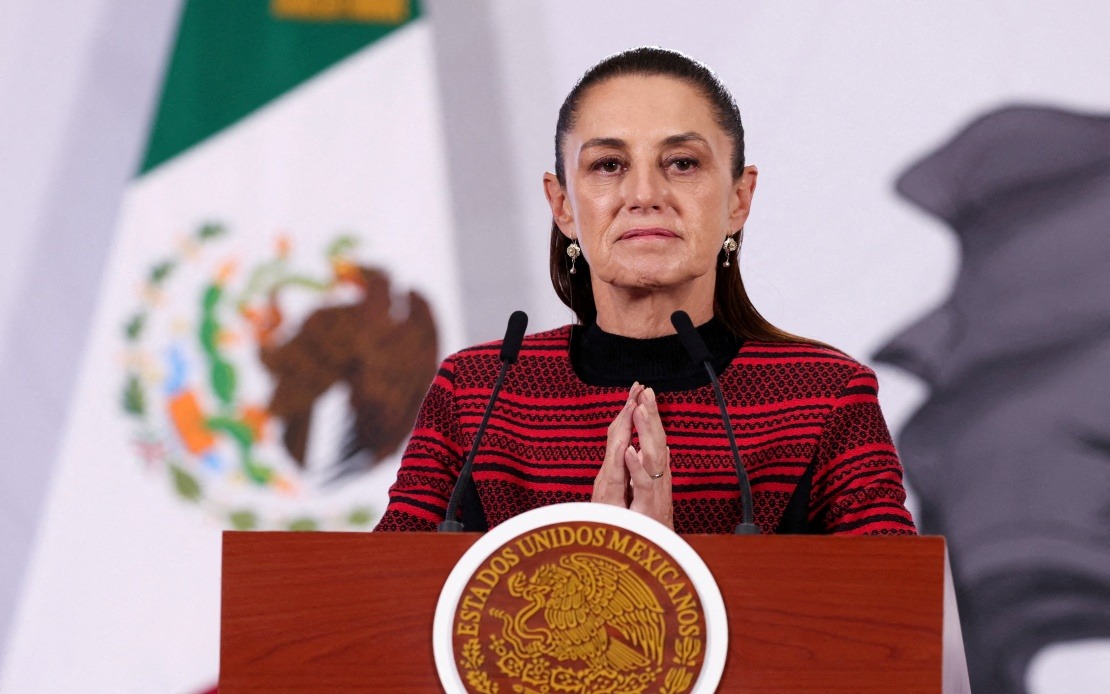
Mexican President Claudia Sheinbaum has chosen to attend the World Cup final in East Rutherford near New York following a personal invitation from United States President Donald Trump, marking an unexpected diplomatic gesture amid ongoing tensions between the neighbouring nations. The Mexican leader confirmed the development to journalists on Friday, emphasizing that the invitation came directly from Trump himself. Canada's Prime Minister Mark Carney, representing the third co-hosting nation of the 2026 World Cup tournament, is also expected to be present at the showdown between Argentina and Spain scheduled for Sunday.
Sheinbaum's decision to travel to New Jersey for the final represents a notable shift in her approach to World Cup participation. In June, she had declined to attend the opening ceremony held at Mexico's Azteca Stadium, instead offering her ticket to an indigenous woman passionate about football. That choice reflected her stated commitment to equity and representation, yet the acceptance of Trump's invitation suggests a readiness to engage in high-profile diplomatic occasions when circumstances favour broader geopolitical objectives.
The timing of the invitation assumes particular significance given the current state of Mexico-US relations. Both nations are navigating complicated discussions centred on trade policies and security concerns, issues that have dominated bilateral conversations in recent months. These underlying tensions underscore why Sheinbaum's acceptance carries more than ceremonial importance—it signals a willingness to maintain dialogue channels and participate in shared moments of celebration despite disagreements on substantive policy matters.
Personal familiarity between the two leaders remains limited. Sheinbaum has encountered Trump face-to-face only once previously, during the World Cup draw ceremony held in Washington last December. That December meeting occurred well before the current presidential term fully commenced, suggesting that the relationship remains in its early stages of development. The invitation to the final thus represents one of the more substantial in-person engagements between the two leaders since taking office.
To accommodate her attendance at the World Cup final, Sheinbaum restructured her official schedule in Quintana Roo state, according to reports from Mexican media outlets. This logistical rearrangement demonstrates the priority placed on accepting Trump's overture, requiring adjustments to pre-planned activities and commitments within Mexico itself. Such scheduling flexibility indicates that both Mexico and the United States view the World Cup final as an opportunity for meaningful interaction beyond typical diplomatic channels.
The World Cup final will host several other international leaders and dignitaries reflecting the global significance of the tournament. Spain's royal family intends to be present to support their national team, with King Felipe VI, Queen Letizia, Crown Princess Leonor, and Infanta Sofía all planning to attend Sunday's match. Their presence underscores how World Cup finals have become major diplomatic occasions bringing together political and cultural figures from around the world.
Argentina's President Javier Milei has chosen a different path, deciding not to watch the final from the stadium itself. His absence reflects deeply rooted Argentine superstitions surrounding football, cultural beliefs that carry significant weight in a nation where the sport occupies a central place in national identity and collective consciousness. Such traditions, respected across Argentine society, influence even the highest levels of political decision-making, demonstrating how sporting culture intersects with leadership choices.
For Malaysian and Southeast Asian observers, this diplomatic dance between Mexico, Canada, and the United States carries implications for understanding how major sporting events function as platforms for international relations. The 2026 World Cup, which will see matches distributed across three nations for the first time, presents novel opportunities for countries to navigate bilateral tensions through the lens of shared celebration. Sheinbaum's acceptance of Trump's invitation exemplifies how leaders can use such occasions to maintain communication and signal openness to engagement, even when fundamental disagreements persist on trade, migration, and security.
The convergence of world leaders at the final also reflects broader trends in global diplomacy, where sporting events have increasingly become venues for substantive political dialogue. The World Cup final brings together national leaders, royal families, and prominent figures in contexts that blend patriotic enthusiasm with formal protocol, creating unique opportunities for bilateral conversations that might otherwise prove more difficult to arrange. For Mexico, participating actively in these ceremonial moments while co-hosting the tournament could strengthen its position in negotiations with the United States over upcoming trade discussions and border security matters.
Sheinbaum's participation demonstrates that despite rhetorical positioning and policy differences, Mexico's government recognises the value of maintaining strong personal relationships with the Trump administration. The World Cup final provides a neutral, celebratory context where such relationships can be reinforced without explicitly addressing contentious policy questions. In diplomatic practice, these seemingly informal encounters often prove more consequential than formal negotiations, allowing leaders to establish rapport and mutual understanding that can facilitate smoother discussions on difficult issues subsequently.

