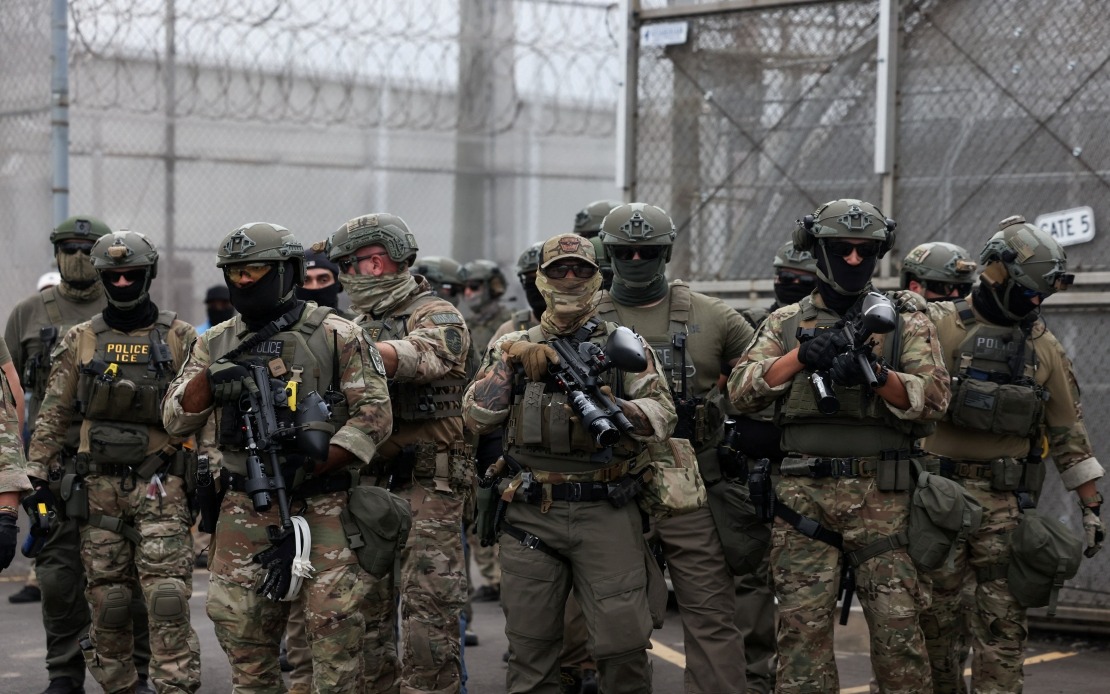
A Mexican national was fatally shot by a United States Immigration and Customs Enforcement officer during an early morning incident that has triggered federal investigations on multiple fronts. The shooting marks another controversial use of force by US federal agents, adding to mounting concerns about officer conduct in enforcement operations across the country. The incident underscores persistent tensions in immigration enforcement and raises fresh questions about the protocols governing high-risk encounters between federal agents and individuals suspected of immigration violations.
According to the US Department of Homeland Security, the incident escalated when the driver refused to comply with lawful orders while remaining inside his vehicle. The sequence of events, as officially described, began when the individual rammed a vehicle occupied by federal agents, creating an immediate threat to officer safety. The situation deteriorated further when the driver allegedly attempted to use his car as a weapon against one of the officers, leaving the agent believing he faced imminent danger to his life. Responding to what he perceived as a lethal threat, the officer discharged his firearm, striking the driver. The man was transported to hospital but succumbed to his injuries despite medical intervention.
The alleged victim, identified as Lorenzo Salgado Araujo, was reportedly in the United States without legal authorization, though the circumstances surrounding his immigration status and how his presence came to the attention of enforcement authorities remain unclear. The Department of Homeland Security statement did not elaborate on whether agents were conducting a targeted operation or routine enforcement activity when the encounter occurred. Such details are often crucial for understanding the context and intensity of initial interactions between federal officers and individuals they seek to apprehend.
The incident has triggered parallel investigations designed to examine different aspects of the shooting. Homeland Security launched an internal investigation to evaluate whether the officer's actions complied with departmental policies and legal standards governing the use of deadly force. Simultaneously, the Federal Bureau of Investigation's Houston field office is conducting a separate inquiry focused on whether the driver's alleged actions constituted an attack on a federal officer, which carries serious criminal implications. These parallel investigations reflect the jurisdictional complexity and institutional checks designed to scrutinize officer-involved shootings.
Witness documentation of the incident may prove crucial in determining what actually transpired. Multiple individuals present at the scene captured photographs and video recordings of the encounter, according to NBC News reporting. This civilian documentation has become increasingly important in immigration enforcement cases, as previous incidents have revealed significant discrepancies between official accounts provided by authorities and the visual evidence captured by bystanders. The availability of such evidence introduces an independent dimension to accountability that can either corroborate or contradict the government's narrative.
This shooting occurs within a troubling pattern of fatal encounters between federal enforcement agents and individuals during immigration-related operations. In January of this year, federal agents shot and killed two United States citizens, Renée Good and Alex Pretti, during what was described as law enforcement actions. Those deaths sparked considerable public backlash and raised awareness about the risks associated with armed enforcement operations, particularly in situations involving vehicle-based encounters. Critics have argued that current protocols may inadequately distinguish between genuine threats and defensive reactions, or may establish overly permissive standards for deploying lethal force.
For Malaysian observers and Southeast Asian readers, this incident illustrates structural challenges within the US immigration enforcement system that parallel concerns in other jurisdictions grappling with cross-border migration and enforcement. The case demonstrates how quickly encounters between enforcement personnel and individuals can escalate to fatal outcomes, and how institutional investigations may struggle to provide timely, transparent accountability to affected communities. The reliance on federal investigations conducted by related agencies raises questions about the objectivity and independence of review mechanisms, issues that resonate across different legal systems.
The use of vehicles as weapons in law enforcement encounters presents a distinctive tactical dilemma. When a driver refuses to comply with orders and subsequently uses the vehicle in a manner suggesting hostile intent, officers must make split-second judgments about whether the threat is genuine and whether lethal force is proportionate. These decisions occur under extreme stress and incomplete information, yet they determine life-and-death outcomes. The tension between officer safety and de-escalation approaches continues to animate debates about enforcement practices.
The timing of the shooting in early morning hours adds another dimension worth examining. Enforcement operations conducted during periods of reduced visibility and heightened stress may increase the likelihood of miscommunication and escalation. Questions about why the operation occurred at that particular time, whether advance planning involved risk assessment, and whether alternative approaches were considered may emerge during investigations. Such procedural questions often prove as important as the immediate tactical decisions that precede fatal encounters.
The broader context of immigration enforcement in the United States reveals structural pressures that may contribute to high-risk encounters. Federal agents operating with authorization to enforce immigration laws frequently encounter individuals with limited English proficiency and unfamiliarity with US legal procedures. Communication barriers can create situations where lawful orders are misunderstood or compliance becomes impossible, potentially escalating situations unnecessarily. Training in de-escalation techniques and cross-cultural communication has become increasingly important in enforcement agencies nationwide.
Transparency in the investigation process will likely face scrutiny from civil rights advocates and immigrant communities already skeptical of federal enforcement practices. The availability of witness video evidence creates pressure for thorough, credible investigations that can stand public scrutiny. Previous cases where federal accounts diverged significantly from documented evidence have eroded public confidence in official narratives and demonstrated the importance of independent review mechanisms in high-profile shootings.

