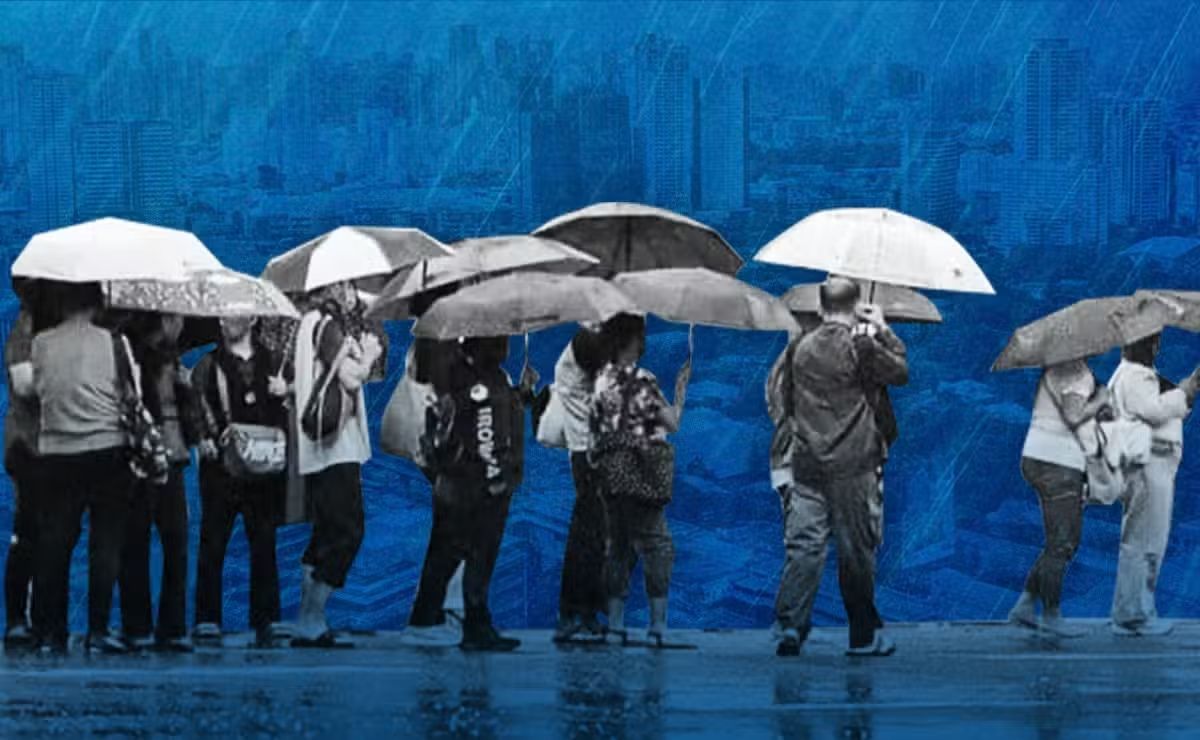
The southwest monsoon and successive tropical cyclones that battered Metro Manila from August 5 to 14 deposited an average of 483.4 millimeters of rainfall across the sprawling metropolis, a volume that underscores critical vulnerabilities in how the capital manages and responds to extreme precipitation events. Data scientist Dr Alicor Panao of the University of the Philippines, who analysed readings from 23 Philippine Atmospheric, Geophysical and Astronomical Services Administration monitoring stations, characterised the accumulated rainfall as emblematic of a broader crisis: that infrastructure alone cannot address flooding without proper governance, maintenance, and transparent resource allocation.
The 10-day precipitation event, which averaged 48.3 millimeters daily, proves particularly instructive when examined through the lens of temporal distribution. Nearly half of the total rainfall occurred on just two days—August 9 and 10—with the Airport station recording 226.5 millimeters on the ninth alone, a quantity Panao described as "extraordinary." While this single-day figure fell short of Tropical Storm Ondoy's 2009 record of 455 millimeters at the Science Garden station, the cumulative burden imposed on drainage systems over such a compressed timeframe posed its own extraordinary challenge to the city's flood management capabilities.
Historical perspective matters when evaluating the significance of recent events. Ondoy in 2009 had itself broken the previous single-day rainfall record of 334 millimeters set in June 1967, establishing Metro Manila as a city accustomed to extreme precipitation. However, the gap between Ondoy's devastating 2009 impact and the current episode suggests that intensity metrics alone misrepresent the problem. The sheer quantity of water that fell between August 5 and 14 translated into staggering absolute volumes when distributed across the metropolitan area's 620 square kilometres—approximately 120,000 Olympic-sized swimming pools or roughly 193 such pools per square kilometre.
When visualised in hydraulic terms, the rainfall accumulation becomes even more striking. If the recorded 483.4 millimetres had distributed evenly across a single square kilometre, it would have deposited roughly 483.4 million litres of water in just 10 days. Specific monitoring stations bore even heavier precipitation: Sitio Wawa recorded 708 millimetres, San Mateo-2 logged 701 millimetres, and La Mesa Dam measured 645.5 millimetres during the same period. These variations underline another critical infrastructure lesson—that flood resilience cannot rely on uniform solutions, as different geographic zones and microwatersheds experience dramatically different precipitation intensities.
Panao's analysis suggests that the fundamental problem transcends engineering design. The succession of heavy rainfall episodes, particularly when occurring within short timeframes, fundamentally overwhelms the recovery capacity of drainage networks, river channels, and watershed systems. This reality creates a qualitatively different challenge than what conventional infrastructure planning typically addresses. When precipitation events cluster temporally, drainage systems cannot sufficiently empty before the next deluge arrives, leading to cumulative saturation and overflow across multiple waterways simultaneously. Metro Manila's geography, with its many interconnected waterways and low-lying areas, amplifies this vulnerability.
The policy implications carry particular resonance given ongoing investigations into flood control project anomalies. Panao pointedly noted that flood protection constitutes far more than a matter of constructing additional structures or expanding infrastructure capacity. Rather, it fundamentally concerns whether existing public infrastructure meets design specifications, whether construction adheres to approved standards, and whether maintenance regimens receive adequate resourcing and oversight. The distinction matters enormously for public trust and fiscal accountability.
Recent scrutiny of flood-control projects has apparently uncovered alleged ghost projects—infrastructure supposedly completed but never built—alongside substandard construction and inflated contract values. Criminal investigations reportedly now proceed against responsible parties. These findings suggest that even substantial public expenditure on flood mitigation may produce minimal protective benefit if funds become diverted, quality standards slip, or maintenance budgets evaporate. For Metro Manila residents and the broader Philippine public, such revelations raise troubling questions about whether recent flooding reflects genuine infrastructure limitations or instead reflects governance failures.
For Malaysian readers observing the Metro Manila situation, the cautionary lessons appear relevant to the region's own flood management challenges. Major Malaysian cities including Kuala Lumpur, Penang, and Johor Bahru have experienced increasingly severe monsoon flooding, prompting substantial infrastructure investments and policy responses. The Metro Manila experience suggests that rainfall projections and design capacity calculations, while necessary, prove insufficient without rigorous project execution standards and sustained maintenance cultures. Similarly, the importance of drainage system recovery time between precipitation events resonates with Malaysian experience, where back-to-back monsoon surges frequently saturate regional drainage networks.
The Metro Manila rainfall episode also highlights the distinction between infrastructure adequacy under design-standard conditions versus infrastructure resilience under increasingly climate-stressed scenarios. The current ten-day event, while extraordinary by historical standards, may become more frequent as climate patterns shift. This possibility demands that flood management frameworks incorporate adaptive capacity and flexibility rather than assuming historical precipitation patterns will persist indefinitely. Rigid infrastructure designed for twentieth-century rainfall extremes may prove inadequate as the twenty-first century progresses.
Panao's emphasis on governance quality alongside infrastructure development offers a framework applicable across Southeast Asia. Even well-designed flood management systems require consistent funding, professional maintenance, transparent procurement processes, and genuine accountability when projects underperform or funds disappear. The Metro Manila situation demonstrates that technical solutions cannot compensate for governance deficiencies. As the region confronts intensifying precipitation events, particularly across the tropical and subtropical zones where Malaysia and the Philippines both operate, the institutional and administrative dimensions of flood management deserve equal emphasis with the engineering and construction aspects that typically dominate public discussion.

