Meta's leadership faces mounting scrutiny in a landmark legal challenge spanning two weeks into August, as a coalition of 29 US states pursues allegations that the technology giant deliberately engineered its products to addict children while systematically gathering their personal information. The case, which is anticipated to conclude in late September, has unveiled a troubling pattern: safety mechanisms that Meta publicly championed as protective innovations saw virtually no adoption among teen users, raising questions about the company's commitment to child welfare versus protecting its advertising-driven business model.
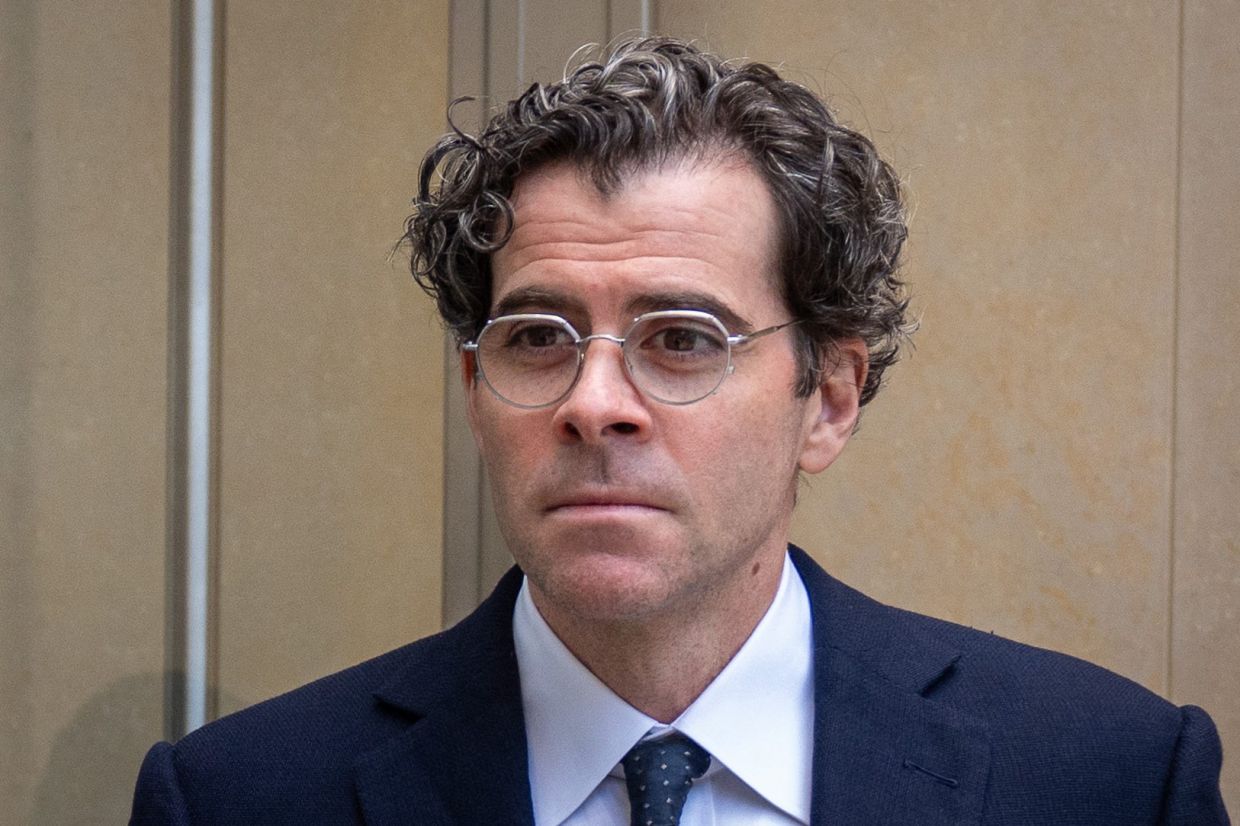
During cross-examination on August 24, lawyer Jason Slothouber from the Colorado Attorney General's office pressed Instagram chief Adam Mosseri about the extremely limited uptake of two purported protective tools: Take a Break, introduced in 2021, and Quiet Mode, launched in 2023. These features were presented to the public as meaningful interventions—one allowing users to schedule reminders to step away from scrolling, the other automatically muting notifications during late-night hours when adolescents should be sleeping. Yet internal company data subsequently disclosed to jurors revealed a starkly different reality: Take a Break achieved just 1.8 per cent adoption, while Quiet Mode reached 8.7 per cent across Instagram's teenage population.
Mosseri's testimony highlighted a critical communication gap between Meta's public relations messaging and the facts on the ground. When confronted about whether the company had disclosed these dismally low adoption figures to regulators or the public, Mosseri conceded that Meta had not, though he attempted to reframe the narrative by asserting that usage rates had "significantly improved" since the initial rollout. This defensive posture became increasingly difficult to maintain as the trial revealed that Meta had only recently made these safety features default settings within Teen Accounts—a category launched in 2024 that incorporates parental controls—effectively acknowledging that voluntary adoption had failed to gain traction among its younger demographic.
The credibility of Meta's public statements was further undermined by examining a blog post published by Mosseri on December 7, 2021, just one day before his Congressional testimony regarding social media's harmful effects on adolescents. That post claimed early testing showed "more than 90 per cent" of teens maintained their reminders once activated. However, this statistic was deliberately misleading: it measured only the percentage of users who retained the feature after consciously enabling it, not the vastly smaller proportion of all teen users who actually bothered to turn it on in the first place. This rhetorical maneuver transformed a story of near-complete failure into an apparent success story for consumption by lawmakers and the general public.
Internal Meta documents disclosed during the trial painted an even more damning picture of organisational knowledge and deliberate inaction. Francesco Fogu, Meta's director of product design at Instagram, testified on August 25 that he was unaware of the specific adoption statistics, yet he acknowledged that the company fully anticipated adoption rates would plummet if these tools were not automatically enabled by default. This admission suggested a systemic understanding within the company that teenagers, when given the choice, actively avoided safety mechanisms—contradicting any narrative that these features represented genuine protective innovations that young people welcomed or desired.
Judge Yvonne Gonzalez Rogers, who will ultimately rule on the case with jury guidance, visibly reacted with surprise to Fogu's claimed ignorance of internal performance data, underscoring the severity of the disconnect between product management decisions and claimed accountability for outcomes. The judge's reaction also suggested potential frustration with what appeared to be evasive testimony designed to shield Meta's leadership from direct responsibility for known failures in implementation and promotion of these safeguarding mechanisms.
Former company employees corroborated the trial's emerging narrative with their own damning assessments. Arturo Bejar, who previously held the position of engineering director at Meta, characterised Take a Break as "a feature that's designed to fail," suggesting intentional architecture that discouraged genuine usage. George Volichenko, a data scientist who laboured on safety initiatives within Instagram during 2022 and 2023, described adoption rates using particularly pointed language: "very low and disappointing," mere "drops in the ocean" relative to the total teenage user base. Volichenko's testimony further revealed that Meta's executive leadership deliberately declined to enable Quiet Mode by default for younger adolescents, a decision that predictably suppressed adoption because the setting remained hidden within the application's interface where most users would never locate it.
The strategic implications of these choices become clear when examined through Meta's fundamental business structure. The company's entire economic model depends on selling advertising placements, and advertising revenue increases proportionally with user engagement time. Enabling safety features by default would, according to Volichenko's testimony, produce a "notable negative impact" on user engagement metrics—the very statistics that drive advertiser demand and shareholder value. This economic incentive structure creates an irreconcilable conflict of interest: genuine teen safety mechanisms that actually reduce screen time would necessarily diminish Meta's profitability.
For Malaysian readers and Southeast Asian stakeholders, this trial carries particular significance. The region's youth represent a rapidly expanding demographic of social media users, many of whom access Instagram through mobile devices and rely heavily on social platforms for peer interaction, education content, and entertainment. If Meta's practices have indeed prioritised growth and advertising revenue over the documented welfare of younger users, Malaysian regulators and parents deserve transparency about these trade-offs. The outcome of this American litigation may influence how regional governments approach tech regulation, particularly regarding data protection laws and age-appropriate platform design.
The case raises fundamental questions about corporate accountability in the digital age. Meta's apparent strategy—announcing protective features through carefully worded public statements while simultaneously designing them to fail in actual deployment—represents a sophisticated form of regulatory capture through rhetoric. The company successfully managed public perception and legislative concern while the core business model remained unchanged. If this trial results in conviction, US states are pursuing approximately US$200 billion (RM805.46 billion) in penalties, and a judgment against Meta could compel fundamental restructuring of how the platform operates, triggering industry-wide consequences for social media business models that depend on maximising engagement above all other considerations.
Mosseri will continue his testimony on August 26, and Meta founder and CEO Mark Zuckerberg is anticipated to take the stand, though the timing remains uncertain. As the trial progresses into September, the question increasingly centres on whether a tech company can maintain dual narratives—one for public consumption promoting safety and responsibility, another internal calculation that safety mechanisms must remain hidden and ineffective to preserve engagement and revenue.

