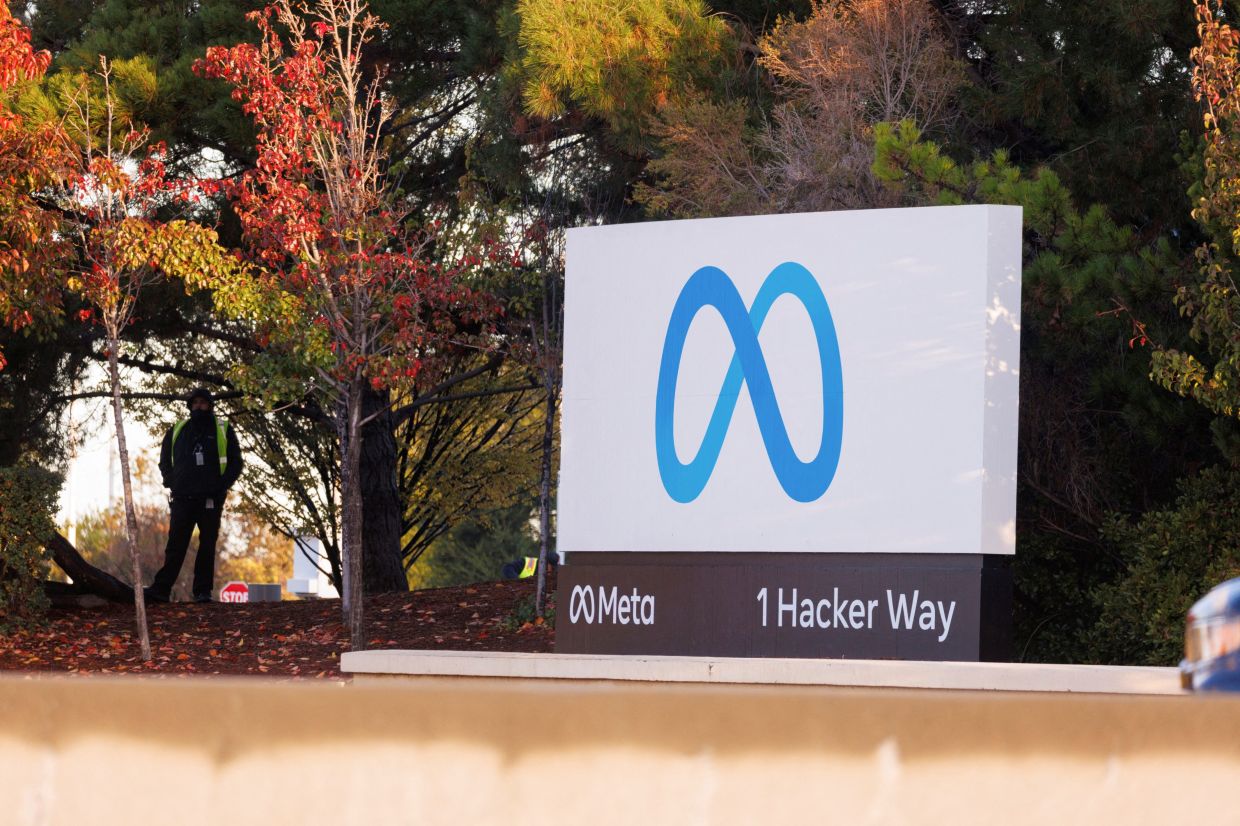
A United States federal judge has determined that Meta deliberately concealed or permitted the destruction of vital evidence in a legal battle initiated by a prominent Australian mining magnate who claims the social media platform enabled fraudulent cryptocurrency schemes using his image. Judge P. Casey Pitts, in a ruling reviewed by AFP, found that Meta's handling of data pertaining to the case constituted gross negligence and caused measurable harm to the plaintiff, setting the stage for a significant legal confrontation over the company's liability for user-generated content.
The Australian billionaire's accusations centre on Meta's alleged complicity in proliferating deceptive advertisements across its platforms since 2019. According to court documents, thousands of fraudulent postings on Facebook have exploited his likeness to promote investment scams, resulting in substantial financial losses for countless victims. The plaintiff's legal team contends that Meta did not merely host these ads passively, but rather employed sophisticated artificial intelligence systems to optimise, personalise, and strategically distribute the fraudulent content to targeted audiences, thereby transforming the company from a neutral platform into an active participant in the scheme itself.
Meta's response has hinged on invoking Section 230 of the Communications Decency Act, a 1996 federal statute that provides broad immunity to internet platforms for third-party content posted by users. The company maintains that this legal shield absolves it from responsibility for fraudulent advertisements created and disseminated by bad actors on its network. However, the destroyed data now emerges as potentially critical to dismantling this defence, as it would ostensibly demonstrate that Meta's own tools substantially modified the advertisements, thereby negating the company's claim to platform neutrality.
Judge Pitts expressed considerable scepticism regarding Meta's explanation for the missing evidence. The technology giant had claimed it required two years to locate and identify the relevant data within its own systems, a timeline the judge characterised as wholly implausible. In his findings, Pitts stated that "it is not reasonable to assert that Meta itself needed two years to learn about its own data," effectively dismissing the company's narrative as lacking credibility. While the judge stopped short of finding intentional misconduct, the determination of gross negligence carries serious implications for Meta's broader legal strategy.
The case remains in preliminary proceedings, with Meta expected to file motions seeking dismissal based on Section 230 immunity protections at a hearing scheduled for completion by year's end. This procedural timing is crucial, as the technology company may attempt to short-circuit the litigation before substantive factual discovery progresses. Should Meta succeed in that motion, it would terminate the case before the destroyed data and its significance could be fully explored at trial. Conversely, should the judge permit the case to advance, the evidence destruction ruling could substantially weaken Meta's immunity arguments and shift leverage decisively toward the plaintiff.
The broader legal landscape surrounding Meta's liability for harmful content has shifted markedly in recent years, with several jurisdictions challenging the company's traditional reliance on Section 230. The Massachusetts Supreme Judicial Court previously determined that the statute does not shield Meta from a state lawsuit alleging that Instagram's design deliberately incorporates addictive mechanisms targeting children. This ruling represents a significant departure from decades of judicial deference to Section 230 protections and signals growing judicial willingness to scrutinise platform design choices and algorithmic promotion systems.
Meta's legal troubles have extended beyond this single case. During 2024, juries in Los Angeles and Santa Fe, New Mexico, both found the company liable for causing harm to minors through its platforms' design and operation. These verdicts underscore a mounting consensus among courts that platforms cannot simply invoke legal immunity when their specific design choices demonstrably contribute to consumer injury. The accumulated weight of these adverse rulings has progressively eroded Meta's historical litigation advantage and created vulnerabilities in its legal defence architecture.
For Malaysian and Southeast Asian observers, the implications of this case warrant close attention. The region has experienced explosive growth in cryptocurrency-related fraud, much of it perpetrated through social media platforms with minimal accountability mechanisms. Meta operates across virtually every country in Southeast Asia and generates substantial revenue from advertising targeted at the region's younger, digitally-native populations. Should courts continue to restrict Section 230 protections and hold platforms liable for algorithmic amplification of fraudulent content, the regulatory environment for technology companies operating in the region could face similar pressures toward stricter accountability.
The destroyed evidence ruling also highlights a persistent tension in digital regulation: platform companies possess vastly superior information about how their algorithms function and distribute content, yet litigation rarely penetrates this information asymmetry. By destroying or failing to preserve data about algorithmic optimisation and content modification, Meta has insulated itself from accountability while simultaneously arguing it deserves immunity precisely because it is not actively shaping content distribution. Judge Pitts' scepticism of Meta's explanation reflects growing judicial recognition that such contradictions cannot indefinitely persist.
As the case advances toward its critical immunity hearing, both Meta and consumer advocates will scrutinise every procedural development. The destroyed evidence finding may prove instrumental in convincing Judge Pitts to allow the lawsuit to proceed past the preliminary stage, potentially establishing precedent that platform design choices and algorithmic amplification can constitute actionable conduct beyond Section 230's protective umbrella. For Meta, the stakes extend far beyond this single Australian matter—a loss could encourage similar litigation globally and invite regulatory intervention in markets where the company currently operates with minimal oversight.

