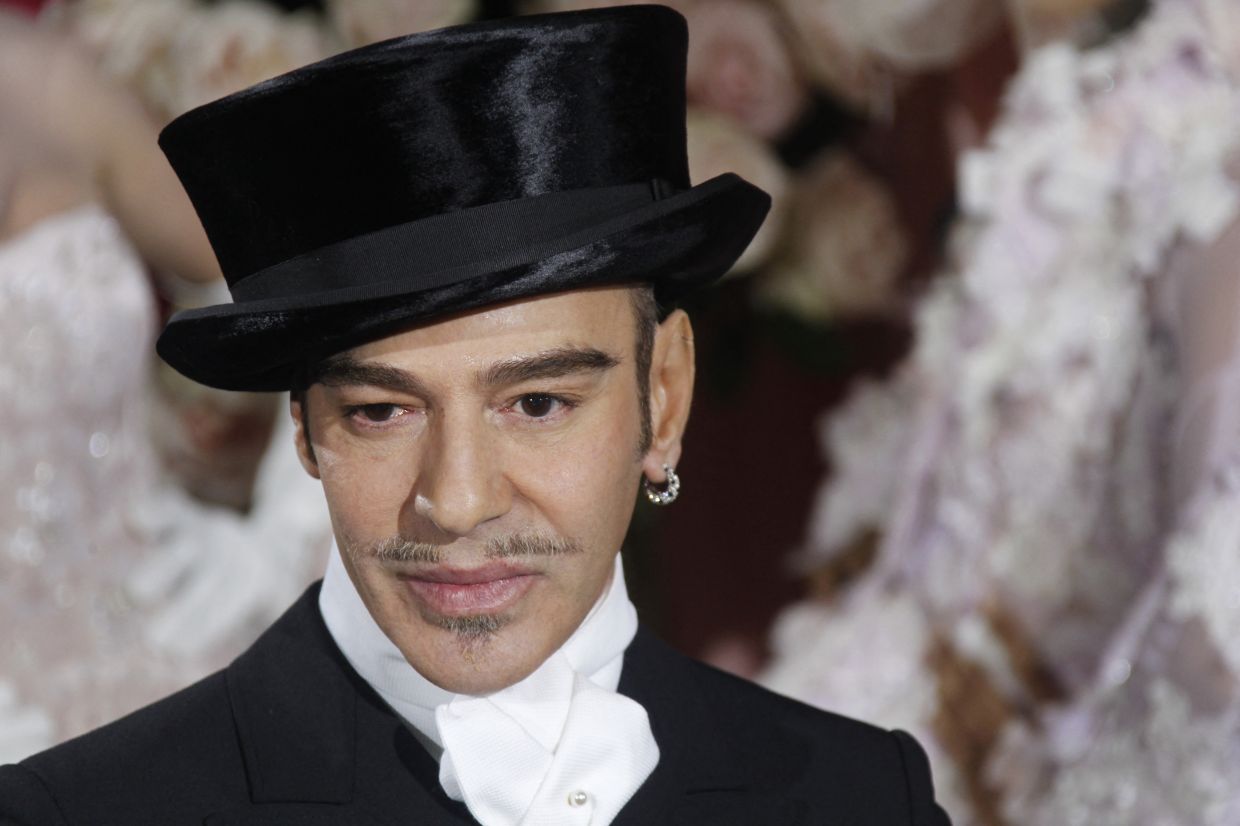
The Metropolitan Museum of Art has announced that the 2025 Met Gala will be anchored by a comprehensive exhibition devoted to John Galliano, marking a complex reckoning with one of contemporary fashion's most polarising figures. The British designer represents both the heights of creative achievement in haute couture and the depths of personal transgression, making this retrospective an unusually fraught undertaking for an institution accustomed to celebrating artistic legacy.
Galliano's trajectory through the fashion world reads as a study in extremes. For nearly fifteen years, he served as creative director at Christian Dior, arguably the most prestigious position the industry offers. His tenure at the storied French house saw him produce collections that redefined luxury fashion for an entire generation, establishing himself as a visionary capable of commanding the attention of the world's most discerning style arbiters. His designs were characterised by elaborate technical execution, historical referencing, and a theatricality that made each collection a narrative experience rather than merely a seasonal offering.
Yet this ascendancy came to an abrupt halt in 2010 and 2011 when Galliano made a series of antisemitic and racist remarks that became public through social media and video evidence. Most damaging was footage of him expressing affection for Hitler in a bar setting, comments that violated not just contemporary social norms but fundamental ethical principles. A Paris court subsequently convicted him for public insults based on race, religion, ethnicity, and origin. The fashion establishment responded swiftly: Dior terminated his employment, and his own eponymous label severed ties with him immediately.
What followed was a period of rehabilitation spanning several years, during which Galliano undertook both public and private efforts to address the harm caused by his statements. He sought treatment for substance abuse, acknowledged his wrongdoing, and engaged in what observers characterised as genuine introspection. This gradual process of reckoning culminated in 2014 when Maison Margiela, a luxury fashion house owned by the Arnault Group, offered him a position as creative director. His decade-long tenure there demonstrated that creative talent, when coupled with meaningful reformation, could allow individuals to rebuild professional credibility.
By designating Galliano as the subject of a solo exhibition, the Metropolitan Museum positions him as only the third living designer to receive such recognition at the Costume Institute. This status speaks to the undeniable significance of his contributions to fashion vocabulary and technique. Yet the museum's approach reveals institutional awareness that celebrating Galliano's work demands parallel acknowledgment of his past conduct. The curatorial framework deliberately refuses the conventional narrative of triumphant genius, instead insisting on ethical scrutiny alongside aesthetic appreciation.
The exhibition's structure reflects this dual mandate. The first section, titled "Bearings," directly confronts the rupture in Galliano's career and reputation. Rather than sidestepping or minimising the antisemitic and racist statements of 2010 and 2011, this component examines the consequences of his conduct, his legal conviction, his dismissal from major positions, and his subsequent efforts at personal rehabilitation. This section represents a significant curatorial choice, particularly given the museum's consultation with Jewish community leaders in New York to ensure appropriate framing and sensitivity.
The consultation process itself involved John Galliano, museum curator Andrew Bolton, and Anna Wintour, reflecting the seriousness with which the institution approached questions of community impact and historical accuracy. Such engagement signals recognition that fashion exhibitions, particularly those centred on controversial figures, operate within broader social conversations about accountability, redemption, and the relationship between artistic achievement and personal conduct. For Asian and Southeast Asian audiences accustomed to fashion being treated as apolitical spectacle, this transparency offers an instructive model of institutional responsibility.
The exhibition's second section, "Horizons," pivots toward examining Galliano's creative sources. This component investigates how history, geography, visual art, narrative construction, and performance have informed his design sensibility. By positioning inspiration and influence at the centre of his work, this section allows visitors to understand the intellectual architecture underlying his collections, moving beyond surface-level appreciation of aesthetic accomplishment to deeper comprehension of how designers synthesise cultural references and personal preoccupations into wearable form.
The final component, "Atlas Of Transformation," shifts focus to technical and conceptual innovation. This section foregrounds Galliano's mastery of construction, his experimental approach to materials and silhouettes, and his willingness to challenge conventional ideas about how garments could function and appear. For students of fashion craft, this element offers crucial insight into the mechanics of haute couture and the problem-solving required to execute avant-garde vision at the highest technical level.
The exhibition's three-part structure deliberately mirrors the complexity of assessing Galliano's legacy. No single narrative—whether one celebrating pure genius or one that condemns and dismisses—adequately captures his significance. Instead, the Met's framework suggests that understanding his contributions requires holding multiple truths simultaneously: that his antisemitic conduct was grave and consequential, that his efforts toward rehabilitation merit recognition, that his creative output fundamentally shaped contemporary fashion, and that these realities do not neatly resolve into simple conclusions about artistic worth and personal accountability.
For Malaysian fashion enthusiasts and industry observers, this exhibition offers important lessons about how luxury brands and cultural institutions navigate ethical complications within the creative industries. The Met's refusal to sanitise Galliano's history while still engaging seriously with his technical and conceptual contributions suggests that maturity in cultural evaluation requires resisting both uncritical adulation and wholesale dismissal. As Southeast Asian fashion continues to develop its own critical frameworks for assessing international designers and their work, such nuanced institutional engagement provides valuable precedent.
The May 2025 Met Gala will undoubtedly attract extraordinary attention, drawing celebrities, critics, and fashion observers invested in how contemporary culture addresses the intersection of artistic brilliance and moral reckoning. Galliano's return to the institution's highest-profile platform represents neither total vindication nor continued exile, but rather a complex negotiation of how societies can acknowledge both human failing and demonstrated capacity for growth.

