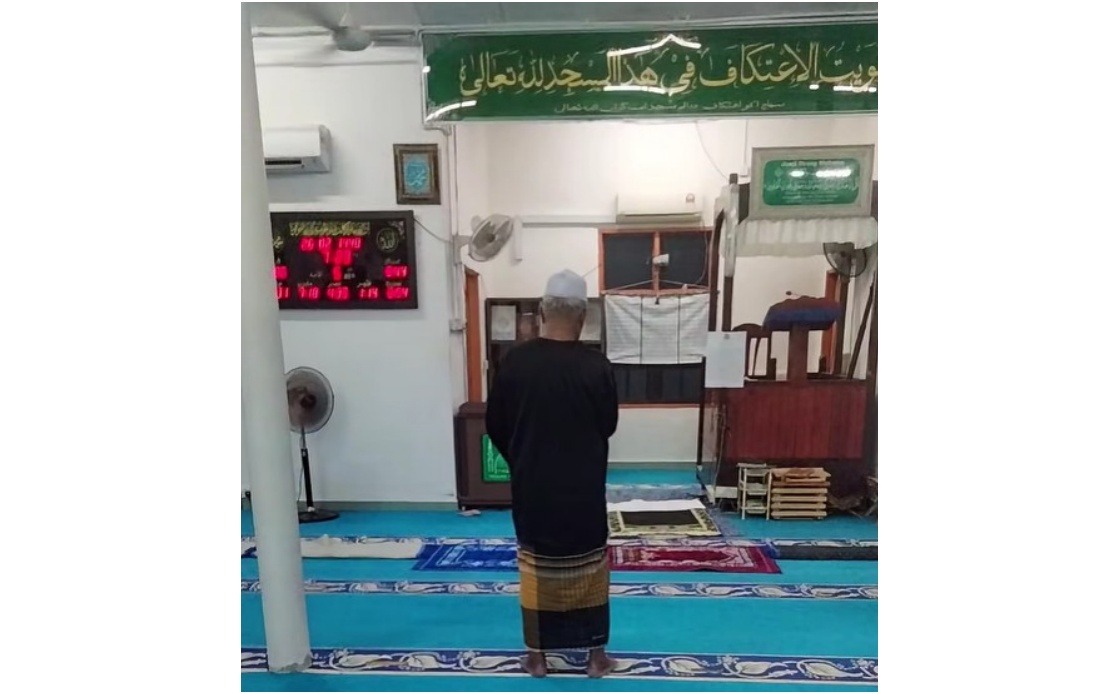
A short video circulating on social media has brought unexpected attention to Masjid Tanjung Resang in Mersing, with the 15-second clip appearing to show only a single worshipper at prayer, sparking questions about the mosque's viability and operations. The footage, shared across Facebook and WhatsApp, seemingly depicted one man serving simultaneously as congregant, imam, and bilal—the person responsible for making the call to prayer—a scenario that raised eyebrows among viewers unfamiliar with the realities of rural religious institutions in Malaysia.
Mersing Member of Parliament Muhammad Islahuddin Abas, himself a village resident, has stepped forward to provide context for what the video captured. Rather than indicating any failure in mosque stewardship, he explained that the congregation's smallness reflects broader demographic shifts affecting rural communities throughout the country. Many residents have relocated to urban centres for employment opportunities, while others have migrated permanently, leaving behind a skeleton population in what was once a more bustling settlement. Despite these constraints, Muhammad Islahuddin stressed that the mosque's regular programming continues without interruption, maintaining its schedule of weekly activities that include religious lectures, Quranic recitations, and educational sessions.
The viral moment initially caught Muhammad Islahuddin by surprise when a friend based in Kuala Lumpur sent him a screenshot of the video via WhatsApp, highlighting how quickly such content spreads across Malaysia's digital landscape regardless of geographical context. However, the MP soon identified an unexpected positive outcome from the social media storm: the attention has inadvertently publicised the mosque to audiences far beyond the Mersing district, achieving through viral controversy what traditional outreach might never accomplish.
Geographic isolation has long presented challenges for Masjid Tanjung Resang. Situated off the main thoroughfare running through the area, the mosque's somewhat obscure location has meant that even some district residents remain unaware of its existence. This hidden placement, while creating accessibility challenges, has not deterred the mosque from serving multiple functions within the local community. Muhammad Islahuddin characterised the facility as welcoming to visitors regardless of religious background, noting that it has become an informal waystation for hikers tackling Gunung Arong, the mountain that dominates the local landscape. The mosque provides essential conveniences for these trekkers, extending its role beyond strictly religious purposes to function as a community asset serving the broader population.
Mosque chairman Abdul Syamil Abdul Fadzil moved quickly to address the concerns raised by the video, clarifying the actual circumstances captured in the footage. He revealed that the individual shown performing prayers was in fact the mosque's noja, or religious assistant, engaged in a voluntary devotional act rather than a formal congregational prayer. The distinction carries significance in Islamic practice, as voluntary prayers are often performed individually and may not require a formal congregation. Abdul Syamil confirmed that he had been contacted by representatives from the Johor Islamic Religious Affairs Department (JAINJ) concerning the viral content, and that he had fully explained the situation to departmental officials, who recognised and understood the genuine circumstances surrounding the mosque's operations.
The mosque leadership stressed that the single frame captured by the video presents a fundamentally misleading impression of regular activity at Masjid Tanjung Resang. Abdul Syamil emphasised the continuation of varied religious programming throughout the year, with scheduled activities including lectures, Quranic study circles, and communal devotional exercises that maintain the mosque's role as a spiritual centre. The concern that a single snapshot might be interpreted as representative of typical conditions illustrates how social media's tendency to decontextualise imagery can create misunderstandings about institutional functioning, particularly in rural settings where demographic realities differ significantly from urban norms.
The incident reflects broader challenges facing religious institutions across rural Malaysia, where population decline following rural-to-urban migration has fundamentally altered the scale and scope of congregational life. Unlike urban mosques that may accommodate hundreds of worshippers, rural facilities increasingly serve dispersed populations whose daily rhythms are governed by employment in distant cities, with many returning only during significant holidays or weekends. This demographic reality does not reflect administrative failure but rather the structural realities of contemporary Malaysian development patterns, in which economic opportunities concentrate in metropolitan areas while hinterland settlements experience gradual depopulation.
For Masjid Tanjung Resang, the unexpected viral attention may ultimately prove beneficial despite its initially uncomfortable origins. The increased awareness of the mosque's existence, coupled with public clarification of its actual operations, has positioned it as a symbol of rural religious resilience and adaptive management in the face of demographic headwinds. The mosque's multifaceted role—serving hikers, welcoming interfaith visitors, and maintaining regular programming despite population constraints—demonstrates how religious institutions can remain vibrant community anchors even as surrounding demographics shift dramatically.
The response from Muhammad Islahuddin and mosque officials also illustrates the importance of institutional transparency when misconceptions arise in the digital age. By promptly explaining the context behind the viral video and confirming that departmental authorities understood the situation, leadership forestalled potential negative consequences while leveraging the publicity to enhance visibility. For other rural mosques facing similar demographic pressures across Malaysia and Southeast Asia, the Masjid Tanjung Resang case offers instructive lessons in crisis communication and the recognition that quantitative measures of success—congregation size, attendance numbers—may inadequately capture the genuine value that religious institutions provide to dispersed communities navigating the complexities of modern development.

