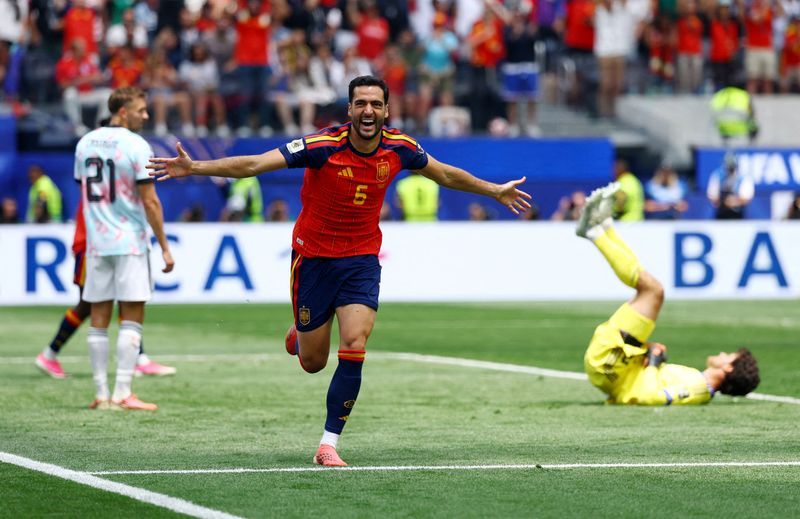
Spain secured a place in the World Cup semifinals by edging past Belgium 2-1 in a hard-fought quarterfinal encounter at Los Angeles Stadium on Friday, with substitute Mikel Merino proving the matchwinner once again in a dramatic late finish. The Spanish side, buoyed by early aggression and superior possession control throughout, ultimately broke through the resilient Belgian defence when backup goalkeeper Senne Lammens failed to hold onto a low shot from Pau Cubarsi, presenting Merino with a straightforward finish in front of a largely Spanish crowd on an exceptionally hot day in California.
The narrative of the match took shape early when Fabian Ruiz opened the scoring for Spain around the half-hour mark, capitalizing on an excellent diving save by Belgium's Thibaut Courtois by firing a shot through the legs of defender Timothy Castagne. Ruiz's goal vindicated the unconventional selection decision made by Spain coach Luis de la Fuente to start the Paris Saint-Germain midfielder in place of the more orthodox choice of Pedri, a call that appeared astute in the opening exchanges as Spain dominated proceedings with their characteristic passing football and purposeful movement.
Belgium, however, demonstrated the fight and technical quality expected of a team containing experienced international players, hitting back with an equalizer within eleven minutes through Charles De Ketelaere, who timed his run to perfection and headed in Timothy Castagne's inviting cross past keeper Unai Simon. This goal also carried particular significance as the first goal conceded by Spain throughout the entire tournament, highlighting the exceptional defensive discipline the Spanish squad had maintained up to that point and suggesting that Belgium possessed enough quality to trouble their opponents significantly despite the injury complications affecting their squad.
The first half concluded with the contest delicately poised at 1-1, though Spain had clearly set the tempo and rhythm of the encounter. The oppressive heat at the stadium seemed to affect both sides as the half progressed, with the constant physical exertion in such conditions taking its toll on players' stamina and decision-making. Belgium showed resilience and organization despite their defensive frailties, refusing to capitulate and demonstrating the resilience that has characterized their tournament campaign.
The situation deteriorated for Belgium even before the match commenced, as their captain Youri Tielemans sustained an injury during the warm-up and was replaced in the starting lineup by Hans Vanaken, a significant blow to their midfield orchestration. The absence of midfielder Amadou Onana, sidelined by a torn anterior cruciate ligament sustained in their previous knockout encounter against the United States, further weakened their ability to control the tempo and assert dominance in the centre of the park. These absences left Belgium without key orchestrators in midfield, forcing their veterans Kevin De Bruyne and Romelu Lukaku to shoulder greater responsibility in seeking attacking opportunities.
Spain emerged with noticeably enhanced intensity following the interval, controlling the ball with greater precision and systematically probing the Belgian backline with more purposeful attacking movements. The introduction of teenage sensation Lamine Yamal provided Spain with additional creative impetus on the flanks, the eighteen-year-old electric young talent creating consistent difficulties for Belgian defenders with his pace, technical ability, and intelligent positioning. As the half progressed, the dominance of Spain became increasingly apparent, with their superior fitness and cohesion beginning to overwhelm their opponents as fatigue inevitably set in.
The decisive moment arrived in the 86th minute when Merino, introduced from the bench merely moments earlier, finished clinically after Lammens spilled Cubarsi's low shot directly at his feet, presenting the most straightforward of opportunities that the Spanish midfielder dispatched with assured composure. The goal represented an extraordinary individual achievement for Merino, who became the first player in World Cup history to score the winning goal in two separate knockout stage matches while operating as a substitute, his previous occasion coming in Spain's 1-0 round-of-16 triumph over Portugal. The manner of his impact underlined the depth of quality within the Spanish squad and their tactical flexibility in deploying attacking substitutes to exploit tired defences in the closing stages.
Merino's assessment of his own performance reflected the professionalism and preparation that characterizes Spain's approach to tournament football. "There are no such things as coincidences," he stated following the match, attributing his impact to meticulous match preparation and mental readiness. "If you go into a match well-prepared, things tend to happen again." The midfielder's confidence and composure in critical moments has become a hallmark of Spain's campaign, with the entire squad demonstrating the technical mastery and tactical discipline that earned them the European Championship title earlier in their tournament schedule.
Spain now faces a formidable obstacle in the semifinals, with tournament favourites France awaiting them in Dallas on Tuesday evening in a contest that will determine which nation advances to the final. Spain coach Luis de la Fuente expressed measured confidence regarding the challenge ahead, acknowledging both his team's capabilities and the quality of their opponents. "We're going to work hard to try and beat France," de la Fuente noted. "They'll be just as worried as we are." The statement reflects the genuine belief within the Spanish camp that they possess the capabilities to compete with and overcome even the most favored opponents when performing at peak efficiency.
For Spain, reaching this stage represents a return to the semifinals for the first time since 2010, when they captured the World Cup title in South Africa, establishing themselves as a dominant force in international football. Merino's own ambitions extended beyond the immediate challenge, with the midfielder expressing the ultimate objective clearly: "We are two matches away from winning the World Cup and that is what we are going after." This straightforward articulation of Spain's ultimate aspirations demonstrates the confidence coursing through the squad following their progression from a challenging quarterfinal encounter against a Belgian side that, despite their injury complications, demonstrated sufficient quality to push one of the tournament's standout performers.
Belgium, despite their loss, can reflect on a campaign that demonstrated considerable character given the obstacles they encountered throughout the tournament. De Bruyne and Lukaku worked tirelessly to engineer attacking opportunities even as their team fell behind, and the Belgian federation will undoubtedly conduct a thorough review of how pre-match injuries and squad depth affected their ability to maintain the challenge against more favorably circumstanced opponents. The nature of knockout football means such fine margins determine outcomes, and Belgium's experience in this quarterfinal will provide valuable lessons regarding preparation and contingency planning for future major tournaments.

