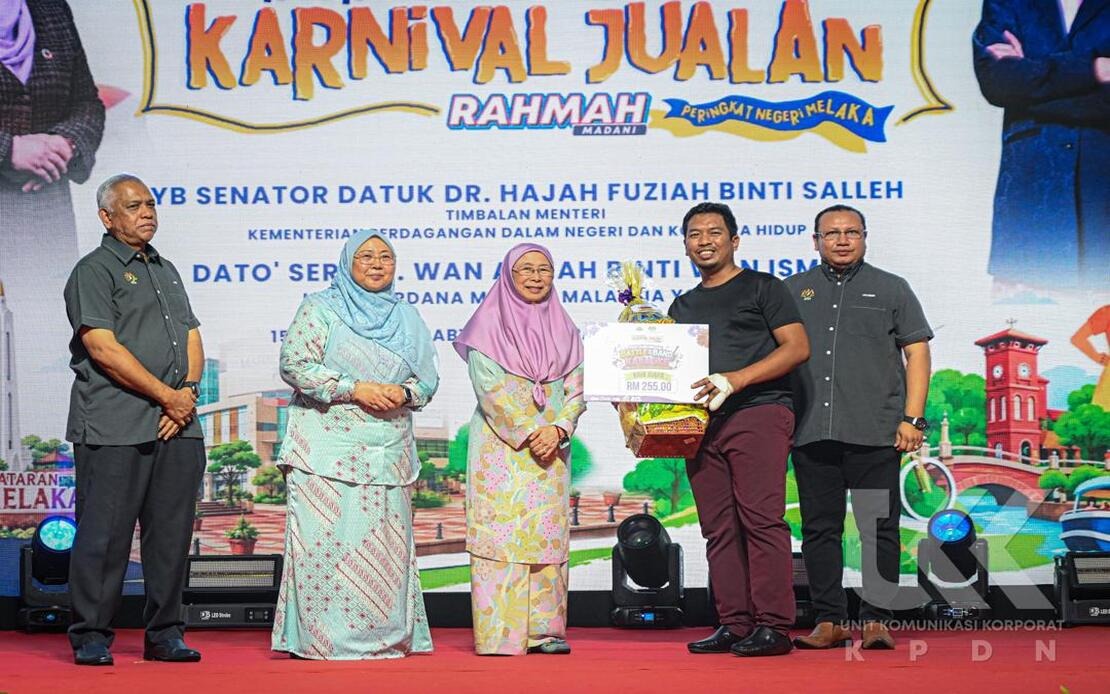
The Menu Rahmah programme continues its upward trajectory with participation from 3,210 food and beverage establishments across Malaysia as of July this year, according to Domestic Trade and Cost of Living Deputy Minister Datuk Dr Fuziah Salleh. Speaking in Melaka, she underscored that the growing engagement of food operators signals their commitment to partnering with government efforts aimed at alleviating the financial pressures facing ordinary Malaysians. This expanding network of participating premises represents a deliberate diversification of the initiative beyond its initial scope, suggesting genuine market appetite for schemes that balance affordability with business viability.
The composition of participating operators reveals interesting patterns in how different food service segments have embraced the initiative. Food stalls and food court operators have demonstrated the strongest uptake with 1,016 registrations, reflecting the dominance of informal and semi-formal dining establishments in Malaysia's food ecosystem. Beyond these categories, the programme has attracted traditional restaurants, independent hawker vendors, mobile food trucks, and bazaar-based food sellers. This broad-based participation indicates that Menu Rahmah has successfully transcended its potential perception as a burden on business operators, instead positioning itself as a vehicle through which diverse food service providers can expand customer reach while contributing to national cost-of-living priorities.
Fuziah emphasized that Menu Rahmah should not be construed as a temporary expedient to address short-term economic pressures. Rather, the programme occupies a permanent position within the government's framework for managing cost-of-living challenges. This distinction carries significant implications for food operators considering long-term participation, as it suggests government commitment to sustained funding and regulatory support. For consumers, the permanence signals reliability in accessing affordable meals, fostering planning confidence for household budgets. The structural embedding of Menu Rahmah into Malaysia's economic policy architecture reflects acknowledgment that food affordability remains a structural challenge requiring institutional solutions rather than cyclical interventions.
Strategic geographic focus has been instrumental in shaping the programme's deployment. The Ministry of Domestic Trade and Cost of Living has deliberately prioritized high-demand areas, notably Rest and Service Areas along Malaysia's major highways and transport corridors. This positioning strategy recognizes that travellers and mobile populations face particular food price vulnerabilities at commercial nodes where competitive pricing typically remains limited. By establishing Menu Rahmah presence at R&R facilities, the government extends cost-of-living relief beyond urban centres and established residential zones to transient populations and highway commuters. Such targeted placement demonstrates sophisticated understanding of consumer vulnerability across different geographic and demographic contexts.
Complementing Menu Rahmah, the MADANI RAHMAH Sales Programme (PJRM) has achieved notable momentum, recording 19,322 implementations as of July 2026 and surpassing the annual target of 17,500 deployments. The programme has generated over 25.4 million transactions nationwide, indicating substantial consumer engagement with subsidized essential goods. PJRM delivers savings ranging from 10 to 30 percent relative to prevailing local market prices, a significant differential for households allocating substantial budget shares to food and household essentials. The product range spans chicken, fish, eggs, cooking oil, flour, rice, fresh vegetables, fruits, and household necessities, addressing the core components of Malaysian household consumption patterns.
The geographic reach of PJRM underscores the government's commitment to inclusive coverage. Implementation spans 600 state constituencies and 40 distinct zones within the Federal Territories, reflecting deliberate efforts to ensure that cost-of-living support penetrates regional areas and federal zones rather than concentrating benefits in major urban centres. This dispersed implementation pattern addresses legitimate concerns about regional inequality in access to subsidized goods. However, Fuziah indicated that deployment remains calibrated toward areas demonstrating genuine need, suggesting that targeting mechanisms incorporate socioeconomic assessments rather than blanket geographic coverage. Such needs-based allocation represents prudent fiscal management while maintaining fairness considerations.
The Ministry of Domestic Trade and Cost of Living has adopted a multi-pronged promotional strategy to maximize programme utilization and operator participation. The 'Jom Cari Menu RAHMAH' campaign functions as an awareness and outreach initiative designed to educate consumers about participating premises and available menu options. Simultaneously, the ministry has intensified engagement with industry stakeholders, including traders' associations and established food operators, to broaden the universe of participating establishments. This collaborative approach recognizes that programme success depends on both supply-side participation and demand-side awareness, requiring coordination across government agencies, private sector operators, and consumer constituencies. The strategy implicitly acknowledges that regulatory mandates alone cannot generate sustainable market participation; instead, voluntary engagement driven by perceived mutual benefit proves more durable.
A showcase event in Melaka illuminated the practical manifestation of these government initiatives at the community level. The KPDN Mini Carnival, spanning two days, functioned as an experiential platform where residents could encounter multiple government programmes simultaneously, including Menu RAHMAH and PJRM offerings alongside exhibitions, advisory services, and business networking opportunities. The carnival attracted nearly 3,000 visitors on its opening day, with organisers anticipating continued growth through the concluding sessions. Twenty-seven traders participated in offering competitively priced sales, extending the carnival's economic reach beyond government schemes into the broader merchant community. Integrated entertainment components, including stage activities and esports tournaments in partnership with Todak, reflected efforts to position cost-of-living assistance within broader community engagement rather than presenting it as purely transactional relief.
The scale of consumer engagement evidenced by carnival attendance and transaction volumes suggests that cost-of-living anxiety remains salient among Malaysian households, translating into demonstrated demand for affordable food and essential goods. The willingness of food operators to participate voluntarily in Menu Rahmah, combined with consumer responsiveness to PJRM implementations, indicates alignment between government policy objectives and market conditions. However, sustaining this momentum requires continuous programme refinement, operator recruitment, and consumer education. For Malaysian readers, these developments signal that government commitment to affordability concerns translates into tangible market interventions, though programme effectiveness ultimately depends on ongoing expansion of participating operators and maintenance of price discipline across distributed locations.
Looking forward, the trajectory of Menu Rahmah and complementary programmes will merit monitoring to assess whether participation growth continues and whether consumer savings genuinely translate into measurable improvements in household cost-of-living experiences. The programme's permanence within policy frameworks provides institutional stability, yet ensuring equitable geographic distribution and quality consistency across diverse operator categories presents ongoing administrative challenges. For Southeast Asian readers observing Malaysia's approach, these initiatives demonstrate one model for addressing cost-of-living pressures through public-private collaboration rather than pure subsidies, potentially offering insights for similar regional challenges. The emphasis on voluntary operator participation and targeted geographic deployment represents a pragmatic middle path between laissez-faire market approaches and comprehensive state intervention.

