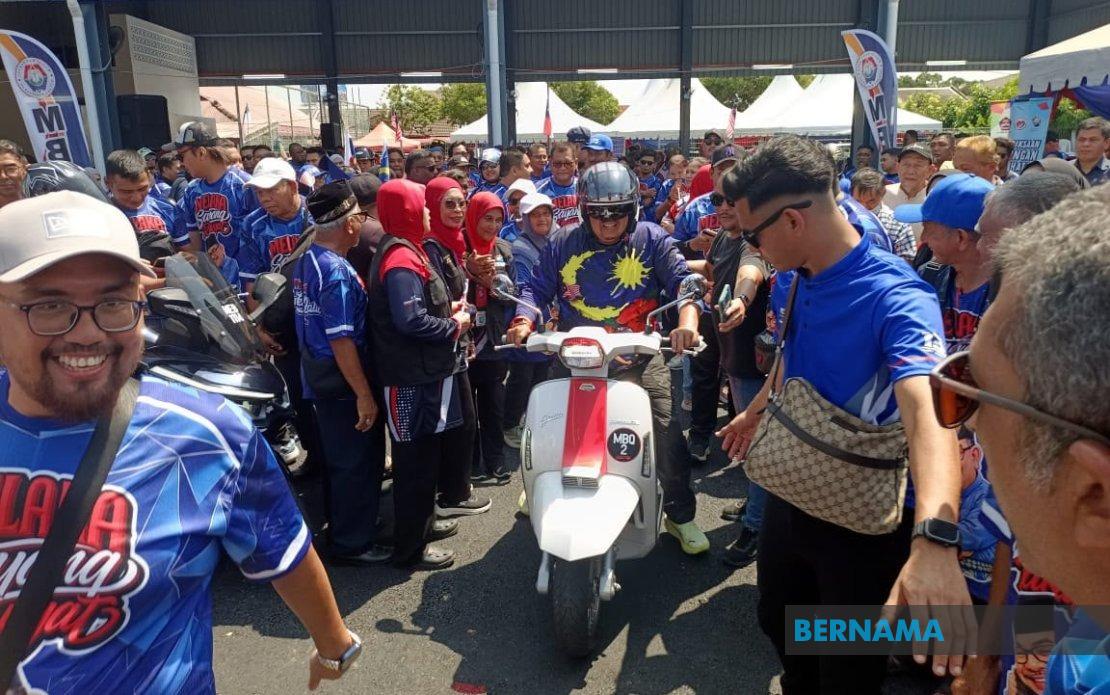
Melaka's Chief Minister Datuk Seri Ab Rauf Yusoh has reframed the state's ongoing 'Jelajah Ketua Menteri Sayang Rakyat' tour as a permanent institutional mechanism for addressing public grievances, distinguishing it from typical campaign-style visits that gain momentum only during election seasons. Speaking in the Pengkalan Batu constituency on August 4, he positioned the initiative as an extension of the 'Wakil Rakyat Untuk Rakyat' (WRUR) programme, which the administration launched two years ago with the explicit aim of creating direct channels between government officials and citizens seeking resolution of concerns.
The Chief Minister's emphasis on the non-seasonal nature of these outreach efforts reflects a broader governing philosophy in Melaka that prioritises rapid problem resolution over bureaucratic delays. By positioning elected representatives as active listeners embedded within their constituencies, the state government aims to compress the timeline between complaint identification and remedial action. Ab Rauf noted that the current approach prevents legitimate public concerns from languishing in administrative bottlenecks, allowing issues amenable to quick resolution to proceed without unnecessary postponement.
The 10th edition of the Jelajah Ketua Menteri Sayang Rakyat, held in the Pengkalan Batu state constituency, demonstrated the tangible outcomes this engagement model can produce. Officials reported that eight unresolved matters originating from the earlier WRUR and 'Hari Exco Bersama Rakyat' (HEBAT) programmes found solutions through this tour iteration. These successes extended across diverse community needs, illustrating how structured engagement can address problems spanning infrastructure, religious facilities, and basic housing.
Among the notable resolutions was the acquisition of land for a Muslim cemetery, a project that had apparently stalled due to ownership complications. A Chinese landowner's decision to offer the property at a 50 percent discount from prevailing market rates underscored how direct dialogue between government intermediaries and private stakeholders can generate solutions that benefit minority communities. The generous gesture reportedly generated significant goodwill among the local Muslim population, demonstrating how tangible outcomes from government engagement programmes can strengthen communal relations.
Housing assistance formed another component of the tour's agenda. The state administration successfully facilitated repairs to five homes in deteriorating condition and distributed a residence valued at RM100,000 through the 'Baiti Jannati' programme, jointly operated with Tenaga Nasional Berhad (TNB). This intervention addresses housing insecurity among economically vulnerable households, a persistent challenge across Malaysia's urban and semi-urban constituencies. The combination of emergency repairs and new housing units reflects a targeted approach to shelter-related poverty.
Communal infrastructure also received attention, with the Melaka Historic City Council (MBMB) completing an open hall for community use within the Pengkalan Batu constituency. Such multipurpose spaces serve essential social functions, providing venues for neighbourhood events, informal gatherings, and community organisation. The inclusion of infrastructure development alongside social assistance suggests a holistic conception of constituency development that balances immediate relief with longer-term improvements in public facilities.
The systematic tracking of programme progress indicates an administrative commitment to accountability. The WRUR initiative has progressed to its 25th iteration, with only five state constituencies remaining uncovered. This suggests that the engagement exercise is advancing methodically through all electoral divisions, ensuring equitable geographic distribution of attention and preventing any constituency from being inadvertently overlooked. The transparent accounting of progress milestones projects organisational discipline and reduces accusations of selective coverage.
For Malaysian governance observers, Melaka's emphasis on sustained, non-electoral engagement represents a counterpoint to the perception that constituent outreach concentrates primarily around campaign periods. By framing the Sayang Rakyat tour as a continuous institutional programme predating electoral considerations, the state administration positions responsive governance as an ordinary function of elected office rather than a temporary gesture. This reframing carries implications for how other state governments approach accountability and public interaction.
The effectiveness of such programmes depends substantially on the institutional capacity to follow through on commitments. The ability to resolve eight separate issues across housing, religious facilities, and infrastructure within a single constituency visit suggests that Melaka maintains adequate administrative coordination between the Chief Minister's office, relevant state agencies, local councils, and external partners like TNB. This level of coordination capability, if sustained, distinguishes truly functional engagement mechanisms from performative exercise.
For constituencies across Southeast Asia grappling with governance challenges, Melaka's approach offers a replicable model for structuring sustained public engagement. The integration of different programme streams—WRUR, HEBAT, and the tour itself—suggests that layering multiple feedback channels can capture a broader spectrum of community concerns than any single mechanism alone. The progression from listening to action, captured through specific case resolutions, provides a measurable framework that elected officials and administrative systems can be held accountable against.
About half of Melaka's state constituencies have now been covered through this engagement exercise, meaning the initiative retains significant momentum heading into its later phases. How the remaining five divisions respond to the tour, and whether the subsequent resolutions match the Pengkalan Batu constituency's outcomes, will determine whether this model represents genuinely embedded governance change or a cyclical programme vulnerable to inconsistency. The Chief Minister's framing invites scrutiny of whether outcomes consistently materialise across all constituencies or whether some divisions receive disproportionate attention and resources.

