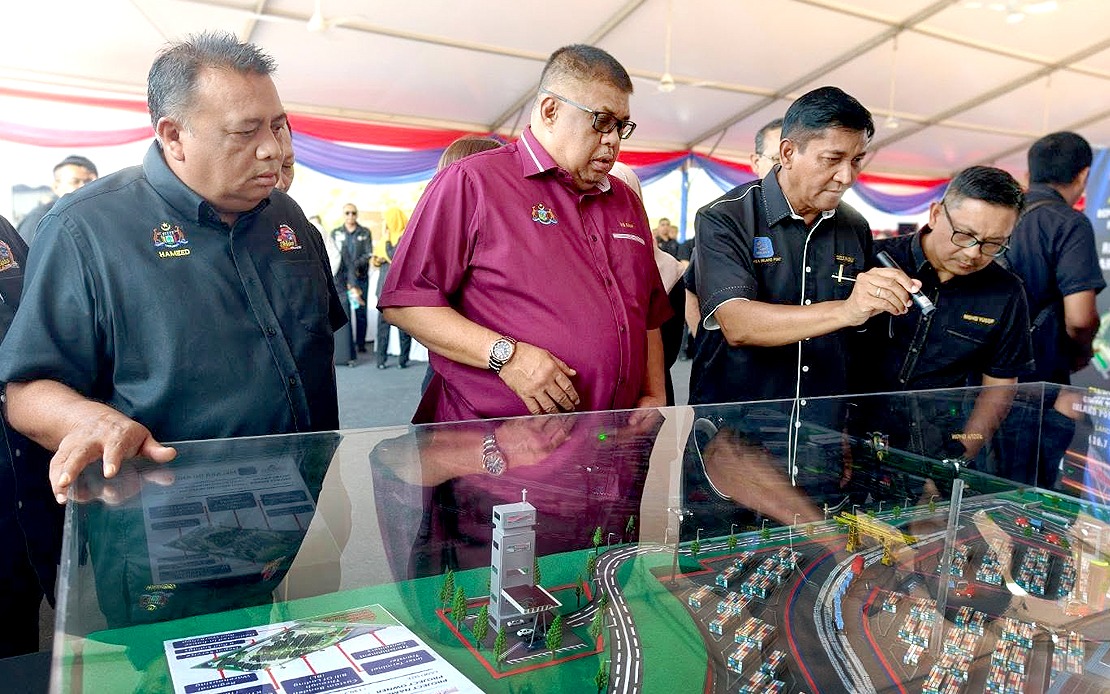
The Melaka government is embarking on an ambitious infrastructure initiative to transform how cargo moves through its expanding port ecosystem. A new 12-kilometre road connecting Kuala Linggi International Port (KLIP) to Ayer Molek and Kuala Sungai Baru, carrying a price tag of RM129 million, represents a strategic investment in regional logistics competitiveness. According to Datuk Hameed Mytheen Kunju Basheer, chairman of the state's Public Works, Infrastructure, Public Facilities and Transport Committee, the project is designed to forge seamless connectivity across Melaka's sprawling port network, a critical consideration given Southeast Asia's intensifying competition for cargo-handling dominance.
The planned route carries substantial operational significance because it traverses the Melaka Inland Port (MIP) area, effectively creating an integrated corridor that allows vessels' cargo to move fluidly between coastal and inland facilities without lengthy detours through congested urban routes. This design approach reflects evolving international port management philosophy, where inland distribution hubs amplify the value chain by reducing dependency on traditional city-centre logistics infrastructure. For Malaysian shippers and regional trading partners, such connectivity translates into lower handling costs and faster merchandise throughput, factors increasingly important as global supply chains recover from pandemic disruptions and seek greater resilience.
The infrastructure gains are quantifiable and significant. Currently, the journey from KLIP to the inland port region stretches 28 kilometres, consuming time and fuel while exposing cargo to weather exposure and handling risks. The proposed direct road will compress this distance to just 12 kilometres, a 57 per cent reduction that carries profound implications for transport operators' bottom lines and overall port competitiveness. For the logistics sector, which represents a material component of Melaka's economy, such efficiency improvements can translate into measurable competitive advantages when bidding for regional cargo flows against competing ports in Port Klang, Tanjung Pelepas, and regional hubs across Thailand and Vietnam.
The project timeline reflects careful phasing appropriate to Melaka's development capacity. Currently in the design stage under the Works Ministry's supervision, the initiative is scheduled to progress through quotation, tender, and contractor appointment processes during 2025. This measured approach avoids the rushed execution that sometimes characterises major infrastructure projects and allows room for design refinements based on port industry feedback. Completion is anticipated around 2028 or 2029, providing a five-to-six-year window for implementation that aligns with other regional port expansion initiatives and allows shipping companies to plan their Melaka operations accordingly.
Complementary road upgrades will amplify the primary project's impact. The state government intends to widen existing roads linking port areas to the MIP, specifically targeting the Tangga Batu to Sungai Udang corridor that connects to Tanjung Bruas Port. These secondary improvements may appear incremental but fundamentally enhance the entire port cluster's functionality. When freight handling facilities are connected by modern, well-maintained roads with adequate capacity, the entire system operates more efficiently. Bottlenecks disappear, vehicle queuing diminishes, and port authorities can maintain higher throughput despite similar berth and storage capacity.
Another planned six-kilometre road from Telok Gong to Kampung Pulau and Paya Lebar, budgeted at RM49 million, extends the connectivity strategy further inland. This complementary project, currently progressing through quotation and design phases, establishes a direct link between port areas and the MIP without routing through traditional villages. The deliberate avoidance of residential communities reflects modern infrastructure planning principles that respect community livelihood while enabling economic development. For Melaka residents in affected areas, this means reduced heavy vehicle traffic through their neighbourhoods, fewer environmental impacts, and a clearer separation between industrial and residential zones.
Melaka's port infrastructure evolution must be understood within the broader context of Malaysian maritime strategy. As Port Klang approaches capacity constraints and competes fiercely with international alternatives, secondary ports increasingly shoulder cargo redistribution responsibilities. Melaka's geographic position on the western Strait and its proximity to high-volume Asian shipping routes positions it advantageously if infrastructure keeps pace with demand. These road projects represent state government recognition that port competitiveness depends as much on land-side access as on berth facilities. Without efficient hinterland connections, even well-equipped ports struggle to attract cargo.
The Melaka Inland Port itself, which received its ceremonial groundbreaking during the announcement, exemplifies a broader shift toward integrated port complexes that combine coastal facilities with inland distribution capabilities. This model allows ports to serve broader geographic catchments and handle cargo types poorly suited to congested urban port areas. A modern warehouse facility in Melaka can serve manufacturers and retailers across Peninsular Malaysia, reducing their reliance on Port Klang's congested environs. For businesses outside the Klang Valley, reliable access to Melaka port infrastructure expands logistics options and potentially reduces transport costs, a consideration of material importance to Malaysia's manufacturing and trading sectors.
Regional implications extend beyond Melaka's borders. Singapore and other Southeast Asian hubs have invested heavily in hinterland infrastructure precisely because modern port operations demand seamless land-sea integration. Melaka's initiatives signal Malaysian commitment to competing seriously in this evolving arena. As Chinese and Vietnamese ports increasingly capture regional traffic through superior infrastructure and operational efficiency, Malaysian ports cannot afford to fall behind. These road projects represent measured progress toward infrastructure standards required for long-term competitiveness.
The financial investment magnitude warrants consideration alongside broader state economic priorities. RM129 million for primary access infrastructure and an additional RM49 million for complementary roads represents substantial capital commitment. For Melaka, a state with more limited fiscal resources than Selangor or Johor, such projects require careful prioritisation and potentially depend on federal funding support or private sector participation. The phased implementation approach suggests realistic acknowledgment of budgetary constraints while maintaining momentum toward strategic objectives.
Implementation success will depend critically on project management rigour and adherence to announced timelines. Malaysian infrastructure projects have occasionally experienced cost overruns and schedule delays, frustrating stakeholders and undermining business confidence. Port industry participants and shipping companies will monitor progress closely, as project delays or cost escalations could postpone the anticipated efficiency gains. Transparent communication from Melaka authorities regarding any challenges or adjustments will be essential for maintaining stakeholder confidence.
Looking forward, these infrastructure investments position Melaka for expanded maritime commerce. As global supply chains rebalance and seek alternatives to traditional concentrated port hubs, well-connected secondary ports offer attractive options. Melaka's combination of coastal location, planned inland facilities, and now enhanced road access creates a compelling proposition for regional logistics operators. Over the next five years, as these projects materialise, the state's freight-handling capacity and attractiveness to international shipping lines should increase measurably. For Malaysia's trade-dependent economy, expansion of functional port infrastructure across multiple locations enhances systemic resilience and competitive positioning.

