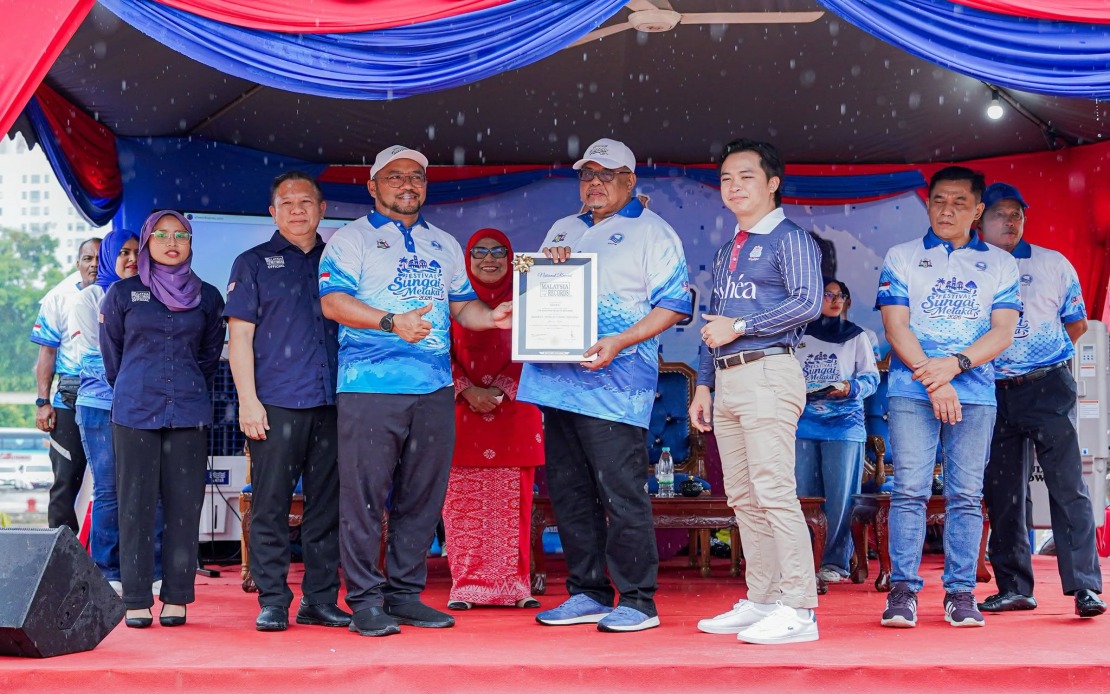
The state of Melaka has consolidated its standing as a dynamic tourism destination by securing four Malaysia Book of Records (MBOR) accolades within a compressed three-year timeframe. The most recent addition to this collection was announced during an official ceremony at Dataran Pengkalan Rama on July 19, signalling the state's consistent ability to generate record-breaking tourism initiatives. Chief Minister Ab Rauf Yusoh framed these achievements as evidence of the administration's commitment to innovative and impactful development strategies in the tourism arena, moving beyond conventional attraction models.
During his remarks at the MBOR Certificate Presentation and Prize Giving Ceremony, which coincided with the launch of the Sungai Melaka Festival 2026, Ab Rauf stressed that record certifications must serve a broader purpose than ceremonial recognition. He articulated a vision where each accolade catalyses further creative endeavours designed to deepen visitor engagement and prolong tourist stays within the state. This philosophy reflects a growing recognition among Malaysian state governments that tourism records carry strategic value only when they translate into measurable economic activity and employment opportunities for local communities.
The Sungai Melaka Festival, now in its 17th iteration, represents a flagship initiative through which the state government seeks to revitalise the riverine precinct as both a cultural and recreational asset. The festival programming spans all three districts within Melaka and encompasses more than thirty separate events, underscoring an institutional commitment to distribute tourism benefits across geographic boundaries rather than concentrating them within urban cores. This dispersed approach addresses longstanding regional equity concerns and positions secondary towns and rural areas as beneficiaries of the tourism economy.
A prominent element of this year's festival iteration was a freshwater fishing competition that attracted unexpectedly robust participation levels. The event mobilised a total prize pool of RM30,000, with the top-placed angler securing RM10,000—a sum that organisers identified as sufficient incentive to motivate serious competitors. The competition drew 1,123 registered participants, encompassing both local anglers and visitors from neighbouring states. This influx demonstrated the latent appeal of activity-based tourism centred on cultural practices and outdoor recreation rather than passive sightseeing alone.
Ab Rauf identified the fishing competition's success as indicative of unexploited commercial potential within niche leisure segments. He signalled intentions to scale and institutionalise the event within a broader tourism product portfolio, incorporating enhanced prize offerings and elevated promotional intensity. This developmental trajectory mirrors patterns observable across Southeast Asia, where state authorities increasingly recognise that grassroots recreational activities with authentic community participation often generate superior return-on-investment compared to conventional heritage-focused attractions. The strategic pivot towards activity-based tourism reflects broader market trends favouring experiential consumption over passive observation.
The Melaka River and Beach Development Corporation (PPSPM) emerged as a central institutional player in these initiatives, with chief executive officer Shaharul Azuar Idris participating in the ceremony. The corporation's role encompasses physical infrastructure maintenance and programming coordination across riverine zones, positioning it as the principal vehicle through which state tourism visions acquire operational reality. The presence of corporate leadership at official functions signals alignment between state administration and implementing agencies—a prerequisite for translating political rhetoric into functional tourism expansion.
From a regional perspective, Melaka's sustained focus on MBOR recognition reflects a deliberate strategy to establish competitive differentiation within Malaysia's intensifying tourism marketplace. As neighbouring destinations including Penang and Kuala Lumpur expand their tourism infrastructure and marketing reach, smaller states must cultivate distinctive identity markers and specialised offerings to capture and retain visitor attention. Record achievements serve dual functions: they generate positive media coverage and provide credible evidence of innovation to prospective tourists evaluating destination choice.
The concentration of four records within three years suggests systematic rather than ad-hoc approach to record-seeking activity. This pattern indicates either remarkably favourable conditions for record achievement or institutional processes designed to identify, document, and submit record-worthy initiatives to MBOR authorities. The latter interpretation implies that Melaka's administration maintains mechanisms for identifying novel or exceptional tourism initiatives and converting them into formally recognised achievements—a managerial capacity that distinguishes progressive from complacent regional governments.
For the broader Malaysian economy, Melaka's trajectory carries instructive implications. The state demonstrates that mid-tier tourism destinations lacking megacity status or international brand recognition can nevertheless achieve competitive vitality through targeted creativity and community-centred programming. This model potentially offers replicable elements for other states seeking tourism diversification without requiring massive capital infrastructure investment. The emphasis on authentic local participation rather than external design expertise aligns with contemporary global tourism philosophy favouring sustainability and community benefit distribution.
Looking forward, Ab Rauf's explicit commitment to converting record accolades into sustained economic momentum will require sustained institutional effort. Tourism products require consistent quality maintenance, regular promotional reinforcement, and adaptive responses to visitor feedback and market evolution. The fishing competition's success, while encouraging, remains a single data point rather than proof of concept. Systematic development and scaling will demand adequate budgetary allocation, personnel capacity, and coordination between state agencies, local government structures, and private sector participants.

