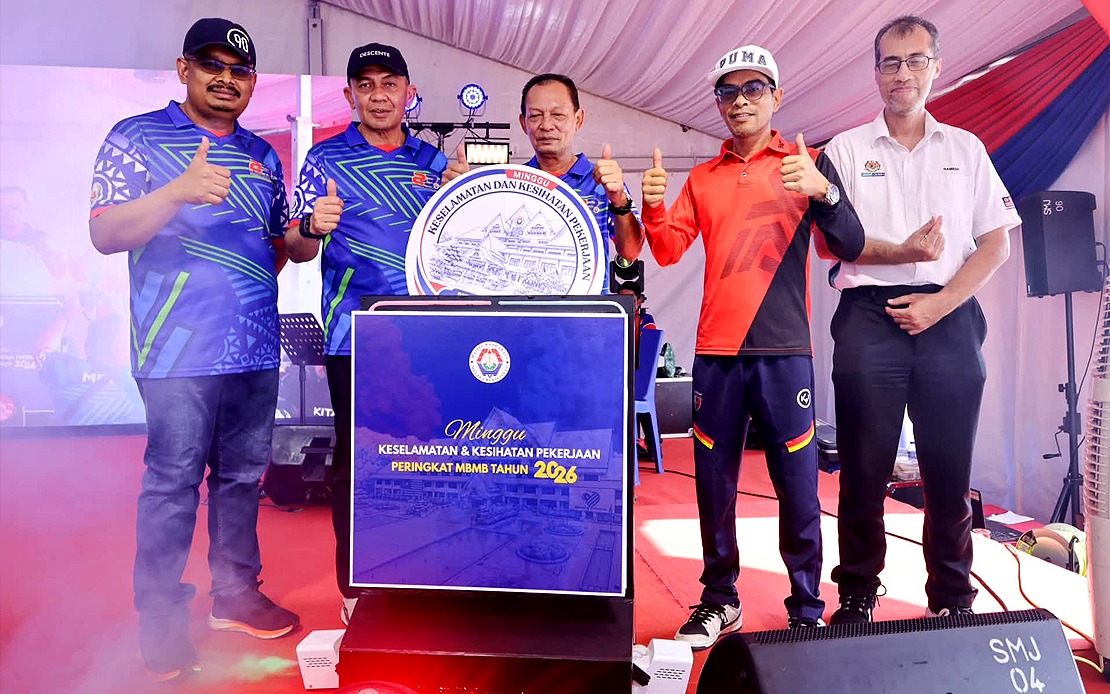
The state of Melaka has documented 277 workplace accidents between January and June 2026, marking a period of significant concern for occupational safety officials despite assertions that the situation remains controlled. The incidents span multiple sectors and have resulted in both temporary and permanent disabilities among workers, according to data released during ceremonies marking the state-level Occupational Safety and Health Week celebration. The three deaths registered during this period—two occurring in the construction industry and one in manufacturing—underscore the persistent risks facing Malaysia's workforce even as regulatory oversight intensifies.
Ramesh Zakir Shamsul, director of Melaka's Department of Occupational Safety and Health (DOSH), characterised the current accident rate as "relatively under control" during remarks made at the Melaka Historic City Council celebration of the annual safety campaign. However, this assessment comes with an important caveat: DOSH maintains continuous monitoring of industrial operations throughout the state to ensure compliance with established occupational safety protocols. The framing suggests that while the trajectory may be stabilising, vigilance remains essential across all economic sectors where workplace hazards persist.
The reporting and investigation of workplace accidents in Malaysia operates under the Occupational Safety and Health Act 1994 (Act 514), a legislative framework that mandates employers to report all incidents promptly. Ramesh Zakir emphasised that detailed investigations accompany each reported case, providing authorities with insights into root causes and circumstances that might otherwise remain obscured. This investigative approach serves not merely as a compliance mechanism but as a foundation for identifying systemic vulnerabilities and implementing preventive measures across industries.
The construction sector's prominence in the fatality statistics—accounting for two of the three deaths—reflects a broader pattern observed across Malaysia and Southeast Asia, where building and infrastructure projects consistently rank among the most hazardous work environments. Construction workers face exposure to falls, equipment failures, and structural collapse risks that require constant reinforcement of safety protocols and investment in protective equipment. The inclusion of a manufacturing fatality indicates that dangers extend across the industrial spectrum, affecting workers in factories and production facilities where machinery, chemical exposure, and process failures create distinct occupational health challenges.
Melaka's collaborative approach to occupational safety represents a notable feature of the state's enforcement strategy. Rather than relying solely on DOSH oversight, officials have cultivated partnerships with employers and local authorities, particularly the Melaka Historic City Council (MBMB), to broaden the reach of safety awareness initiatives. Through workshops, educational talks (ceramah), and organised campaigns, these stakeholders work to embed safety consciousness throughout workplaces and communities. State deputy senior executive councillor Datuk Zulkiflee Mohd Zin's participation in launching the safety week celebration underscores political commitment to workplace standards at the state government level.
The emphasis on employer responsibility represents a critical dimension of Malaysia's occupational safety framework. While government agencies enforce regulations and conduct investigations, employers bear primary responsibility for creating safe working conditions, implementing hazard controls, and maintaining a culture of compliance within their organisations. Ramesh Zakir's public acknowledgment that employers must champion these efforts signals recognition that regulatory bodies alone cannot address the full scope of workplace safety challenges. This shared accountability model positions employers as partners in achieving meaningful reductions in accident rates rather than merely as subjects of enforcement.
The Melaka Historic City Council's active involvement in promoting occupational safety through various programmes demonstrates how local government can leverage its position to reinforce state-level initiatives. As the primary administrative body responsible for local development and infrastructure projects, MBMB exercises influence over construction standards, contractor licensing, and project oversight. By integrating occupational safety considerations into these functions, the council extends the reach of safety advocacy beyond what centralised agencies might accomplish alone. This multi-tiered approach reflects evolving best practices in occupational health management across the region.
For Malaysian workers and employers, the Melaka data carries significant implications regarding the current state of workplace safety nationwide. The 277 accidents over six months translate to an average of approximately 46 incidents monthly within a single state, suggesting that workplace injuries remain a substantial public health and economic concern. These figures do not merely represent abstract statistics; they translate into individual workers experiencing disability, loss of income, and potential long-term health complications. Families lose breadwinners or face reduced household earnings when workers suffer permanent disabilities, cascading economic impacts that extend beyond immediate medical costs.
The manufacturing and construction sectors, prominent in Melaka's accident profile, remain cornerstone industries for Malaysia's broader economic development. Any deterioration in safety standards within these sectors threatens not only worker welfare but also industrial productivity and international competitiveness. Foreign investors and multinational corporations increasingly scrutinise occupational safety records when evaluating investment locations, making improvements in accident prevention a matter of economic strategy alongside ethical obligation. Melaka's relatively low population compared to other Malaysian states means that the 277 accidents represent a notable concentration of incidents within a smaller workforce base, warranting intensified attention.
Moving forward, the effectiveness of collaborative safety initiatives in Melaka depends upon sustained commitment from all stakeholders and responsiveness to emerging hazards. The occupational safety landscape evolves continually as industries adopt new technologies, processes, and work arrangements. Remote work, gig economy employment, and automation introduce novel safety challenges that traditional regulatory frameworks may not adequately address. Melaka's authorities must remain adaptive, updating protocols and awareness campaigns to reflect contemporary workplace realities while maintaining foundational emphasis on hazard recognition and prevention.
The three fatalities recorded during the first half of 2026 represent not merely statistical data points but tragic losses that were potentially preventable through rigorous adherence to established safety standards. Each death in a workplace accident typically sparks investigations that may reveal systematic failures, inadequate training, or insufficient equipment maintenance—patterns that, once identified, can inform targeted interventions. Public disclosure of accident data, as occurred during the safety week celebration, serves important functions: it maintains visibility of occupational safety as a policy priority, communicates risks to workers and employers, and creates accountability mechanisms that encourage compliance.
As Malaysia continues its development trajectory and industrialisation efforts, the foundation for sustainable progress must include an unwavering commitment to protecting worker safety and health. Melaka's experience demonstrates that achieving this goal requires coordinated effort across government agencies, employers, local authorities, and worker organisations. The recognition that workplace safety remains "relatively under control" rather than fully resolved suggests continued work ahead. Through sustained focus on hazard prevention, investigation of accidents, enforcement of regulations, and cultivation of safety culture across all sectors, Malaysian states like Melaka can progressively reduce the burden of workplace injuries and fatalities that currently affect thousands of workers annually.

