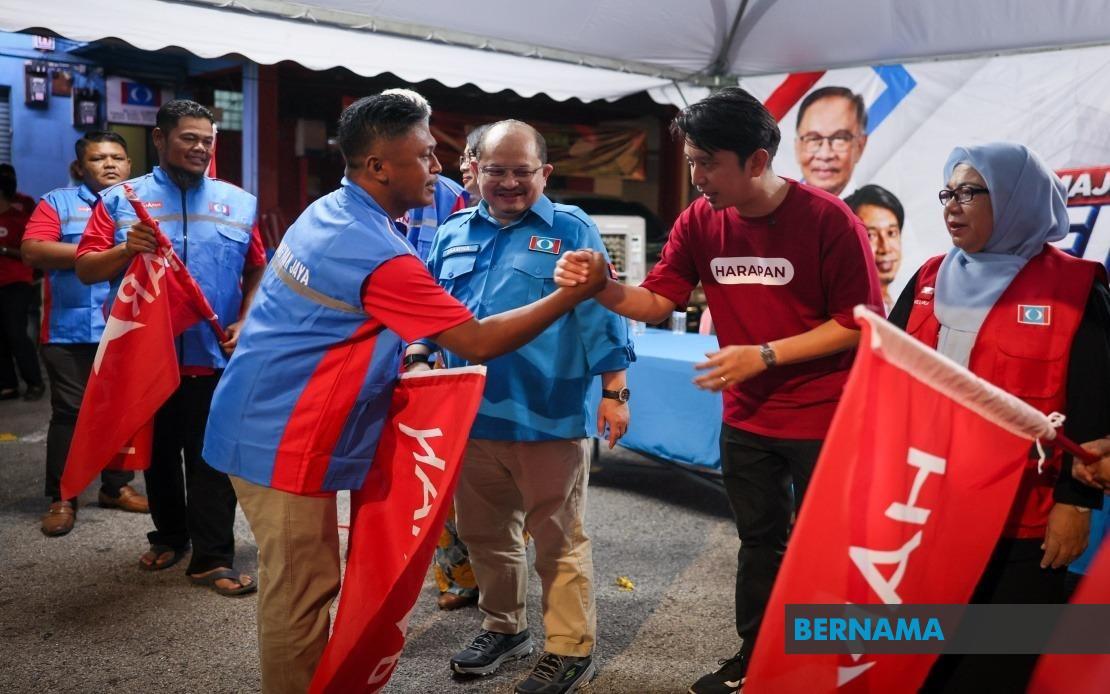
Parti Keadilan Rakyat's Melaka division is strategically shifting its candidate announcement schedule forward, departing from a historical pattern of last-minute declarations that have often left new contenders with minimal preparation time before facing voters. The decision, announced by Adam Adli Abdul Halim, acting chairman of the Melaka PKR Leadership Council, reflects the party's commitment to presenting a roster of fresh political talent capable of competing effectively in the forthcoming state election.
The accelerated timeline serves multiple strategic objectives for PKR in a state where it holds significant political influence within the Pakatan Harapan coalition. By moving the candidate selection process earlier, the party creates sufficient runway for new political figures, particularly those without established electoral experience, to build name recognition and develop grassroots connections across their constituencies. This approach contrasts sharply with previous electoral cycles where logistical delays and competing priorities forced the party to unveil candidates only weeks before polling, leaving them scrambling to mobilise support networks and communicate their platforms to voters.
The candidate selection process itself operates through a structured multi-tier framework designed to ensure transparency and party-wide consultation. Branch-level screening forms the initial checkpoint, filtering candidates based on local party assessments and community standing. These recommendations then advance to state-level evaluation, where broader party leadership examines candidates against statewide strategic priorities and demographic considerations. Only after this vetting process does the selection move to the central party apparatus, where the party president renders final approval. This hierarchical approach theoretically prevents personalised decision-making while ensuring alignment with party direction.
Representing a deliberate departure from past practices where "various factors" created recurring delays, Adam Adli emphasised that the early timeline reflects lessons learned from previous electoral disappointments. The party's historical struggles with timely candidate announcements stemmed not from procedural complications alone, but from deeper tensions within the party structure—including competing factional preferences and negotiations over seat allocations that frequently extended negotiations beyond practical deadlines. By front-loading the process this time, PKR leadership aims to avoid these familiar pitfalls.
Demographic representation constitutes another pillar motivating the accelerated schedule. PKR's explicit goal of fielding "many new faces" interconnects with broader commitments to gender parity and youth engagement in politics. Achieving meaningful representation of women and younger voters requires identifying, vetting, and developing candidates substantially in advance, particularly when many potential nominees may be entering electoral politics for the first time. The preparation period allows these candidates to undergo party-sponsored training programmes, develop policy positions, and establish visibility without feeling rushed or underprepared.
To operationalise these ambitions, PKR Melaka is launching a systematic campaign to activate its election machinery across multiple constituencies. Structured machinery activations in Tangga Batu, Hang Tuah Jaya, Alor Gajah, Masjid Tanah, and Jasin represent a geographical dispersion strategy ensuring that no constituency lacks dedicated volunteer coordination and voter outreach infrastructure. These launches build party consciousness at grassroots levels, even as final candidate selections remain pending. Adam Adli, who also serves as Deputy Minister of Higher Education, underscored that robust machinery must precede candidate announcements—the organisational foundation must be solid enough to support whoever eventually receives the nomination.
The machinery-first approach reflects sophisticated electoral thinking. Rather than allowing candidate selection to drive organisational activation, PKR reverses the sequence, building volunteer networks and campaign infrastructure independently of specific nominees. This methodology ensures that no candidate benefits from pre-existing machinery advantages while others inherit underdeveloped networks. It also positions the party to pivot quickly once candidates are finalised, deploying already-mobilised volunteers rather than scrambling to build organisations from scratch.
Beyond internal party dynamics, PKR's candidate strategy intersects with broader coalition cooperation questions between Pakatan Harapan and Barisan Nasional. While formal negotiations on electoral cooperation remain nascent, informal discussions have commenced between the political coalitions. Datuk Seri Amirudin Shari, the PH election director, has already initiated contact with Melaka Chief Minister Datuk Seri Ab Rauf Yusof to explore cooperation possibilities and identify convenient meeting times. These preliminary exchanges carry significance beyond simple scheduling—they signal genuine willingness from both camps to explore partnership arrangements that could reshape Melaka's electoral landscape.
The cooperation discussions reflect shifting political calculation in Malaysian electoral politics. Rather than viewing state elections purely through adversarial lenses, both coalitions recognise potential mutual benefits from coordinated approaches. Such arrangements might involve seat-sharing agreements, coordinated campaign messaging against common opponents, or reciprocal non-interference arrangements in specific constituencies. For PKR specifically, early cooperation agreements could influence final candidate selections, as the party might need to adjust nominations based on negotiated seat allocations with BN partners.
However, Adam Adli carefully maintained that PKR retains organisational autonomy regardless of cooperation outcomes. The party has prepared contingency plans enabling it to contest independently should Pakatan Harapan-Barisan Nasional negotiations prove fruitless. This dual-track preparation—simultaneously pursuing cooperation while maintaining solo-contest readiness—reflects prudent political risk management. The party cannot afford to sacrifice electoral readiness by assuming cooperation will materialise, yet equally cannot ignore partnership opportunities that might improve overall coalition performance.
The emphasis on healthier political culture represents another dimension of PKR's strategic messaging around the Melaka election. By positioning coalition discussions as mechanisms for reducing "harsh and dirty politics," PKR leadership frames cooperation as elevating democratic discourse rather than merely calculating electoral advantage. This rhetorical positioning resonates particularly in Melaka, where previous electoral cycles generated considerable acrimony and fragmented voter sentiment. Voters fatigued by adversarial politics might reward coalitions demonstrating restraint and civility.
For Malaysian observers monitoring PKR's evolution, the Melaka candidate announcement strategy signals the party's increasing sophistication in electoral management. Rather than treating candidate selection as a discrete event, PKR now conceptualises it as one component within a comprehensive electoral strategy encompassing machinery activation, coalition diplomacy, demographic representation, and political culture messaging. This integrative approach contrasts with reactive patterns that historically characterised Malaysian opposition party operations, suggesting PKR has absorbed lessons from previous electoral setbacks and is implementing more professional campaign infrastructure. Whether early candidate announcements ultimately translate into improved electoral performance remains to be determined, but the strategic thinking underpinning the approach reflects serious institutional evolution.

