The Melaka state government has pledged RM1 million in immediate funding to tackle a persistent water shortage plaguing Terendak Camp, one of the nation's most established military installations. Chief Minister Datuk Seri Ab Rauf Yusoh announced the allocation as part of a coordinated response with federal defence authorities and the state's utility company to restore reliable water supply to the camp's residential areas. The intervention underscores growing recognition among state administrators that infrastructure problems at ageing military facilities require urgent attention alongside longer-term development plans.
Terendak Camp has struggled with water supply disruptions stemming from deteriorating pipelines in its external water distribution network. These leaks have created cascading effects throughout the facility, leaving residents facing intermittent access to running water and forcing reliance on alternative supply arrangements. Rather than wait passively for a comprehensive infrastructure overhaul, Melaka's leadership decided that immediate remedial measures were essential to sustain the camp's livability. The RM1 million allocation will focus specifically on repairing the most critical pipeline segments and installing emergency water storage tanks at strategic points within residential zones.
Datak Rais Yasin, the State Housing, Local Government, Drainage, Climate Change, and Disaster Management Committee chairman, explained that officials recognised the inadequacy of deferring all solutions until the completion of a much larger water infrastructure project scheduled for 2028. That major undertaking, valued at more than RM40 million, will fundamentally reconfigure water distribution across the camp, but its timeline made it unsuitable as the sole response to current hardship. The RM1 million investment represents a pragmatic acknowledgment that governance must address immediate citizen welfare even while pursuing transformative long-term projects.
Syarikat Air Melaka Berhad, the state's water utility company, has complemented government efforts by contributing water storage tanks through its corporate social responsibility initiatives. These tanks will be positioned throughout the residential quarters to serve as buffer supplies during disruptions, providing continuity of access whenever planned repairs occur or emergency situations demand. This public-private collaboration model demonstrates how state agencies and commercial entities can work in tandem to address infrastructure deficits, with SAMB's in-kind contribution reducing pressure on state budgets while expanding the scope of relief measures.
The water crisis at Terendak Camp reflects broader challenges facing Malaysia's military infrastructure. As Southeast Asia's oldest and largest standing army headquarters, the camp embodies decades of institutional history but also carries the maintenance burden of aging systems. Facilities constructed in earlier decades increasingly require substantial capital investment to meet contemporary standards. This situation mirrors infrastructure challenges faced across the region, where colonial-era and post-independence installations struggle to balance preservation of strategic assets with modernisation imperatives.
For Malaysia's defence sector, reliable water supply carries particular significance beyond ordinary civilian concerns. Military operations depend on consistent access to clean water for personnel health, equipment maintenance, and operational readiness. Disruptions in residential water supply affect personnel morale and retention, especially for families stationed at the camp. The state government's intervention therefore supports not merely quality-of-life improvements but also operational effectiveness of a critical national institution.
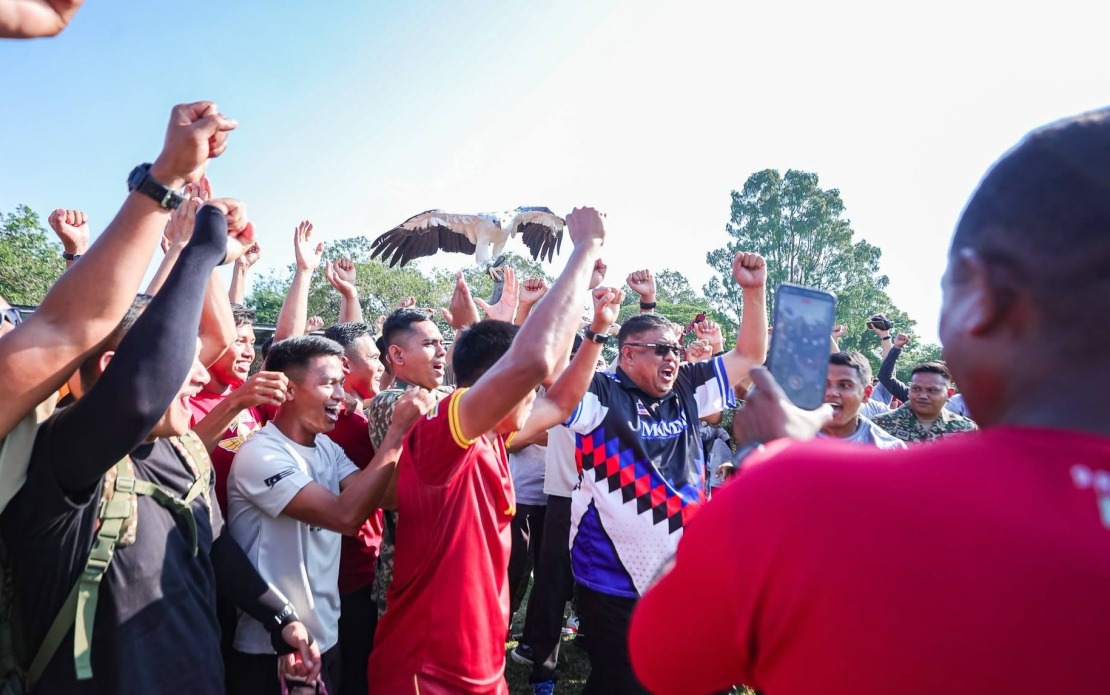
The announcement of the RM1 million allocation follows an official ceremony at Terendak Camp attended by high-ranking military officials, including Deputy Army Chief Lieutenant General Datuk Mohamad Suria Mohamad Saad and multiple divisional commanders. This high-level attendance signals the defence establishment's support for the initiative and reinforces commitment to resolving the water crisis. Such cooperation between state civilian authorities and federal military leadership demonstrates the collaborative governance structures necessary when addressing problems affecting military personnel and their families.
Regional observers note that water infrastructure challenges extend beyond Melaka. Throughout Malaysia and Southeast Asia, aging utility systems designed for smaller populations now serve expanded demand. Urban expansion, industrial growth, and rising living standards have strained networks constructed decades ago. Addressing these deficits requires sustained capital investment and technological modernisation. The Melaka government's commitment to both immediate repairs and participation in the longer-term RM40 million project represents recognition that infrastructure renewal demands dual-track approaches combining urgent stabilisation with comprehensive transformation.
The RM40 million water reticulation project scheduled for 2028 completion will constitute a major transformation of water delivery infrastructure at Terendak Camp. This substantial investment reflects the scale of modernisation necessary to bring military facilities into alignment with contemporary standards. The phased approach—immediate repairs followed by comprehensive infrastructure renewal—provides a realistic timeline for institutional transformation while demonstrating responsiveness to current resident needs. Similar strategies may offer useful models for other Malaysian and Southeast Asian jurisdictions facing comparable infrastructure pressures at military and government installations.
Chief Minister Ab Rauf Yusoh's statement emphasised that the state government views resolution of Terendak Camp's water problems as a priority reflecting broader commitment to ensuring all residents throughout Melaka enjoy adequate basic services. The allocation therefore represents not merely a technical fix but a policy signal that state leadership recognises interdependence between civilian and military communities. This inclusive approach to infrastructure development strengthens social cohesion and demonstrates that governance addresses diverse constituent groups equitably.

