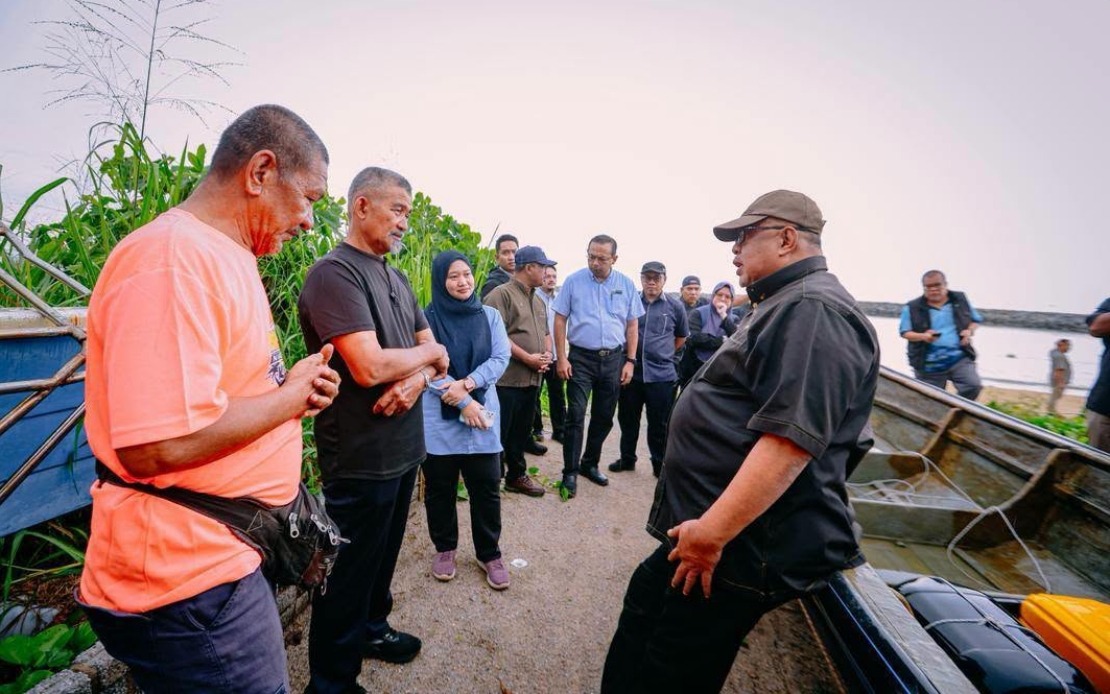
Melaka Chief Minister Datuk Seri Ab Rauf Yusoh has instructed the Public Works Department (JKR) and the Drainage and Irrigation Department (DID) to immediately address pressing concerns affecting the fishing community in Pasir Gembur, Tanjung Bidara. The directive follows an on-site inspection where Ab Rauf met directly with residents and fishing operators to understand the obstacles preventing the smooth development of a new fishermen's complex in the area.
The visit, conducted in Alor Gajah on July 8, represented more than a ceremonial engagement according to the Chief Minister, who emphasized his intention to translate government commitments into concrete outcomes. Following the inspection, Ab Rauf convened a coordination meeting with relevant agencies, including the Alor Gajah Municipal Council, to evaluate the current state of the fishermen's facility project and chart a path forward that addresses community grievances systematically.
Among the critical tasks assigned, DID has been tasked with conducting a comprehensive feasibility study aimed at determining the viability of deepening the fishing channel that connects Pasir Gembur to Batu Tenggek. This initiative directly responds to operational constraints faced by fishing boat operators navigating the waterway, with improved channel depth expected to enhance accessibility and reduce transit difficulties during varying tidal conditions. The feasibility assessment will evaluate technical requirements, environmental implications, and implementation timelines for this infrastructure enhancement.
JKR simultaneously faces responsibility for identifying and preparing an alternative site for the fishermen's complex that offers superior protection against the dual threats of seawater intrusion and tidal flooding. The current location has evidently proven vulnerable to these environmental hazards during high tide cycles, rendering it unsuitable for permanent commercial fishing infrastructure. By relocating the facility to a more strategically positioned area, authorities aim to safeguard investments in the new complex while ensuring reliable operational conditions for fishing entrepreneurs.
The Melaka administration has additionally imposed regulatory controls over future development within designated coastal zones, announcing that no supplementary private structures will be permitted in wave-breaker areas. This decision reflects an effort to maintain coastal integrity and prevent ad-hoc construction that might compromise flood management or environmental sustainability. The policy establishes clearer boundaries for coastal development and provides predictability for both government planning and private sector stakeholders operating in maritime regions.
Existing and newly-proposed structures within coastal reserve zones must now satisfy formal licensing requirements under state regulations. All such installations require a Temporary Occupation Licence from the Land Administrator, coupled with technical clearance from relevant departments responsible for coastal management and environmental protection. This regulatory framework creates accountability mechanisms while establishing standardized procedures for approving marine-related infrastructure, reducing potential disputes between developers and government authorities.
For the broader Malaysian context, the Melaka government's intervention illustrates how state-level administrations increasingly prioritize direct community engagement when addressing sectoral challenges. The fishing industry remains economically significant across Malaysia's maritime states, generating employment and food security for thousands of households. Infrastructure deficiencies in fishing areas—whether inadequate channel access, flood vulnerability, or substandard facility standards—create compounding difficulties that hinder productivity and discourage investment in the sector.
The emphasis on feasibility studies and alternative site selection suggests a more deliberative approach than rushed infrastructure projects that might replicate existing problems. For Southeast Asian fishing communities confronting similar environmental pressures from climate variability and coastal erosion, the Melaka approach of conducting detailed assessments before major relocations or modifications offers methodological value. Lessons from this initiative could inform how other Malaysian states and regional jurisdictions evaluate fishery-related infrastructure interventions.
Ab Rauf's framing of the directive as implementation of the state government's "Melaka Sayang Rakyat" (Melaka Cares for the People) commitment underscores how political rhetoric increasingly intertwines with material service delivery expectations. The Chief Minister explicitly rejected characterizing the initiative as symbolic, instead highlighting tangible outcomes—specific agency assignments, defined deliverables, timeline expectations—that can be measured against stated objectives. This approach acknowledges growing citizen expectations for governmental accountability beyond ceremonial interactions.
The coordination mechanism established through the multi-agency meeting represents an attempt to address a persistent governance challenge: ensuring integrated action across departments with divergent mandates and priorities. By bringing JKR, DID, municipal authorities, and other stakeholders into synchronized planning, the Melaka government aims to prevent the fragmented implementation that often undermines infrastructure projects in Malaysia. Such integrated approaches require clear leadership, defined responsibilities, and regular progress monitoring—elements explicitly embedded in Ab Rauf's intervention.
For Malaysian fishing communities observing this development, the directive signals receptiveness to their concerns within formal government structures. However, sustained resolution depends on departments meeting assigned deadlines and allocating sufficient resources to complete feasibility studies and site preparation work. The fishing sector's historical experience with delayed infrastructure projects and incomplete initiatives necessitates ongoing scrutiny of implementation progress beyond initial announcements.
The regulatory modifications concerning coastal development and licensing requirements potentially affect multiple stakeholders beyond the immediate Pasir Gembur fishing community, including fish processors, equipment suppliers, and logistics operators functioning in or near coastal reserve zones. Clarity regarding new licensing procedures and timeline requirements would benefit these complementary sectors dependent on functional fishing infrastructure. Government communication strategies should specifically target these stakeholder groups to minimize compliance confusion and operational disruption during the transition period.

