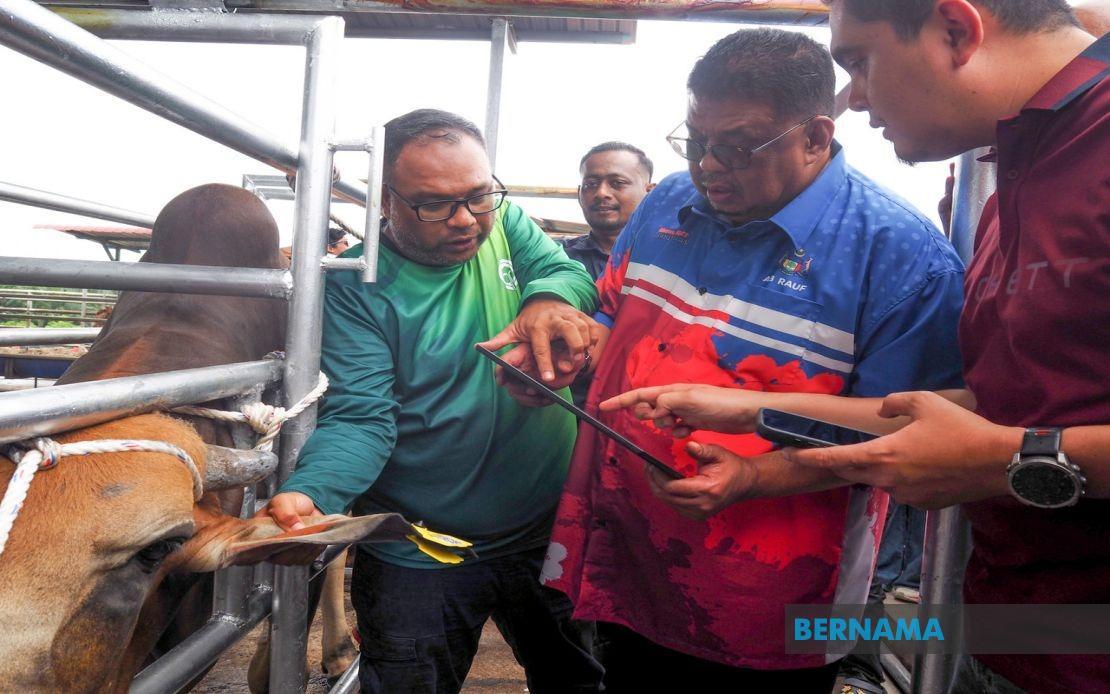
Melaka has rolled out a digital livestock tracking initiative using Quick Response (QR) code tags, a move designed to improve animal management and swiftly identify owners when incidents occur. The state government is bankrolling the RM6.50 installation cost per tag through the end of this year, aiming to drive breeder participation in what officials describe as a cornerstone of their broader digitalisation strategy.
The programme emerges from an initiative championed by Chief Minister Datuk Seri Ab Rauf Yusoh and developed in conjunction with Melaka's Veterinary Services Department. According to Mahathir Mustafa, chief assistant secretary of the Melaka Chief Minister Department's Local Government Unit, the system represents a systematic upgrade in how the state manages its cattle and buffalo population. Each tag contains a unique identification number and QR code, allowing authorities and veterinary staff to access critical farming information by simply scanning the tag with a smartphone.
The technology addresses a genuine public safety concern that has escalated in recent years. Since 2023, Melaka recorded 835 traffic accidents involving livestock alongside more than 50 formal complaints about stray animals roaming residential and commercial areas. These figures underscore the practical urgency behind the scheme—without rapid owner identification, local authorities struggle to hold breeders accountable for animals that pose hazards to road users and community wellbeing. The system transforms what was previously a laborious process into an instantaneous lookup, revealing the breeder's name, premises identification, and farm location.
As of early June, roughly 2,000 livestock had received tags, with state officials setting their sights on eventually covering the entire registered population of approximately 32,000 cattle and buffalo in Melaka. The rollout will expand incrementally, allowing authorities to refine operational procedures and address any technical issues before full-scale deployment. This phased approach reflects pragmatic implementation, ensuring that both breeders and enforcement agencies grow accustomed to the system before broader mandates take effect.
One significant feature of the scheme is its permanence. Once applied, the QR tag remains the animal's official identifier throughout its lifetime and does not require replacement even when ownership changes hands. This continuity streamlines record-keeping and prevents the confusion that arises when livestock documentation lags behind actual ownership transfers. When a breach occurs—when a cow or buffalo is sold or relocated—the new proprietor simply updates their details in the eVetPermit Malaysia system, ensuring that government records reflect current ownership without necessitating physical tag replacement.
The subsidy structure is deliberately front-loaded to maximise early adoption. Breeders who register their livestock with Melaka's Veterinary Services Department during the promotional period receive tags at no cost. Once the subsidy concludes at year-end, replacements or new installations will cost RM5 per animal from 2027 onward, a modest charge designed to sustain the system without creating undue hardship for smallholder operators who form a significant portion of Melaka's livestock sector.
Breeders appear receptive to the initiative, viewing it as a protective measure for their own interests as much as a regulatory compliance tool. A more transparent, digitised livestock sector enhances the state's agricultural reputation and should theoretically reduce frivolous ownership disputes or confusion when animals go missing or are involved in accidents. From the breeders' perspective, rapid owner identification following an incident strengthens their negotiating position with authorities and demonstrates professional stewardship of their operations.
The success of the programme hinges on genuine collaboration between multiple state agencies. The Local Government Unit, Veterinary Services Department, and municipal authorities must coordinate registration drives, troubleshoot technical problems, and enforce compliance. Mahathir emphasised this interdependency, noting that seamless coordination between these bodies is essential for achieving the scheme's objectives. Without buy-in from local councils responsible for animal control and from veterinary staff conducting routine inspections, even the most sophisticated technology platform risks underutilisation.
For Malaysia's wider agricultural and regional context, Melaka's approach offers a template for how Southeast Asian governments might harness relatively low-cost digital tools to strengthen livestock governance. The scheme demonstrates that smart-state ambitions need not be confined to urban infrastructure or digital payments; they can extend into primary sector management. Other Malaysian states and neighbouring countries wrestling with similar stray animal challenges could adapt Melaka's model, perhaps tailoring it to their own livestock compositions and regulatory frameworks.
The initiative also reveals the state government's willingness to absorb upfront technology costs as an investment in public safety and sector modernisation. By subsidising tags initially, Melaka reduces barriers to participation that might otherwise discourage compliance among resource-constrained breeders, thereby broadening the system's reach and effectiveness. This pragmatic cost-sharing approach—public funding for the digital infrastructure that benefits collective safety, with long-term individual responsibility—balances equity with sustainability.
The broader digitalisation agenda matters too. Melaka's aspiration to become a smart and livable state encompasses multiple initiatives beyond livestock monitoring. Each successful deployment of digital systems in unglamorous but essential service areas builds institutional capacity and public trust in technology-driven governance. A farmer who appreciates how QR tags solve a practical problem becomes more receptive to other digital services the state might introduce.
As Melaka expands the QR tag programme over the coming months, officials will gather data on system effectiveness—how quickly owners are contacted following incidents, whether stray animal complaints decline, and whether enforcement actions become more efficient. This real-world feedback will shape programme refinements and inform decisions about extending the approach to other animal categories or sectors. The system's early promise lies not merely in its technological sophistication but in its direct responsiveness to citizen grievances about stray livestock that has accumulated for years.

