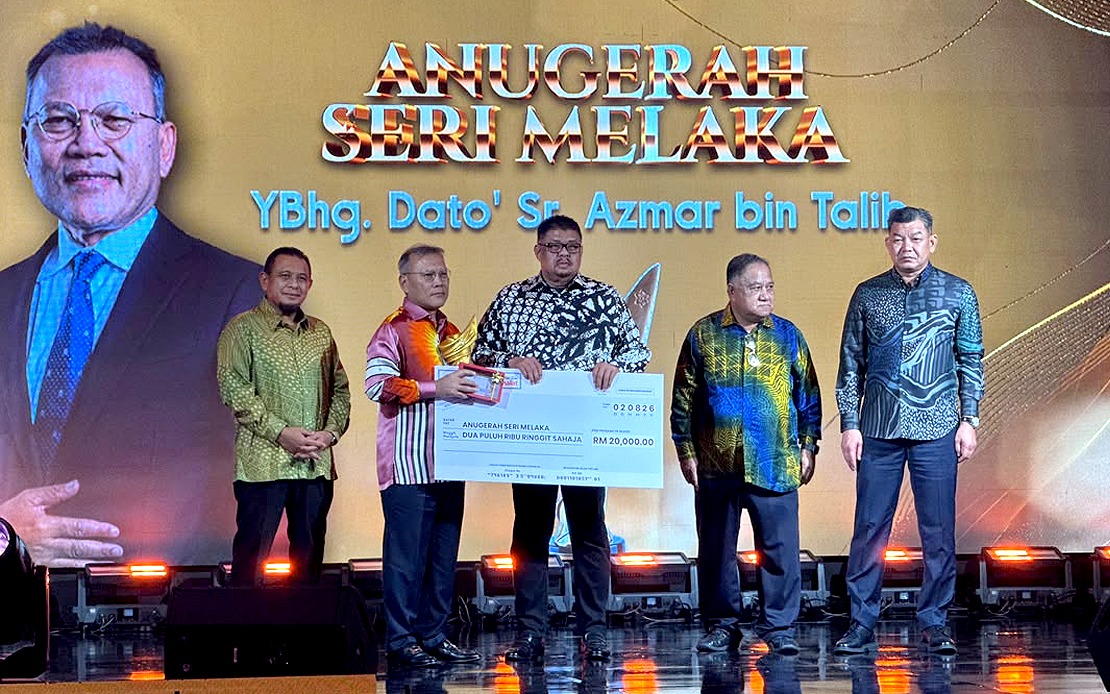
Melaka's Chief Minister Datuk Seri Ab Rauf Yusoh has made an impassioned appeal to the state's accomplished professionals and entrepreneurs, urging them to take on roles as strategic collaborators with the state administration. Speaking at an awards ceremony celebrating excellence, Ab Rauf outlined a vision where Melaka's most successful citizens—drawn from diverse sectors including business, sports, and the arts—would actively contribute to developing the next generation of talent within the state.
The initiative reflects a growing recognition among state leadership that economic and social advancement depends not merely on individual achievement, but on the deliberate transfer of knowledge and opportunity across generations. Rather than allowing accomplishments to remain isolated personal victories, the Melaka state government seeks to transform such successes into collective resources that benefit the broader population. This approach acknowledges that networks, insider knowledge, and professional connections accumulated by high-achievers represent valuable assets that could be systematically channelled to support emerging talent.
The flagship programme driving this effort is the Melaka Sayang Rakyat (MeSRa) initiative, which aims to document and publicise the stories of accomplished Melakans across various disciplines. By creating a visible repository of local success stories, the scheme intends to inspire residents and demonstrate the calibre of talent that the state can produce. This narrative approach is particularly relevant in regions seeking to build regional competitiveness and retain talented professionals who might otherwise migrate to larger economic hubs like Kuala Lumpur or Singapore.
The centrepiece of the initiative is the Anugerah Seri Melaka (ASM) award scheme, which was formally unveiled at a gala event held at the Melaka International Trade Centre in Ayer Keroh. The awards recognise excellence across four distinct categories: Public Service, Corporate, Sports, and Arts and Culture. This diverse categorisation reflects the government's commitment to acknowledging merit across multiple dimensions of society, rather than concentrating recognition solely on business or political leadership. The breadth of categories signals an understanding that state development requires contributions from varied sectors and professions.
The inaugural awards attracted substantial interest, with organisers receiving more than 200 nominations from across the state. Each nomination, according to Ab Rauf, encapsulated a personal narrative of determination and sacrifice, demonstrating Melaka's capacity to nurture individuals capable of achieving distinction. The volume of applications suggests considerable awareness and engagement with the recognition initiative among the state's professional communities. The award mechanism thus serves a dual function: recognising past achievement while signalling the state government's investment in celebrating and leveraging excellence.
Among those honoured at the ceremony was Datuk Azmar Talib, chief executive officer of TRX City Sdn Bhd, who received the prestigious ASM award and won in the Corporate category. His selection underscores the importance of business leadership within the state's broader development narrative. Aaron Chia, a national badminton competitor, received recognition for the Sports category, highlighting Melaka's contribution to Malaysian athletic achievement. Performing arts director Lokman Abd Ghani was recognised in the Arts and Culture category, while Datuk Zamri Misman, director-general of the Legal Affairs Division at the Prime Minister's Department, received recognition for his public service contributions. Additionally, Dr Saiful Anuar Singar, an international medical science researcher, was awarded the Special Category honour, signalling the government's desire to celebrate contributions to global knowledge and scientific advancement.
The monetary incentives attached to the awards reflect the government's commitment to making the recognition meaningful beyond symbolic acknowledgment. Recipients of the special ASM award received RM20,000 in cash alongside a trophy, while category winners received RM10,000 and recognition. These financial components, whilst modest, demonstrate tangible state investment in honouring excellence and potentially supporting award recipients' continued professional development or charitable endeavours.
For Malaysian observers, this initiative illustrates a broader trend among state governments attempting to strengthen regional competitiveness through deliberate talent cultivation and retention strategies. As states compete for investment, skilled professionals, and productive capacity, recognising and leveraging existing excellence has become a standard governance practice. Melaka's approach parallels similar initiatives in other Malaysian states seeking to build distinctive economic identities and retain accomplished residents.
The underlying philosophy assumes that formal recognition, combined with explicit calls for mentorship and knowledge-sharing, can catalyse a culture of continuous improvement and mutual support within professional communities. If successfully implemented, such initiatives could strengthen intergenerational knowledge transfer, particularly in sectors where tacit understanding and professional networks carry substantial value. The effectiveness will depend on whether award recipients genuinely engage in mentoring relationships and whether the government creates institutional pathways enabling such collaboration.
The initiative also reflects current policy thinking emphasising human capital development as essential to inclusive prosperity. By attempting to systematise the relationship between accomplished individuals and emerging talent, Melaka's government positions itself as an active facilitator of meritocratic advancement rather than a passive administrator. This positioning may resonate with voters and professionals who value recognition of excellence and support for capability-building among younger generations.
However, critics might question whether voluntary partnerships and recognition awards alone sufficiently incentivise busy professionals to dedicate meaningful time to mentoring. The scheme's success will ultimately depend on the depth and sustainability of engagement from recognised achievers, alongside the government's capacity to create structured opportunities for mentorship relationships to flourish beyond ceremonial recognition. Additionally, ensuring equitable representation among awardees—particularly regarding gender, ethnic composition, and geographic distribution across the state—will remain important for maintaining public confidence in the process.

