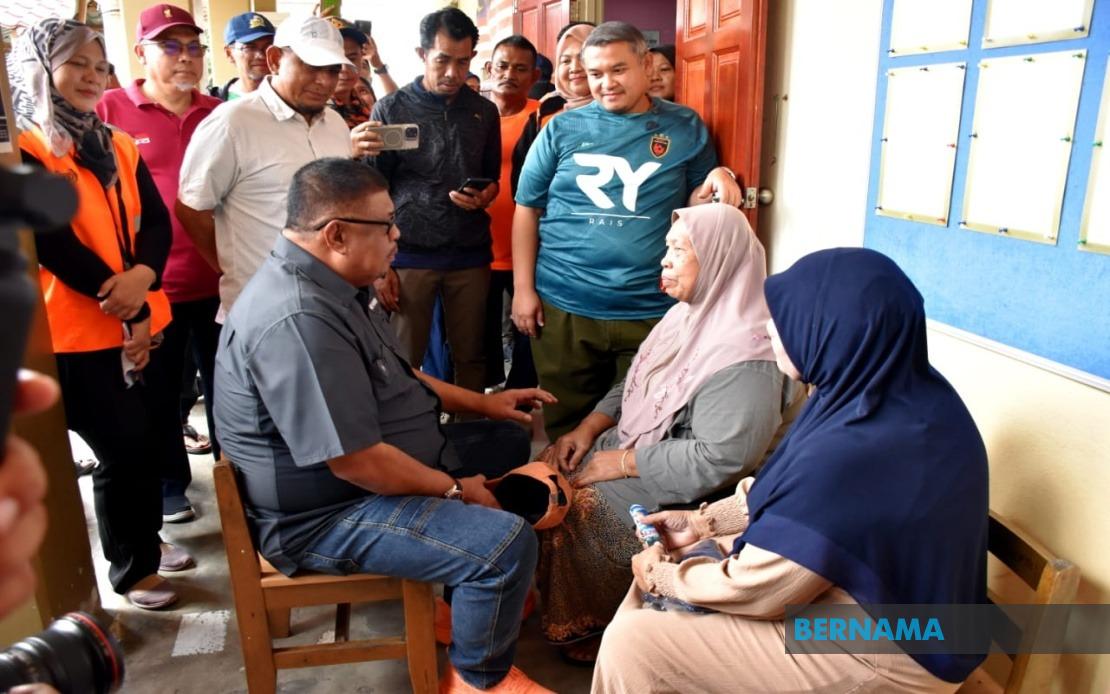
Melaka Chief Minister Datuk Seri Ab Rauf Yusoh has declared his administration's determination to tackle the flooding catastrophe that has beleaguered Tanjung Minyak for more than 30 years, following a visit to relief centres sheltering hundreds of displaced residents. The commitment comes as the state grapples with the aftermath of exceptionally intense rainfall that overwhelmed existing water management infrastructure and forced nearly 1,000 people from approximately 300 families into temporary shelters across multiple locations.
The Melaka leadership intends to conduct a thorough examination of all proposals and technical recommendations submitted by concerned government agencies, with the explicit goal of identifying sustainable, long-term interventions that can finally break the cycle of recurring inundation. This move signals a shift toward comprehensive planning rather than reactive emergency responses, acknowledging that piecemeal approaches over the past three decades have failed to provide lasting relief to residents repeatedly caught in destructive flood events.
During his visit to Sekolah Kebangsaan Tanjung Minyak 2, where evacuees were being accommodated, Ab Rauf articulated the state's commitment to evaluating methodologies and technical suggestions from relevant agencies with the explicit aim of mitigating the severe impact of intense precipitation events on the area. He stressed that immediate priority lies in determining the most effective pathway forward for a locality that has endured prolonged suffering, emphasizing that the state government recognises both the urgency of the situation and the frustration of residents facing repeated displacement.
Accompanying the Chief Minister were state Senior Housing, Local Government, Drainage, Climate Change and Disaster Management Committee chairman Datuk Rais Yasin and Melaka Social Welfare Department director Halyjah Muhamad, reflecting the multi-agency approach required to address such a complex infrastructure and planning challenge. The presence of senior officials across different portfolios underscores recognition that flooding solutions require coordinated effort spanning drainage systems, urban planning, climate resilience, and social support mechanisms.
The triggering event for this latest crisis was rainfall of unprecedented intensity for the region, with precipitation levels exceeding norms documented over the preceding two decades, causing drainage and retention systems to discharge far beyond their designed capacity into surrounding residential zones. According to the Melaka Irrigation and Drainage Department director Mohd Adnan Ahmad Fauzi, the accumulated rainfall surpassed 100 millimetres across both Melaka Tengah and Alor Gajah districts by mid-afternoon, exceeding even the severe precipitation recorded during Tropical Storm Senyar in late 2023.
This latest deluge highlights a fundamental vulnerability in the state's water management infrastructure, with systems apparently calibrated for historical rainfall patterns that no longer reflect contemporary climate realities. The fact that current precipitation extremes now exceed those witnessed during a named tropical storm suggests either that infrastructure standards have become inadequate, or that climate patterns themselves are shifting in ways that demand reassessment of drainage capacity and urban planning approaches.
The state government has mobilised comprehensive support mechanisms to assist affected families, with the District Office coordinating immediate relief whilst the broader state administration channels assistance through established welfare channels. Officials have placed all relevant agencies on heightened alert status to ensure rapid deployment of resources and personnel to affected communities, reflecting lessons learned from earlier flood episodes where response delays compounded suffering.
The welfare of evacuees remains a stated priority for the administration, with guarantees that government support will continue until normalcy returns to flood-affected areas. This commitment extends beyond the provision of temporary shelter to encompassing food provision, medical attention, and coordination of recovery assistance, recognising that families displaced from their homes face cascading challenges affecting employment, education, and household stability.
For Melaka residents and observers across Southeast Asia, the Tanjung Minyak situation represents a broader challenge confronting the region as climate variability intensifies. The state's willingness to fundamentally reassess 30 years of accumulated policy responses suggests recognition that incremental adjustments to existing infrastructure may prove insufficient against emerging climate pressures, a lesson potentially applicable to flood-prone communities across Malaysia and the wider region facing similar intensifying precipitation events.
The resolution of Tanjung Minyak's chronic flooding will likely require solutions spanning infrastructure modernisation, potentially including expanded drainage capacity, retention pond systems, or modified urban planning approaches to reduce runoff into residential zones. Such interventions typically demand substantial capital investment and complex coordination across multiple government departments, suggesting that meaningful progress may unfold gradually despite the urgency residents understandably feel after experiencing repeated cycles of destruction.

