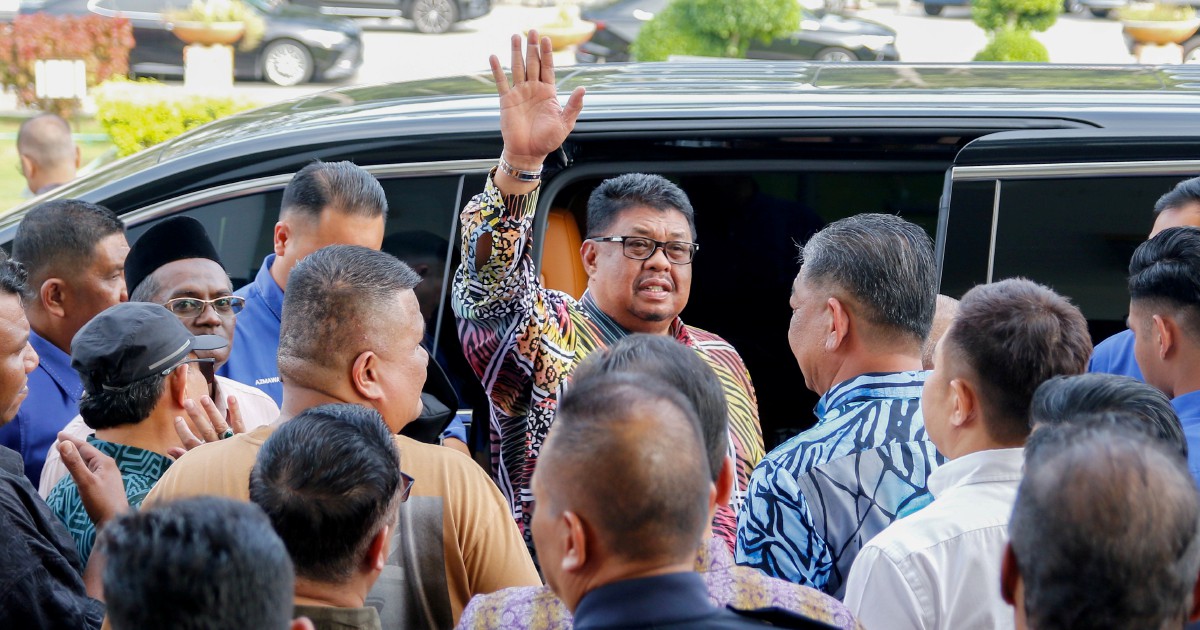
Melaka Barisan Nasional is proving an irresistible prospect for multiple political suitors, according to the coalition's state chairman Datuk Seri Ab Rauf Yusoh, who employed a distinctly romantic metaphor to characterise the relationship dynamics ahead of the state's impending election. Speaking in Ayer Keroh, Ab Rauf likened his coalition to a 'beautiful maiden' commanding the attention of rival political blocs, each seeking to negotiate cooperative arrangements that might strengthen their competitive position when voters go to the polls.
The remark speaks to a broader realignment of Malaysian politics at the state level, where single-party dominance has given way to more fluid coalition-building and strategic partnerships. Melaka, a state with a complex recent political history marked by shifting allegiances and coalition changes, appears to be emerging as a crucial battleground where multiple factions are jostling for advantage. The incoming election represents a significant opportunity for various groups to either consolidate control or challenge incumbent arrangements.
BN's position as a sought-after coalition partner reflects its continued organisational reach and electoral machinery across Malaysia's states, despite national political uncertainties. The coalition's presence in Melaka provides legitimacy and infrastructure that newer or less-established groupings may lack. For smaller parties or emerging political movements, alignment with BN—or conversely, positioning themselves as a credible alternative—represents a strategic calculation about which political framework offers the best path to influence and representation.
The description of BN as attractive to multiple suitors also underscores the transactional nature of contemporary Malaysian coalition politics. Rather than viewing political cooperation as ideologically determined or permanently settled, state-level partnerships increasingly reflect pragmatic assessments of electoral mathematics and the distribution of parliamentary or state assembly seats. Parties approach these negotiations with clear-eyed calculations about how many seats they might win, what ministerial positions might be available, and how their standing might evolve after an election.
Melaka's particular political configuration adds layers of complexity to these negotiations. The state has experienced several changes of government in recent years, including episodes of political instability and shifting parliamentary majorities. This history makes current coalition overtures particularly significant: groups are attempting to secure arrangements that might prove more durable and electorally resilient than previous partnerships. Ab Rauf's comments suggest BN believes it holds advantageous cards in these negotiations, though the ultimate outcome will depend on how other parties evaluate their own competitive positions.
For Malaysian voters in Melaka, these behind-the-scenes coalition discussions have direct implications for governance and representation. The particular alliances formed before an election often determine which parties hold ministerial portfolios, how resources are distributed, and which communities and constituencies receive priority attention. Coalition arrangements can also affect policy priorities, with some agreements bringing environmental or social concerns to the forefront while others emphasise economic development or religious issues.
Regionally, Melaka's political developments carry significance beyond the state's boundaries. As one of Malaysia's most urbanised and economically important states, Melaka frequently serves as a bellwether for broader political trends. Coalition patterns emerging in Melaka often presage similar arrangements in other states, and successful models may be replicated elsewhere. The state's role in national coalition mathematics—particularly its contribution to federal parliamentary numbers—also gives its election consequences that ripple through to the federal level.
The language Ab Rauf employed, whilst light in tone, reflects substantive political reality. BN's attractiveness stems from tangible assets: established party structures, administrative experience, financial resources, and existing government relationships. Other coalitions recognise that cooperating with or incorporating BN components might enhance their own electoral prospects. Conversely, parties within BN must consider whether maintaining coalition unity serves their interests better than pursuing alternative alignments.
These negotiations typically occur across multiple channels, from formal party congresses to informal meetings between senior leaders. Discussions about seat allocations, candidate selections, and policy platforms occur simultaneously, with progress on one front influencing movement on others. The public comments by figures like Ab Rauf serve partly to establish negotiating positions, signalling confidence and desirability to potential partners while also managing expectations among BN's own members and supporters.
The upcoming Melaka election will ultimately test how successfully these coalition-building efforts translate into actual political outcomes. Voter preferences may confound elite expectations, or campaigns may shift the salience of particular issues in ways that reshape coalition dynamics. Nevertheless, the current manoeuvrings among various political groupings demonstrate that Malaysia's electoral politics, particularly at the state level, remains highly dynamic and strategically fluid.
As these negotiations progress toward the election itself, clarity will emerge about which coalitions have successfully formulated arrangements, and which have struggled to align their various components. Ab Rauf's description of BN as a 'beautiful maiden' with admirers captures an important moment in Melaka's political cycle—one where established players maintain influence whilst the shape of future governance arrangements remains contested and uncertain.

