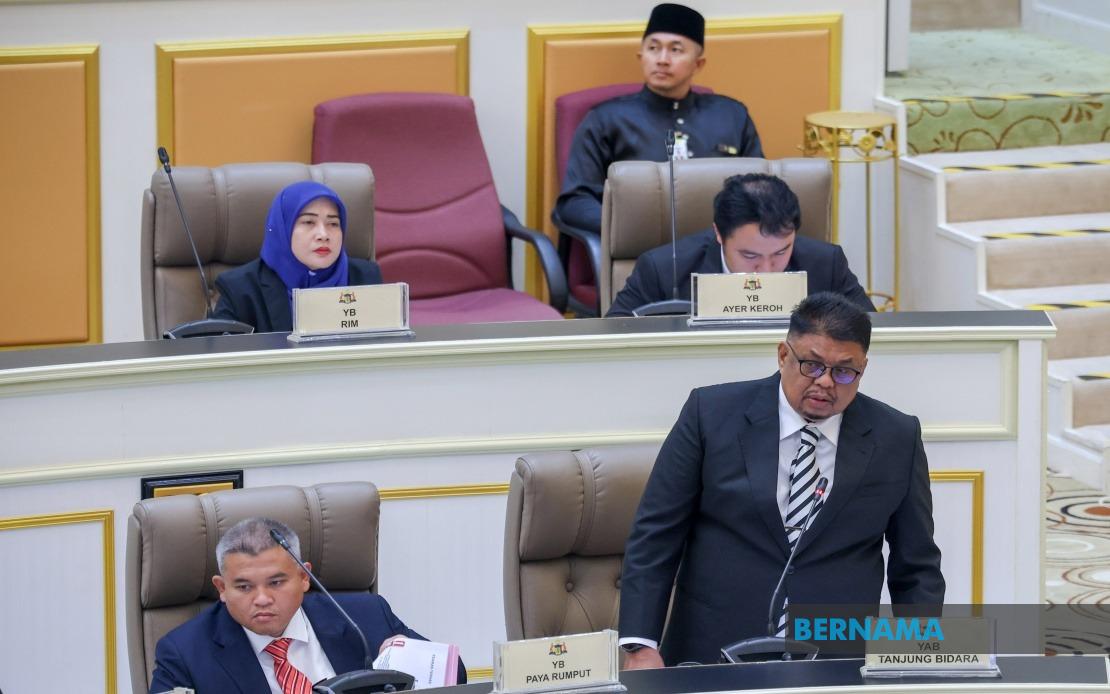
Melaka's State Legislative Assembly has endorsed a significant constitutional amendment to enable the government to nominate up to seven state assemblymen, marking a departure from the purely electoral system that has previously defined the chamber's composition. The Melaka State Constitution (Amendment) Bill 2026 secured comfortable approval on July 14, with 23 legislators voting in favour against five dissenting votes, demonstrating broad consensus for the institutional change across the political spectrum.
Chief Minister Datuk Seri Ab Rauf Yusoh championed the measure, framing it as a mechanism to enhance the quality and calibre of state governance. By permitting the appointment of specialists and experienced professionals, the administration argues the assembly can benefit from expertise in critical domains including law, economics, education, technology, and investment—areas where electoral representation alone may not consistently deliver the required competency. This vision extends beyond mere technical know-how, addressing what policymakers perceive as a structural gap in legislative capacity.
The amendment responds to longstanding concerns about legislative bodies' ability to retain highly qualified individuals who may struggle to win elective office despite possessing substantial professional credentials. Ab Rauf emphasized that the reform creates pathways for groups historically underrepresented in electoral contests, including women, younger professionals, Orang Asli communities, and ethnic minorities. Rather than viewing appointed positions as bypassing democratic principles, the government frames them as supplementary measures that broaden the pool of contributors to state development beyond traditional electoral mechanics.
Advocates contend that appointed members would strengthen institutional checks and balances by offering perspectives less bound by constituency considerations. These individuals could theoretically engage in more evidence-based, technical analysis of legislative proposals and administrative performance, elevating debate quality above purely partisan considerations. The government expects such appointments to introduce professional rigour to committee work and policy scrutiny, lending objectivity to discussions affecting the state's economic and social frameworks.
Support transcended partisan divides, with Melaka Opposition Leader Dr Mohd Yadzil Yaakub endorsing the concept during legislative debate. He drew parallels to federal-level practice, noting that Dewan Negara appointments have historically accommodated accomplished individuals with demonstrated contributions to national progress. This cross-party acceptance suggests the measure reflects pragmatic consensus rather than ideological contention, though opposition members underscored the critical importance of transparent, merit-based selection processes insulated from patronage considerations.
The constitutional amendment fulfils a commitment contained in Barisan Nasional's 2021 Melaka election manifesto, specifically within its pledge to promote political stability and mature democratic governance. This timing indicates the provision has undergone several years of consideration, suggesting it represents considered institutional evolution rather than reactive improvisation. The delay between pledge and enactment allows for refinement of selection frameworks and safeguards.
Implementation mechanics remain crucial to the reform's legitimacy and effectiveness. Transparent appointment criteria and oversight mechanisms will determine whether nominated assemblymen genuinely contribute specialized knowledge or become vehicles for political patronage disguised as meritocracy. The Opposition's conditional support explicitly hinged upon proper implementation through transparent processes prioritizing public interest, signalling that how the government executes the amendment will attract scrutiny from both within and outside the legislature.
For Malaysia's broader governance landscape, Melaka's initiative represents a cautious experiment in hybrid legislative composition, blending electoral accountability with appointed expertise. Similar models exist internationally—Singapore's Parliament incorporates non-constituency members, while numerous Westminster-derived systems employ appointed upper chambers or co-opted committee members. Whether Malaysia's states gradually adopt comparable mechanisms could influence federal constitutional discussions, particularly if Melaka's experience demonstrates measurable improvements in legislative deliberation quality.
The amendment raises questions about representation and democratic principle that extend beyond Melaka's borders. While specialized expertise undoubtedly strengthens governance, appointed positions inherently reduce direct voter influence over assembly composition. This tension between democratic accountability and technocratic competence remains philosophically unresolved, even as practical necessity pushes jurisdictions toward hybrid solutions. Malaysian stakeholders will monitor whether the system produces the claimed benefits without creating a secondary legislature insulated from popular pressure.
Regional implications merit consideration as well. Southeast Asian legislatures frequently struggle with capacity constraints and limited institutional expertise, particularly regarding complex policy domains. Should Melaka's experiment succeed in demonstrating tangible governance improvements, other Malaysian states and regional governments facing similar capacity challenges might emulate the model. Conversely, if implementation proves subject to political manipulation or fails to deliver promised analytical contributions, it could discredit appointed legislative mechanisms across the region.
The coming years will prove revealing as Melaka's government names its first appointed assemblymen. Selection criteria, nominee credentials, and their actual legislative contributions will determine whether this constitutional change represents genuine institutional improvement or becomes another mechanism for political reward allocation. The Opposition's explicit conditions—transparency, merit-focus, and genuine public benefit—establish benchmarks against which the reform will be measured, making implementation integrity paramount to its long-term viability and potential regional adoption.

