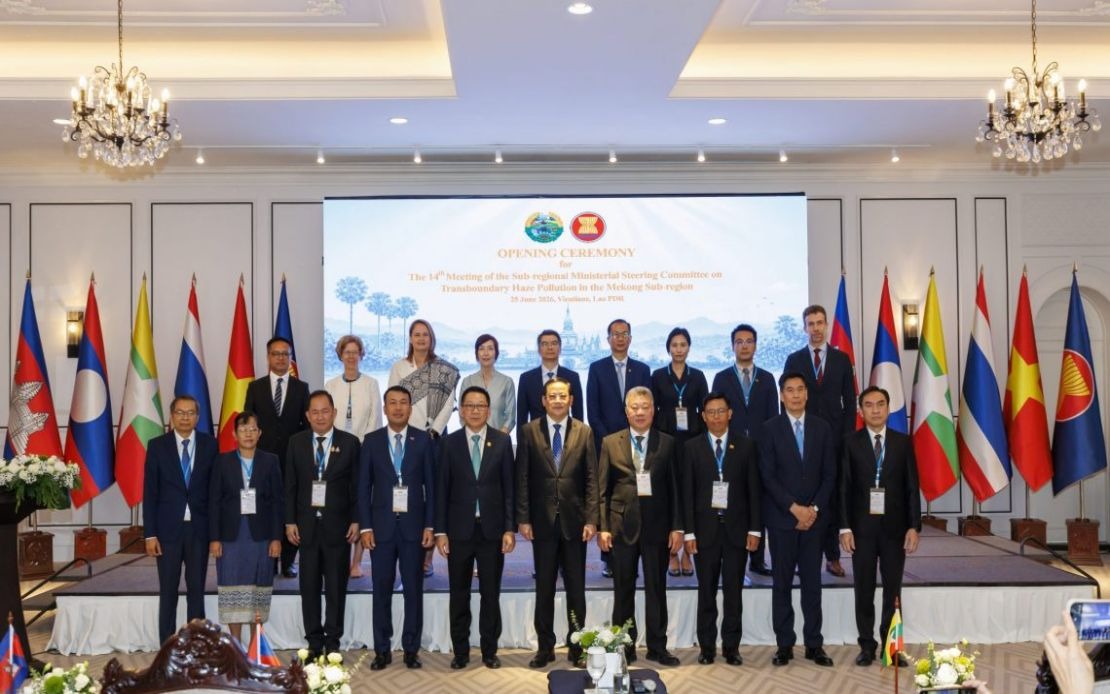
Authorities across Southeast Asia are bracing for a critical period ahead as climate conditions converge to create heightened wildfire risks throughout the Mekong subregion. The convergence of soaring temperatures, the looming influence of El Niño weather patterns, and seasonal dry conditions has triggered urgent cross-border coordination among governments determined to prevent a repeat of previous transboundary haze episodes that have devastated the region's air quality and economy.
The alarm bells are ringing particularly loudly in major metropolitan areas. Bangkok continues to endure oppressive heat, while Ho Chi Minh City faces an unusual combination of extreme temperatures despite technically being in the rainy season. These unusual weather patterns, driven by climate change and El Niño effects, underscore how traditional seasonal expectations no longer apply reliably across the region. Weather scientists have begun raising the prospect of a potential Super El Niño event materializing this year, which would amplify drought conditions and fire risks substantially.
Lao Prime Minister Sonexay Siphandone highlighted the severity of the situation during the 14th Meeting of the Sub-Regional Ministerial Steering Committee on Transboundary Haze Pollution, held June 25 in Vientiane. He emphasized that forest fires and air pollution have evolved into existential challenges for the Greater Mekong Subregion, destroying biodiversity, undermining public health outcomes, and inflicting measurable economic losses across multiple sectors. The warnings reflect decades of experience with haze crises that have previously blanketed the region in hazardous smoke and forced school closures and health emergencies.
The data provides concrete justification for the heightened concern. Between December 2025 and May 2026, fire hotspots across the region increased by approximately eight percent compared to the equivalent period in the previous year. While this might appear a modest increase statistically, it represents a concerning upward trajectory precisely as seasonal risk factors are intensifying. The Lao Ministry of Agriculture and Environment has issued its own forecasts predicting temperatures in certain areas could reach between 35 and 38 degrees Celsius, with unpredictable rainfall patterns, extended dry periods, and declining water levels in various localities.
These meteorological projections carry profound implications for agricultural production across one of Asia's most food-vulnerable regions. Drought conditions, water shortages, and the cascade of forest fires that typically accompany such climatic stress pose existential threats to livestock populations and crop yields. For rural communities throughout Laos, Cambodia, Thailand, and Myanmar whose livelihoods depend directly on agricultural output, such disruptions translate into immediate economic hardship. The regional economy as a whole faces spillover effects through reduced food supply, inflated commodity prices, and the costs of managing environmental emergencies.
The response from ASEAN member states demonstrates recognition of the interconnected nature of the crisis. Rather than treating transboundary haze as an isolated national problem, governments have committed to collaborative frameworks for reducing fire hotspots and controlling air pollution specifically during the dry seasons when risk concentrates. This represents a meaningful evolution from earlier decades when transboundary pollution was often treated as an external irritant rather than a shared environmental challenge requiring unified action. The ministerial steering committee structure provides institutional machinery for coordination and accountability.
Yet translating commitments into tangible results remains the persistent challenge. Previous pledges have occasionally faltered when implementation costs proved substantial or when political priorities shifted. Agricultural interests, logging operations, and development pressures continue generating incentives for land clearing and burning practices that contribute to haze formation. The difference today is that climate change is amplifying the consequences of these activities, making the economic case for prevention increasingly compelling.
For Malaysian readers, the relevance extends beyond academic interest in regional affairs. Malaysia has historically experienced significant transboundary haze impact, with Indonesian peatland fires in previous years creating hazardous air quality episodes that affected millions of Malaysians and disrupted economic activity across the peninsula. The Mekong region's intensifying fire risk creates potential for haze patterns that could eventually affect Malaysia, particularly if prevailing winds shift. Regional stability in environmental terms translates into direct implications for Malaysian public health and economic productivity.
The approaching monsoon season typically brings moisture that reduces fire risk, but the warnings about irregular rainfall patterns complicate this traditional relief mechanism. Scientists caution that even as the calendar moves toward seasons historically associated with increased precipitation, climate change is creating conditions where rainfall becomes unpredictable, concentrated in intense downpours separated by extended dry periods rather than sustained moisture. This volatility removes the safety net that seasonal transitions have historically provided.
Governments are implementing immediate measures aimed at hotspot reduction and early detection systems. Enhanced monitoring capabilities, rapid response protocols, and cross-border information sharing represent concrete steps beyond rhetorical commitments. Thailand, Laos, Cambodia, and Vietnam have strengthened coordination mechanisms with dedicated personnel focused on fire prevention during high-risk periods. These institutional investments suggest seriousness, though their effectiveness ultimately depends on adequate funding and political will during implementation.
The economic dimension cannot be overstated. Previous haze episodes have cost the region billions in health expenditures, agricultural losses, lost productivity, and environmental remediation. Airlines have faced cancellations, tourism has collapsed, and manufacturing operations have shutdown. Against this historical backdrop, the investment in preventive coordination represents rational economic calculation rather than altruistic environmental stewardship. Preventing haze crises is demonstrably cheaper than managing their consequences.
Looking ahead, the critical window extends from late 2025 through mid-2026 as seasonal dynamics and El Niño effects overlap. The effectiveness of current coordinated efforts will likely determine whether the region experiences another severe transboundary haze episode or whether enhanced cooperation successfully contains fire risks. The stakes encompass not merely environmental protection but fundamental stability across one of Asia's most economically dynamic regions.

