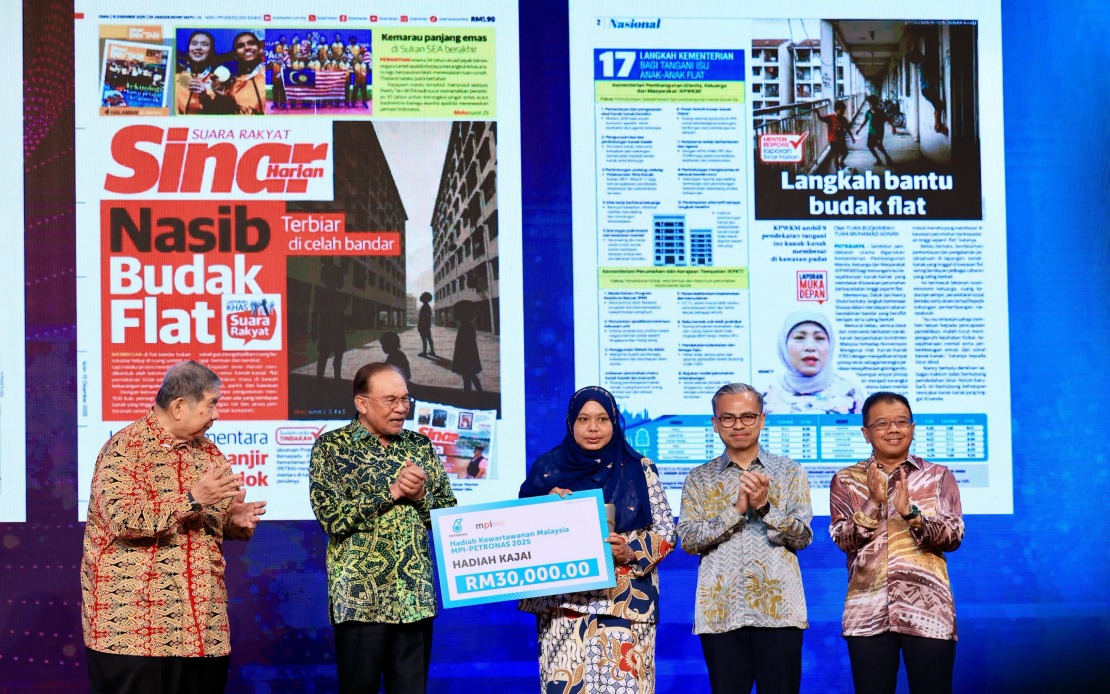
Malaysia's Communications Minister Datuk Seri Fahmi Fadzil has reaffirmed the foundational role that ethical journalism and press independence play in sustaining democratic institutions and fostering an informed citizenry. Speaking at a major industry gathering, Fahmi highlighted how media practitioners serve as essential custodians of public trust, particularly as societies grapple with an unprecedented proliferation of information sources and the attendant risks of deliberate falsehoods.
The minister's remarks came during an address at the Malaysian Journalists' Night 2026, an annual convocation that brings together approximately 1,000 media professionals, government officials, and business leaders. The occasion marked the presentation of the MPI-PETRONAS Malaysian Journalism Awards 2025, a recognition programme designed to celebrate journalistic excellence and acknowledge the contributions of individuals who have advanced the profession's standards and impact. Prime Minister Datuk Seri Anwar Ibrahim accompanied Fahmi to the event, underscoring the government's commitment to recognising the media sector's strategic importance.
Fahmi's emphasis on ethical and independent reporting addresses a concern that resonates across Southeast Asia and globally. The proliferation of digital platforms has democratised information dissemination but simultaneously created an environment where misinformation spreads with remarkable speed and reach. Responsible journalism serves as a bulwark against this trend, providing citizens with verified facts and contextualised reporting that enables informed decision-making. In the Malaysian context, where diverse communities rely on accurate information to navigate complex social and political landscapes, the role of principled media practitioners becomes even more pronounced.
The Communications Minister explicitly acknowledged the dedication of journalists and editors who continue to prioritise accuracy and public interest despite mounting pressures and challenges. His message sought to reinforce professional standards at a moment when media organisations worldwide face economic pressures that sometimes incentivise sensationalism over substance. By publicly commending those who maintain integrity, Fahmi signalled government recognition of the sometimes-thankless work undertaken by journalists committed to their craft's ethical foundations.
The Malaysian Journalists' Night functions as more than a celebratory occasion. Organised annually by the Malaysian Press Institute, the gathering serves as a strategic platform for strengthening relationships between the media industry, government agencies, corporate entities, and educational institutions. These connections facilitate dialogue on pressing issues affecting journalism and media development, enabling stakeholders to align on common goals such as combating disinformation and protecting press freedom. The diversity of attendees—spanning government representatives, business leaders, and academics—reflects the interconnected nature of media's role within broader institutional ecosystems.
The awards programme component carries particular significance within Malaysia's media landscape. Recognition of excellence in journalism through structured, competitive awards programmes encourages newsrooms to maintain high editorial standards and invest in investigative reporting and quality journalism. The MPI-PETRONAS Malaysian Journalism Awards 2025 serves this purpose, acknowledging individual and institutional achievements while simultaneously establishing benchmarks that elevate sector-wide expectations.
For Malaysian and Southeast Asian readers, Fahmi's message underscores a fundamental democratic principle: functioning democracies require functioning free press. Across the region, media organisations operate in varying degrees of freedom and face distinct challenges ranging from economic sustainability to political pressure. Malaysia's experience reflects broader regional patterns, where digital transformation has disrupted traditional business models while creating new opportunities for citizen engagement and accountability journalism.
The timing of Fahmi's remarks also carries contextual weight. The global information environment remains contested, with state and non-state actors deploying sophisticated disinformation campaigns. Developing economies in particular face challenges from foreign interference in information ecosystems, making locally-based, professionally-managed journalism increasingly valuable. Malaysian media practitioners operating within this complex environment perform functions that transcend commercial considerations—they contribute to national resilience and democratic stability.
Looking forward, Fahmi's emphasis on integrity and truth-telling suggests a government stance supportive of press professionalism, even as specific editorial decisions inevitably generate controversy. This approach reflects international best practices in media relations, where governments recognise that credible, independent journalism ultimately serves public interests that align with stable governance. The Communications Ministry's visible support for journalistic excellence through public recognition sends signals to newsrooms about institutional expectations and values.
For media organisations grappling with sustainability challenges and audience fragmentation, the recognition and support articulated by government leaders can provide both moral encouragement and policy tailwinds. Whether through regulatory frameworks protecting editorial independence, tax treatments favouring quality journalism, or simply public acknowledgment of professional contributions, government positioning matters for the health of media ecosystems.
The broader implication of Fahmi's statement extends beyond Malaysia. Throughout Southeast Asia, media sectors are navigating similar pressures—digital disruption, economic uncertainty, and political sensitivities. Countries examining how to strengthen democratic institutions while managing information governance challenges can learn from Malaysia's approach of publicly championing ethical journalism as a democratic necessity rather than an obstacle to government communication.
Ultimately, Fahmi's remarks reflect a recognition that in complex modern democracies, institutional trust depends substantially on media credibility. As Malaysian society continues evolving and citizens encounter increasingly sophisticated information technologies, the foundational principles of verification, context, and ethical reporting become more rather than less important. The Communications Minister's public affirmation of these principles contributes to an environment where journalism as a profession is valued not merely as an industry but as a democratic institution worthy of support and protection.

