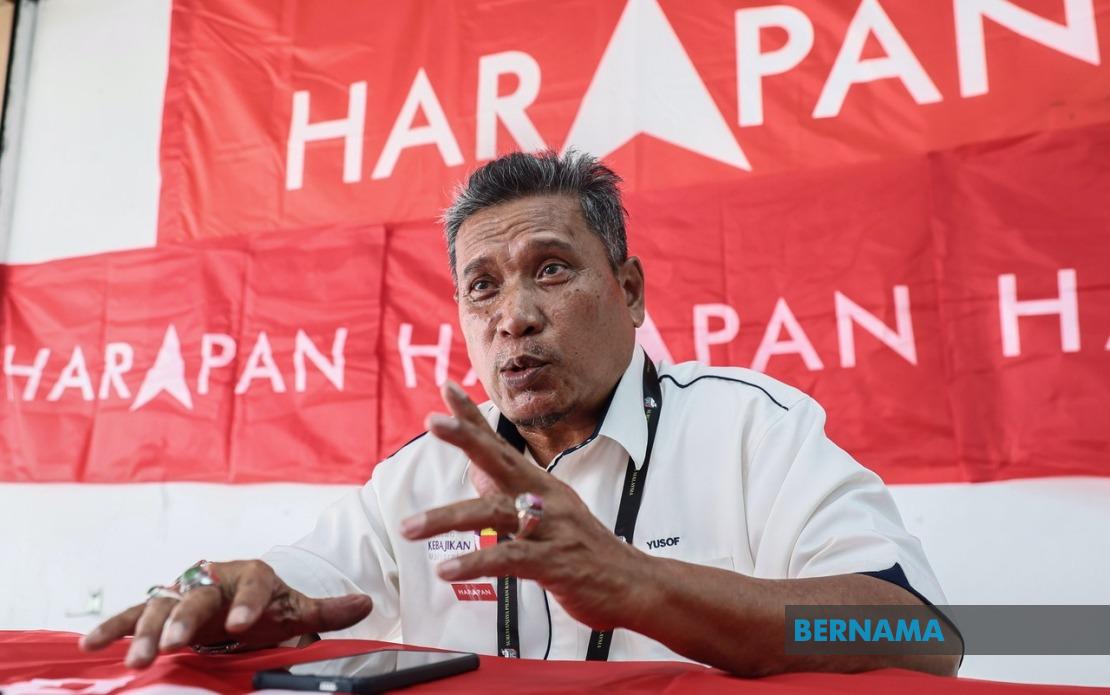
The Tenggaroh state seat race in Johor's upcoming election showcases the evolving challenges facing Federal Land Development Authority (Felda) communities across Malaysia. Pakatan Harapan candidate Md Yusof Dawam, a 64-year-old former educator, has positioned his campaign around addressing the systemic problems that have plagued the settlement scheme for decades, particularly the migration of younger residents seeking better opportunities in urban centres. His platform reflects a broader recognition within the opposition coalition that Felda settlements require targeted, modernised intervention rather than the status quo approaches of previous decades.
The absence of structured housing provisions for children of original settlers represents a fundamental flaw in Felda's long-term sustainability model, according to Md Yusof's analysis. During his campaign interactions across Tenggaroh, he has encountered a recurring grievance: families unable to afford independent accommodation are forced into multigenerational living arrangements, creating psychological and social pressures that drive younger people away from the settlement. This phenomenon threatens not only the demographic viability of Felda communities but also the continuity of agricultural operations that were originally intended to pass through family lines. Md Yusof proposes reserving 10 to 20 acres within the Tenggaroh scheme specifically for second-generation settlement development, with comprehensive planning that would ensure orderly expansion aligned with settler aspirations.
Beyond housing, Md Yusof recognises that agricultural retention among younger generations depends partly on whether they perceive genuine economic opportunity within the Felda framework. His proposal to establish dedicated land grants for modern commercial premises addresses the visual and functional stagnation that has characterised retail environments in many Felda schemes since their establishment. The current landscape of aging shop lots discourages both entrepreneurial investment and consumer spending, creating a self-reinforcing cycle of economic stagnation. By introducing the small-town retail concept with contemporary business infrastructure, Md Yusof argues that economic activity would consolidate within the community itself rather than dispersing toward external commercial hubs like Mersing, which lies 70 kilometres away.
The tourism dimension of Md Yusof's platform directly addresses perceived inequities in how external economic activity is distributed within Felda communities. Mersing's nearby islands—Pulau Besar, Pulau Tinggi, and Pulau Aur—have become increasingly attractive to foreign production companies for filming, yet these opportunities generate minimal tangible benefit for local residents. While infrastructure, equipment, and services flow through the islands, the transaction chains typically exclude local entrepreneurs and youth. Md Yusof contends that developing locally-owned tourism and maritime transport enterprises would capture significantly more of the economic value generated by these activities, creating sustainable employment pathways for younger Felda residents who might otherwise abandon the community.
Md Yusof's career trajectory informs his credibility in championing these issues. His 16 years of experience teaching within Felda Nitar provides intimate familiarity with settler family dynamics and the educational aspirations that drive migration patterns. Teachers in rural communities occupy positions of particular trust and visibility, enabling Md Yusof to build what he describes as a personal rapport with residents—a relationship he intends to leverage into political capital. His four decades of residency in Mersing further establishes him as a genuine community member rather than an external politician parachuted into the constituency.
The campaign methodology Md Yusof has adopted reflects a deliberate choice to prioritise depth of engagement over volume of voters reached. By conducting small-group meetings rather than mass rallies, he creates space for dialogue about specific household concerns and community grievances. This approach acknowledges that Felda residents have experienced decades of political promises that either materialised incompletely or failed to address root causes of decline. Restoration of trust requires demonstrating attentive listening and willingness to translate community input into concrete policy proposals rather than generic electoral rhetoric.
The broader political context surrounding Tenggaroh reflects Johor's significance within Malaysian electoral geography. With 172 candidates contesting 56 state seats in the 16th Johor state election, the competition remains intensely contested. Felda constituencies have historically proven unpredictable battlegrounds where grievance levels can rapidly shift voter preferences. Md Yusof's specific focus on tangible settlement-level improvements rather than state-level abstractions aligns with voter priorities in communities where economic hardship and demographic decline pose immediate challenges to family sustainability.
For Malaysian readers assessing regional political developments, Md Yusof's campaign illustrates how opposition parties are increasingly adopting granular, community-specific policy proposals that acknowledge the distinct challenges of agricultural settlements. Rather than treating Felda constituencies as monolithic voting blocs, PH's approach in Tenggaroh demonstrates recognition that settler communities contain diverse interests—agricultural workers, shopkeepers, educators, youth seeking alternatives to farming—that require differentiated policy responses. This sophistication contrasts with earlier electoral cycles when political engagement with Felda communities operated at more generalised levels.
The timing of the election on July 11 introduces urgency into Md Yusof's campaign message. Early voting for security personnel has already commenced, compressing the period available for voter persuasion. His strategy of personal-touch campaigning therefore faces practical time constraints that require efficient identification and mobilisation of persuadable voters. Within Felda constituencies, community leaders, religious figures, and established resident associations often serve as force multipliers for candidates, enabling concentrated messaging to reach family networks and community cells more effectively than blanket media outreach.
Second-generation Felda housing challenges are not unique to Tenggaroh but manifest across Malaysia's numerous Felda schemes with varying intensity. However, the specific geography and economic circumstances of Tenggaroh—its distance from major urban centres, its proximity to coastal tourism assets, its agricultural land base—create a particular constellation of development opportunities that Md Yusof has attempted to tailor to local conditions. This localised policy development represents a maturation of opposition political engagement that moves beyond reactive criticism of incumbent governance toward proactive articulation of alternative development models grounded in specific community realities.
The implications of these proposals extend beyond Tenggaroh itself. Should Md Yusof succeed in securing the seat and subsequently implementing even portions of his development agenda, the outcomes could serve as a model—whether positive or cautionary—for other parties managing Felda constituencies across Malaysia. The success or failure of small-town retail revitalisation, second-generation housing schemes, or tourism enterprise development in one location generates policy lessons with relevance across the broader Felda network. This demonstration-effect dynamic means that individual constituency contests carry implications that extend throughout Malaysia's rural settlement landscape.

