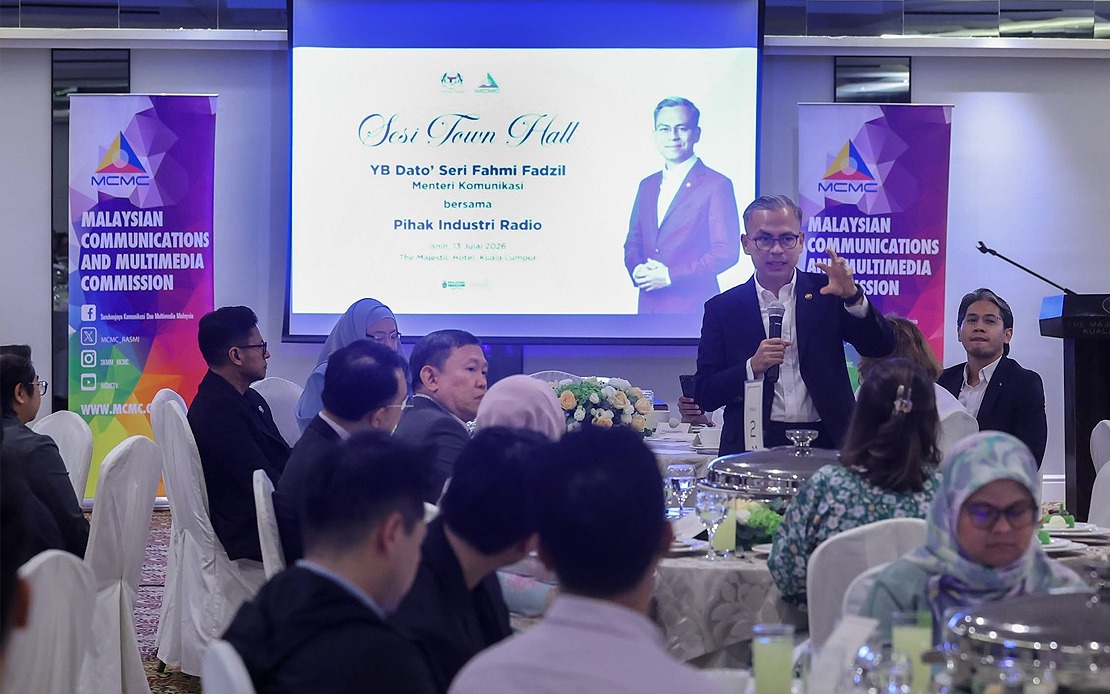
Malaysia's Communications Minister Datuk Seri Fahmi Fadzil has announced that the Malaysian Communications and Multimedia Commission will undertake a comprehensive review of the radio broadcasting landscape, signalling government commitment to revitalising an industry facing significant pressures from digital disruption and changing audience consumption patterns.
The initiative emerged from a town hall session convened to solicit direct feedback from radio broadcasters, station managers, and industry stakeholders about the challenges confronting the sector and potential pathways forward. This consultative approach reflects a broader shift in how the government engages with creative industries, moving beyond top-down policy formulation to incorporate grassroots industry perspectives into regulatory frameworks.
The planned examination of the National Broadcasting Policy comes at a critical juncture for Malaysian radio. The medium, which has historically served as a cornerstone of local content distribution and community engagement, faces mounting competition from streaming platforms, digital radio applications, and social media channels that increasingly capture listener attention and advertising revenue. The government recognises that without strategic intervention, the traditional radio sector risks obsolescence if it fails to adapt to evolving media consumption habits among both urban and rural audiences.
Fahmi emphasised that the review will address several interconnected concerns that define the contemporary radio industry challenge. Among the primary issues identified for examination is the sustainability of local music content production and promotion. Radio stations have traditionally functioned as crucial discovery platforms for Malaysian musicians, yet economic pressures have reduced investment in local programming. The study will explore mechanisms to reinvigorate this role while supporting domestic music creators competing against international content.
Licensing models represent another focal area for investigation. The current regulatory framework governing radio station operations, frequency allocation, and licence renewal processes will be scrutinised to determine whether existing structures remain fit for purpose or require modification to accommodate emerging broadcast technologies and distribution methods. This examination carries implications for both established broadcasters and potential new market entrants seeking to launch digital or hybrid radio services.
The government has positioned this initiative within the broader context of the National Creative Industry Policy and the Orange Economy Council's strategic agenda, linking radio sector strengthening to Malaysia's wider ambitions for creative economy development. This framing suggests that policymakers view radio not merely as a legacy medium requiring defensive protection, but as a strategic asset within the digital creative economy capable of generating economic value, employment, and cultural impact if properly supported.
The study also reflects recognition that radio's future viability depends partly on innovation within existing frameworks rather than regulatory rigidity. Industry stakeholders have likely highlighted how digital transformation creates opportunities for experimentation with podcast integration, streaming simulcasts, and social media complementarity that could extend radio's reach and relevance. The MCMC review process will presumably assess which emerging business models and technological adaptations warrant regulatory encouragement versus which may require safeguarding provisions to protect traditional broadcast services.
Fahmi's commitment to ongoing collaboration with industry players suggests the government intends the policy review as an iterative dialogue rather than a unilateral exercise. This approach offers potential benefits by ensuring regulatory changes reflect practical industry realities rather than bureaucratic assumptions. However, it also raises questions about how competing interests within the broadcasting sector will be reconciled, particularly between established commercial operators and smaller community or niche broadcasters with different priorities and capacities.
For Malaysian radio listeners and the broader media landscape, the review's outcomes could prove consequential. Regulatory changes addressing sustainability and content investment might result in programming variations, while licensing reforms could alter the competitive dynamics that shape what content reaches audiences. The government's emphasis on ensuring radio "remains relevant, competitive and continues to be a medium that is close to the people" suggests policymakers expect the sector to maintain significant social and cultural functions alongside commercial operations.
The timing of this initiative coincides with global industry trends toward convergence between traditional and digital broadcasting. Other regional economies have undertaken similar policy reviews, with experiences suggesting that successful radio sector transformation requires simultaneous attention to technology adoption, content quality, audience measurement modernisation, and business model innovation. Malaysia's approach will provide instructive lessons for other Southeast Asian nations navigating comparable challenges.
The comprehensive nature of the planned study distinguishes it from incremental regulatory adjustments, signalling that substantial changes to the broadcasting ecosystem may emerge once the MCMC completes its investigation. Industry participants will likely intensify engagement with both the commission and relevant policymakers during the review period to ensure their perspectives and interests receive appropriate consideration.
Ultimately, this government initiative represents an acknowledgement that Malaysia's radio industry cannot flourish through passive reliance on legacy advantages but requires active policy support to compete effectively in an increasingly crowded media environment. The success of the review process and subsequent policy recommendations will significantly influence whether Malaysian radio can sustain its cultural relevance and economic viability throughout the 2020s.

