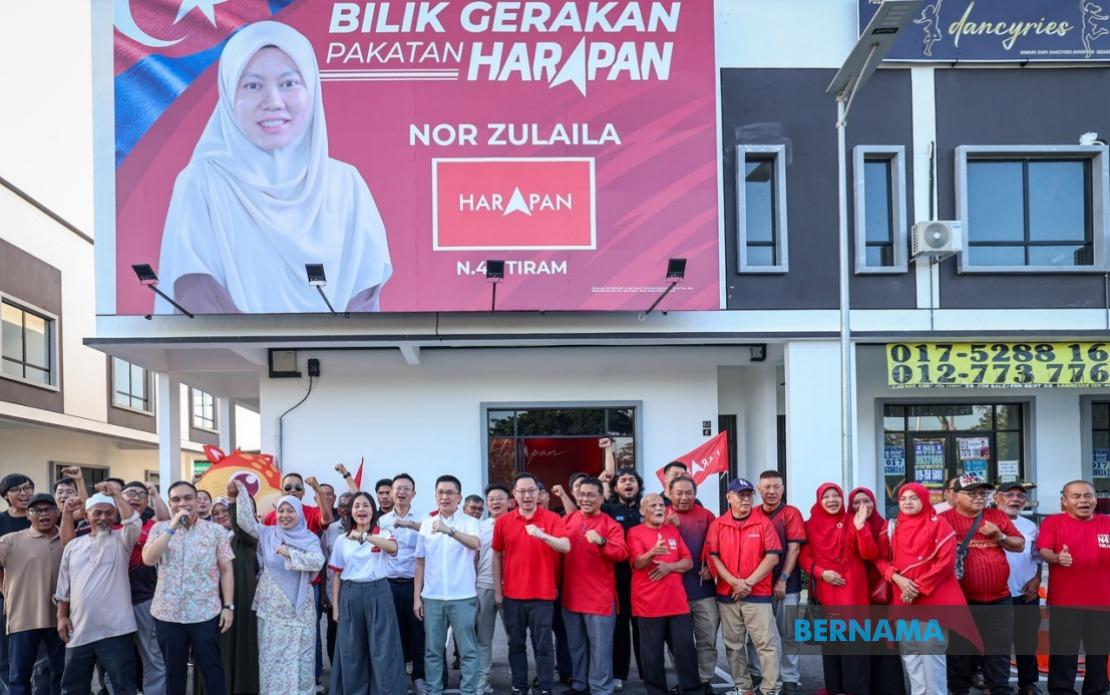
The Malaysian Communications and Multimedia Commission has been instructed to maintain optimal internet connectivity throughout the Johor state election campaign period, with particular focus on areas expected to draw large crowds. Deputy Communications Minister Teo Nie Ching made the announcement in Pasir Gudang after launching Pakatan Harapan's operations room for the N40 Tiram constituency, underscoring the critical role reliable broadband infrastructure plays in enabling political parties to organise events and disseminate information effectively to voters.
Teo's directive reflects a recognition that digital connectivity has become as essential to modern election campaigns as traditional ground mobilisation efforts. In an increasingly connected electorate, the ability to stream rallies, share candidate messaging, and coordinate volunteer efforts depends fundamentally on network stability. The MCMC's regular monitoring programme will be concentrated in constituencies where particularly high voter attendance is anticipated, ensuring that technical capacity does not become a constraint on campaign momentum during the crucial weeks ahead.
The significance of this intervention extends beyond mere operational convenience. For a state election involving 17 parliament-equivalent constituencies spread across Johor's diverse geography—from urban centres like Johor Bahru to more rural regions—disparities in connectivity can inadvertently create information asymmetries between better-served and underserved communities. By proactively addressing coverage gaps, the electoral commission aims to create a more level playing field where all constituencies can access campaign information equitably, regardless of their infrastructure advantages.
Teo, who also serves as Johor DAP chief, reported that preliminary ground-level feedback from voters has been encouraging. This anecdotal evidence suggests growing electoral participation across demographic groups, with particular enthusiasm noted among voters residing outside their home constituencies who are preparing to return for polling day. Such engagement indicates a more engaged and participatory electorate than sometimes assumed, though maintaining these momentum levels depends partly on sustained access to campaign information through digital channels.
Regarding strategic positioning, DAP has adopted a deliberately cautious approach to seat classification, refusing to designate any of the 17 constituencies it contests as definitively winnable. This stance deliberately avoids the complacency trap that historically undermines campaigns when resources are diverted away from supposedly "safe" seats. By maintaining uniform focus across all contested areas and acknowledging the distinct demographic, economic, and cultural variables influencing each constituency, the party signals a commitment to resourceful campaigning that respects local complexity.
This contextual awareness proves particularly relevant in Johor, where constituencies encompass highly urbanised areas with different voter priorities alongside more semi-rural zones where agricultural and local business concerns predominate. The Tiram seat, where the operations room was launched, exemplifies this diversity. Nor Zulaila Abdul Ghani, the Pakatan Harapan candidate, faces the challenge of building consensus across these varied communities—a task substantially aided by consistent access to communication channels for explaining constituency-specific policy platforms.
The election calendar is now compressed into a final fortnight of intensive activity. With nominations scheduled for the day following Teo's announcement, early voting on July 7, and general polling on July 11, the window for campaign activities is deliberately tight. This condensed timeline makes internet infrastructure reliability even more consequential, as parties must maximise their reach within compressed timeframes. Technical failures or connectivity gaps during this period cannot be easily recovered through extended campaigning.
The MCMC's involvement reflects broader infrastructure governance questions relevant across Southeast Asia. As election campaigns increasingly depend on digital channels alongside traditional modes, communications regulators face growing expectations to ensure that technical infrastructure supports democratic participation. The Malaysian precedent of proactive monitoring during elections could offer lessons for regional counterparts managing elections in countries where broadband access remains uneven across constituencies.
For Malaysian voters generally, and Johor residents specifically, this focus on connectivity infrastructure highlights how elections increasingly depend on technical systems often taken for granted. The reliability of the internet backbone, mobile networks, and data transmission capacity now ranks alongside traditional concerns about polling booth security or ballot counting procedures as elemental to electoral integrity and fairness. MCMC's mandate has effectively expanded from purely technical regulation into supporting democratic process itself.
The parallel mobilisation of party machinery is equally noteworthy. The launch of the Pakatan Harapan operations room brought together multiple political figures including Deputy Education Minister Wong Kah Woh, Bangi MP Syahredzan Johan, and Tebrau MP Jimmy Puah Wee Tse—indicating coordinated cross-constituency effort and resource concentration in this battleground state. Such coordination, in turn, requires seamless digital communication infrastructure linking party headquarters, candidate teams, and volunteer networks across Johor's expanse.
Looking forward, the election results will reveal whether strategic discipline across all 17 seats and infrastructure readiness translate into electoral gains. But regardless of outcomes, the emphasis placed on ensuring consistent internet coverage throughout the campaign period signals a maturing recognition that technical infrastructure now constitutes a fundamental component of democratic participation. For Malaysian observers and regional analysts watching, this election cycle demonstrates how governance has evolved to encompass digital systems as essential elements of electoral management alongside institutional and procedural safeguards.

