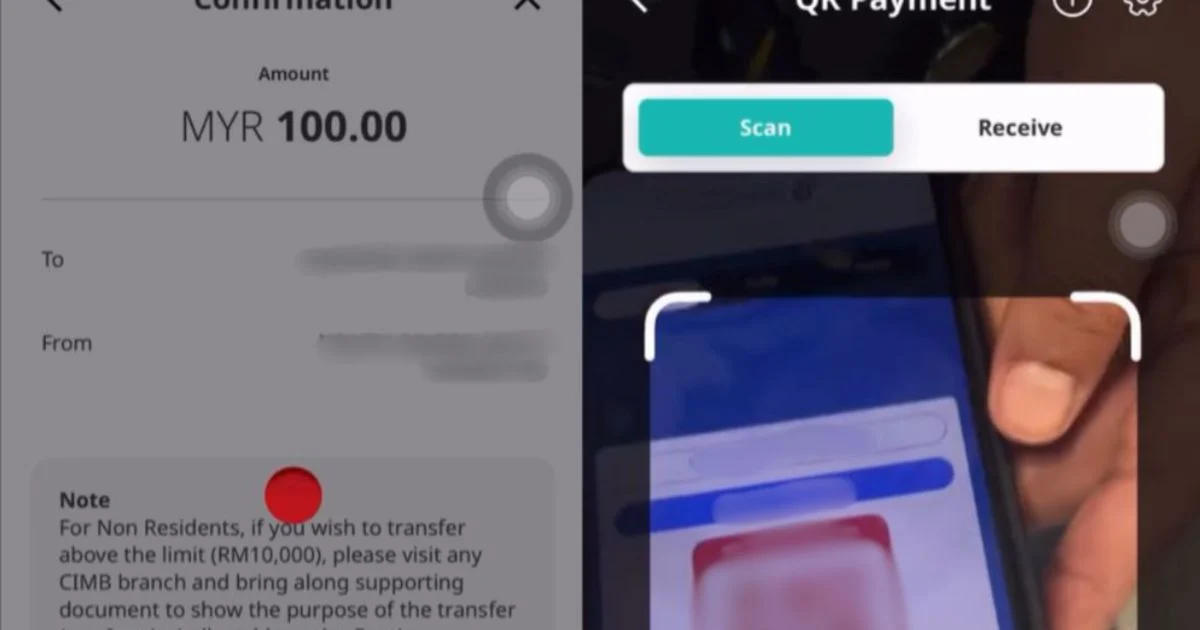
The Malaysian Border Control and Protection Agency (MCBA) has opened an internal investigation into claims that one of its uniformed officers at Kuala Lumpur International Airport Terminal 2 accepted a RM100 payment through a personal Quick Response code transaction, marking the latest in a series of integrity concerns at the nation's primary international gateway.
The incident underscores a persistent vulnerability in Malaysia's border control framework, where opportunistic officials have increasingly exploited the convenience of digital payment systems to solicit unofficial gratuities. Unlike traditional cash handovers, QR code transactions leave minimal physical evidence and can be disguised as legitimate personal transfers, making detection and accountability more challenging for supervisory bodies. The use of contactless payment methods represents an evolution in how corrupt practices have adapted to Malaysia's rapidly digitalising economy.
KLIA Terminal 2 handles substantial volumes of international and domestic passenger traffic annually, processing hundreds of thousands of travellers through immigration and customs checkpoints. The prominence of this facility means that integrity lapses by border officials directly affect Malaysia's international reputation and traveller confidence. Such allegations, particularly when they involve unsolicited demands for payment, suggest systemic supervision gaps within the MCBA's operational structure at this critical facility.
The decision to launch a formal investigation indicates that the MCBA takes the allegation seriously and recognises the reputational stakes involved. However, the agency's responsiveness alone does not address underlying causes: insufficient surveillance of checkpoint interactions, inadequate compensation packages that incentivise corrupt behaviour, and potential gaps in officer training regarding proper conduct and ethical standards. These structural issues require more comprehensive solutions than individual case investigations can provide.
From a traveller's perspective, such incidents create uncertainty and discomfort, particularly for first-time international visitors or those unfamiliar with Malaysia's border procedures. Genuine travellers may struggle to distinguish between legitimate fees and informal demands, and some may reluctantly comply rather than risk delays or complications. This dynamic effectively levies an unofficial tax on those passing through Malaysian airports, disproportionately affecting leisure and business travellers and potentially deterring future visits.
The specificity of the RM100 amount suggests familiarity with pricing thresholds that passengers might consider acceptable rather than reportable—a calculated approach that minimises the likelihood of formal complaints. This calculated opportunism indicates that such incidents may not be isolated occurrences but rather part of a broader pattern, with many passengers potentially paying without formally reporting the experience.
Digital payment systems, while generally beneficial for reducing corruption opportunities associated with cash handling, have paradoxically created new avenues for misconduct. Personal QR codes are easily generated and shared, leaving minimal institutional trace. The MCBA and airport authorities must urgently implement systems that require all border-related payments to flow through official, auditable channels with clear documentation trails. This technological safeguard should complement human oversight mechanisms.
The investigation's outcome will carry significance beyond the individual officer involved. A lenient resolution risks signalling that such behaviour carries minimal consequences, potentially encouraging similar conduct among other officers facing financial pressures or weak supervision. Conversely, a decisive and transparent disciplinary process would reinforce institutional standards and demonstrate that the MCBA prioritises integrity. Public communication of the investigation's findings, while respecting privacy considerations, would also reassure the travelling public and international partners regarding Malaysia's commitment to border professionalism.
For Malaysia's tourism and business sectors, border integrity matters considerably. International travellers often judge destinations partly on their airport experience, and reports of unofficial payments—however minor in absolute terms—create negative perceptions that spread through social media and travel communities. In an increasingly competitive regional tourism market where countries including Thailand, Vietnam, and Indonesia actively court international visitors, Malaysia cannot afford reputation damage stemming from avoidable integrity failures at gateway facilities.
The MCBA should use this investigation as a catalyst for broader institutional reform. Implementing mandatory reporting mechanisms for travellers who encounter suspicious payment requests, conducting periodic integrity audits of checkpoint operations, and establishing clear guidelines distinguishing official fees from any unofficial demands would strengthen the agency's defensive posture. Additionally, anonymous reporting channels for officers witnessing colleagues' misconduct could leverage internal accountability mechanisms.
As Malaysia positions itself as a regional hub for trade, tourism, and business investment, the professionalism and integrity of border officials directly influence investor and traveller confidence. While individual corrupt officers exist in border agencies worldwide, how governments respond—swiftly, transparently, and systematically—distinguishes effective institutions from those perceived as complicit in misconduct. The MCBA's investigation represents an opportunity to reinforce that Malaysia takes such matters seriously and stands prepared to maintain the standards expected at international airports.

