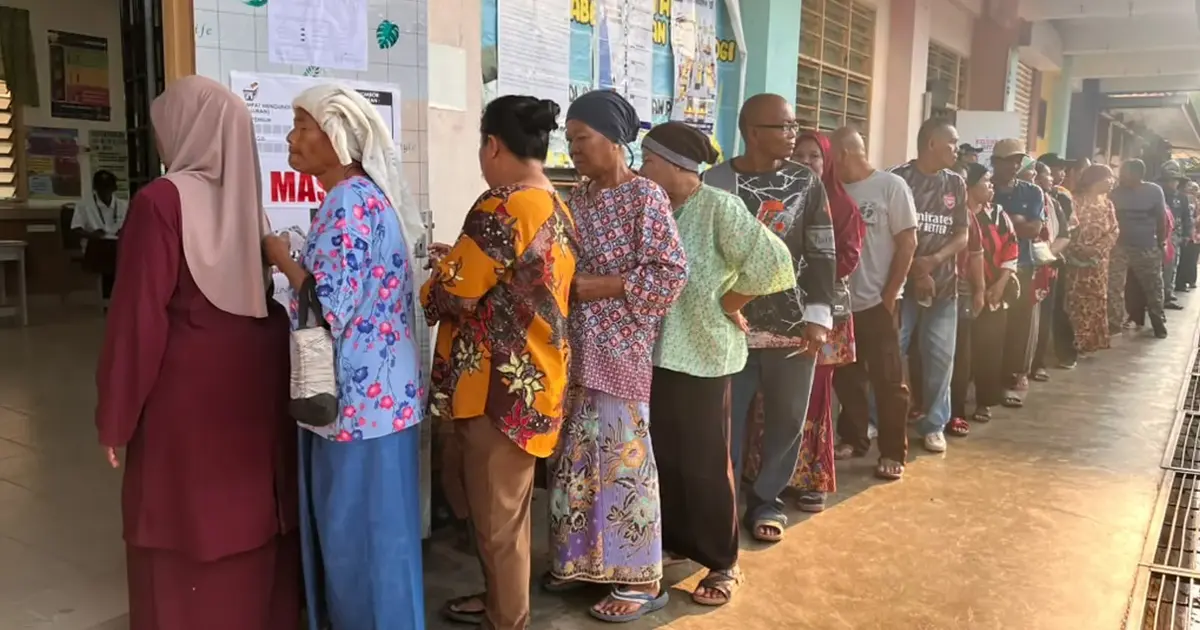
The Malaysian Chinese Association's recent success in wresting the Chennah seat from the Democratic Action Party has reignited discussion about the intricate power dynamics underpinning Barisan Nasional's competitive position. Analysts now point to a straightforward but consequential pattern: when Umno mobilises its voter base effectively, its coalition partners benefit substantially from the resulting electoral momentum. The ouster of DAP's Loke Siew Fook represents more than a symbolic victory for the Chinese-majority party and suggests deeper structural dependencies within the ruling alliance that deserve closer examination.
The conventional narrative surrounding Barisan Nasional's coalition architecture often emphasises the formal equality between its component parties. Yet electoral outcomes reveal a more nuanced reality where the Malay-Muslim majority party functions as the coalition's primary vote-mobiliser. In Chennah, observers noted that Malay voters turned out in significant numbers to support Barisan Nasional's slate, creating the electoral conditions necessary for the MCA to dislodge an incumbent from the opposition. This pattern underscores how coalition dynamics in Malaysia are fundamentally shaped by the relative enthusiasm and organisational capacity of its largest component.
The MCA's historical role as the Chinese voice within Malaysia's post-independence political settlement has become increasingly dependent on Umno's voter-generation capacity. During periods when Umno struggles to energise its supporters or faces internal complications, the Chinese association often finds itself competing in a challenging electoral environment where opposition parties can mount competitive challenges. Conversely, when Umno members and sympathisers mobilise actively for the coalition, the spillover effects benefit smaller coalition partners by shifting the broader political landscape in their favour. The Chennah result exemplifies this dynamic in action.
The Malaysian Indian Congress occupies an even more precarious position within this configuration. As the smallest of the three major coalition parties, the MIC's electoral prospects depend critically on Umno's ability to activate networks and encourage multi-communal support for Barisan Nasional slates. When Umno's grassroots machinery operates at full capacity, the resulting coalition wave can lift the MIC's candidates across finishing lines they might struggle to cross independently. This structural reality has long complicated the MIC's efforts to establish itself as an autonomous political force capable of mobilising Indian voters primarily on its own merits.
The opposition's difficulty in Chennah reflects not merely a failure of Democratic Action Party strategy but also the incumbent's vulnerability to coalition-wide momentum. Loke Siew Fook, despite his parliamentary experience and established presence, could not overcome the electoral current created by concentrated Malay voter support for Barisan Nasional. This suggests that in constituencies with substantial Malay electorates, opposition parties must develop strategies to fracture coalition unity or mobilise non-Malay voters in overwhelming proportions simply to maintain defensive positions. The by-election outcome demonstrates that Umno-driven momentum can neutralise such defensive calculations.
Regional implications become apparent when examining how this dynamic affects Barisan Nasional's competitive position across Southeast Asia's electoral democracies. Malaysia's coalition model differs from the more fragmented political systems of neighbouring countries, and Umno's capacity to function as a vote-mobiliser provides structural advantages that opposition coalitions struggle to counter. The 2024 electoral calendar across the region has made Malaysian political developments more relevant to neighbouring governments and international observers assessing coalition stability and voter behaviour patterns in Muslim-majority democracies.
Within Barisan Nasional itself, the Chennah outcome may reinforce certain internal hierarchies that have characterised the coalition since its inception. The MCA has long competed to maintain relevance in Malaysian politics despite demographic shifts that have reduced the Chinese-voter proportion of the overall electorate. By securing Chennah, the party demonstrates its continued ability to deliver electoral victories under favourable conditions, thereby justifying its continued place within the coalition leadership structure. However, this victory's dependence on Umno's mobilisation capacity underscores the Chinese association's fundamental constraints as an autonomous political actor.
Opposition strategy regarding Barisan Nasional appears to require a fundamental reassessment in light of results like Chennah. Rather than challenging coalition parties individually in constituencies where they maintain demographic advantages, opposition groupings may need to develop mechanisms for coalition-wide voter mobilisation that can compete with Umno's organisational infrastructure. The Democratic Action Party, despite its strength in urban centres and among younger voters, lacks the rural and small-town penetration necessary to overcome concentrated coalition support in diverse constituencies where Malay voters provide critical numbers.
Longer-term trajectory concerns emerge from this analytical frame. As Malaysia's demographics continue evolving and urbanisation proceeds, the relevance of this particular coalition dynamic may shift. Yet for current purposes, the Chennah election demonstrates that electoral outcomes in Malaysia continue reflecting the structural realities of coalition politics. Future by-elections and general elections will likely confirm whether this pattern represents an enduring feature of Malaysian electoral competition or a transitional phenomenon as voter behaviour patterns undergo generational change.

