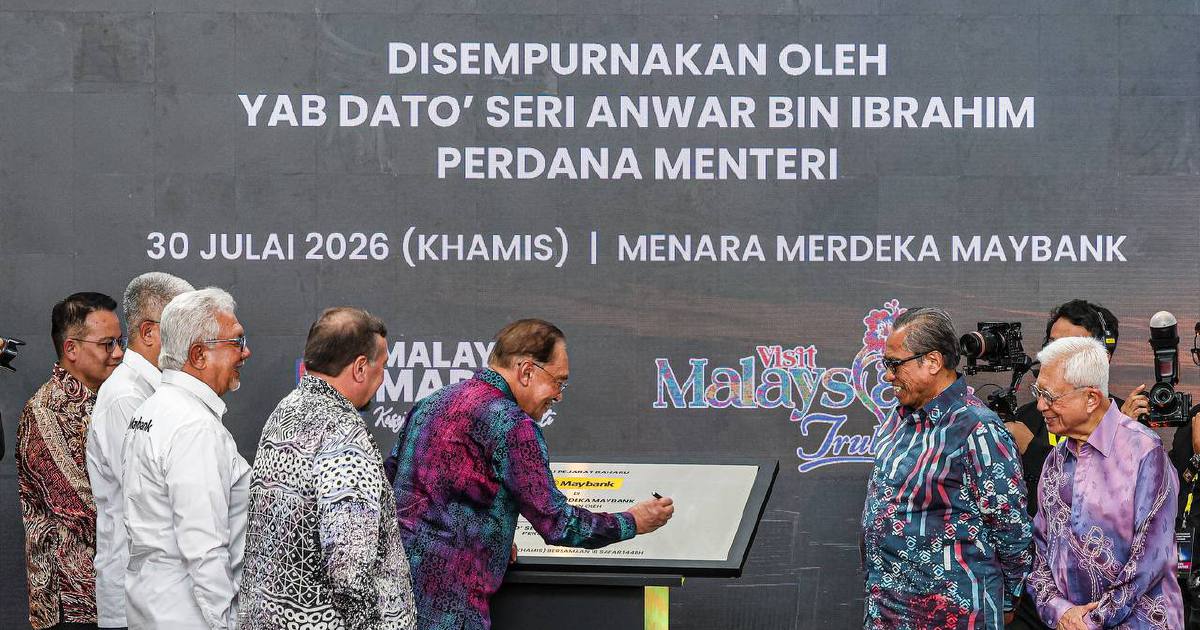
Malaysia's largest bank, Malayan Banking Bhd (Maybank), has unveiled its new flagship headquarters at Menara Merdeka Maybank, marking a watershed moment for the nation's financial sector and Kuala Lumpur's continuing urban transformation. The official ceremony, presided over by Prime Minister Datuk Seri Anwar Ibrahim, underscored the strategic importance of the development both as a corporate milestone and as a symbol of Malaysia's positioning as a leading financial hub in Southeast Asia.
The launch represents a significant corporate relocation and modernisation initiative for Maybank, Southeast Asia's largest financial services group by assets. By consolidating its headquarters operations into a purpose-built facility at Menara Merdeka, the bank is making a decisive statement about its long-term commitment to Malaysia and its confidence in the domestic economy. The move also reflects a broader trend among multinational and regional corporations to invest in premium office infrastructure that supports hybrid working arrangements and attracts top talent in an increasingly competitive regional labour market.
Menara Merdeka itself stands as a landmark achievement in Malaysian real estate development, embodying contemporary standards for sustainability and workplace innovation. The architectural design integrates environmental efficiency measures that align with global practices while meeting the operational requirements of a modern international financial institution. Such developments are increasingly viewed by regional banking centres as essential competitive advantages in retaining headquarters operations and the high-value employment that accompanies them.
For Malaysia's broader economic narrative, the inauguration carries particular significance as it demonstrates investor confidence despite regional headwinds. A major corporation's decision to invest heavily in premium headquarters infrastructure signals belief in the country's medium to long-term economic trajectory and its ability to remain an attractive destination for financial services operations. This carries multiplier effects across construction, property services, hospitality, and supporting industries that cluster around financial centres.
The timing of the announcement, with Prime Minister Anwar Ibrahim's direct involvement in the official ceremony, also highlights government support for domestic corporate investment and modernisation. It reflects alignment between public sector leadership and the private sector's strategic expansion objectives. Such public-private coordination, even in its symbolic form, helps reinforce Malaysia's positioning as a destination where major institutional transformations can proceed smoothly.
Maybank's consolidation into Menara Merdeka also represents a concentration of financial sector talent and operations in central Kuala Lumpur. This geographic clustering effect is well-documented in financial geography literature as producing knowledge spillovers, improving information flow, and enhancing the competitiveness of the financial ecosystem overall. For Malaysia, strengthening the critical mass of financial sector activity in its primary business district supports the country's aspirations to develop a deeper and more sophisticated financial market.
The headquarters shift carries implications for real estate markets across the Klang Valley. As major financial institutions upgrade their facilities and consolidate operations, secondary office markets experience changes in supply and demand dynamics. Maybank's departure from previous premises may open opportunities for other corporations or specialist users, while the completion of Menara Merdeka signals sustained confidence in central KL's value proposition relative to emerging peripheral office clusters.
From an employment perspective, the new headquarters will anchor a significant base of high-skilled jobs in Kuala Lumpur's financial district. The opening of such a facility typically requires expanded staffing for enhanced operations, facility management, and client-facing services. For Malaysia's labour market, particularly in the financial services and professional support sectors, such developments represent employment opportunities with growth potential and advancement pathways.
The inauguration also comes at a moment when Southeast Asian financial centres are intensifying competition for regional headquarters operations and financial technology talent. Singapore remains the region's dominant financial hub, but developments like Menara Merdeka contribute to Malaysia's efforts to specialise in niche areas of financial services and position itself as an attractive base for regional operations. Maybank's own expansion strategy, supported by modern infrastructure, strengthens its capacity to compete for regional mandates and sophisticated financial services contracts.
Looking forward, the completion of Menara Merdeka will likely influence how other major Malaysian corporations and regional financial institutions evaluate their real estate strategies and office location decisions. Successful landmark developments create reference points that shape market expectations and can trigger waves of competitive investment. For Kuala Lumpur's skyline and its position within regional urban hierarchies, the addition of Maybank's flagship facility contributes to a narrative of continuous urban evolution and infrastructure modernisation.
The headquarters opening also carries symbolic weight in domestic political and economic discourse, demonstrating that major institutional anchors remain committed to Malaysia as their primary operating base. In an era of mobile capital and multinational restructuring, corporate decisions to invest in permanent infrastructure carry outsized significance as markers of long-term confidence in a jurisdiction. For policymakers and stakeholders monitoring Malaysia's competitive position in Southeast Asia, such developments provide reassuring signals about investor sentiment and domestic market health.

