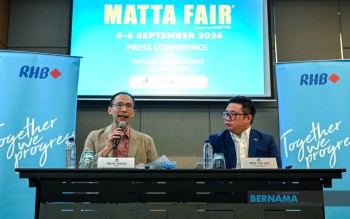
The Malaysian tourism sector is mounting a coordinated push for government support ahead of Budget 2027, with the Malaysian Association of Tour and Travel Agents laying out an ambitious agenda that prioritises tax relief and capital spending on tourism assets. MATTA president Nigel Wong articulated the industry's expectations during a media engagement following the MATTA Fair press conference, signalling that tour operators view the upcoming budget as a critical opportunity to strengthen their competitiveness and boost Malaysia's international visitor arrivals. The timing is significant, as the Finance Minister is scheduled to table the Supply Bill for Budget 2027 on October 9 under Parliament procedures.
Central to MATTA's submission is a request for enhanced tax deductions specifically designed for tour operators engaged in overseas marketing activities. Wong emphasised that improved tax incentives would create direct financial relief for businesses looking to expand their promotional footprint abroad, thereby multiplying the impact of private-sector marketing efforts without requiring proportional government expenditure. By coupling tax benefits with the Visit Malaysia 2026-2027 campaign, tour operators argue they can achieve better synergy between public promotional initiatives and commercial marketing strategies that drive visitor volume. This approach reflects industry reasoning that tax relief is more cost-effective for government than direct spending, while simultaneously incentivising the private sector to invest its own resources in tourism promotion.
The infrastructure modernisation agenda represents the second pillar of MATTA's case to policymakers. Wong pointed to the successful restoration of the Sultan Abdul Hamad Building in Kuala Lumpur as a benchmark for the type of investment that yields tangible returns in terms of urban appeal and visitor attraction. He argued that Malaysia possesses considerable untapped potential through its heritage and historical architecture, which could be systematically refreshed to enhance their appeal to both domestic and international travellers. This recommendation reflects broader recognition within the tourism industry that visitor experience extends far beyond designated attractions—the overall quality and presentation of urban environments directly influences how tourists perceive destinations and whether they recommend them to others.
Wong's emphasis on municipal councils adopting a "whole-of-tourism approach" reveals an understanding that tourism infrastructure extends beyond traditional monuments and beaches into the everyday urban fabric. Safety, walkability, and aesthetic maintenance of city districts directly influence visitor confidence and satisfaction, yet these are often administered through local government budgets that may not explicitly account for tourism benefits. By calling for greater coordination between municipal authorities and tourism stakeholders, MATTA is advocating for a governance model where local councils recognise their role in the tourism value chain. This could involve prioritising maintenance in visitor-heavy areas, implementing safety measures that reassure tourists, and ensuring that public spaces project a welcoming and well-managed impression.
The promotional budget allocation request completes MATTA's three-part submission. Beyond tax incentives and infrastructure spending, the industry wants the government to increase its direct marketing expenditure supporting the Visit Malaysia 2026-2027 initiative. This reflects the reality that Malaysia faces significant competition from neighbouring destinations in Thailand, Indonesia, and Vietnam, each of which has invested heavily in international tourism campaigns. A larger promotional budget would enable more aggressive advertising in key source markets, support for major tourism events, and enhanced digital marketing reaching potential visitors across Asia-Pacific and beyond. The multiplicative effect of combining private-sector tax incentives with robust public-sector promotion creates a pincer strategy aimed at dominating tourism marketing conversations in target markets.
The visit Malaysia 2026-2027 initiative itself provides the overarching policy framework motivating MATTA's budget submissions. This multi-year campaign represents a national effort to position Malaysia as a premier regional destination and boost visitor arrivals during a strategically important economic period. Tour operators view themselves as essential implementation partners in this campaign, yet they argue that current policy settings do not provide sufficient financial encouragement to justify their maximum effort. The gap between campaign ambitions and actual industry incentives appears to be what MATTA is attempting to highlight through its pre-budget lobbying.
From a Malaysian economic perspective, the tourism sector's case carries considerable weight. International visitor expenditure generates foreign exchange, supports employment across hotels, restaurants, transportation, and attractions, and stimulates regional economic development beyond the Klang Valley. Tour operators specifically act as critical intermediaries connecting Malaysia to overseas markets, converting marketing messages into actual bookings and visitor arrivals. Their profitability and investment capacity directly determine how aggressively they will market Malaysia internationally and how effectively they will compete with rival destinations offering their own incentives to travel agents and tour operators.
The budget proposal's timing also reflects sector confidence in the broader economic trajectory. Rather than requesting emergency relief or survival measures, MATTA is positioning its requests as growth-oriented investments in competitive capacity. This suggests the industry expects Malaysian tourism to perform reasonably well through 2026-2027 and is seeking resources to capitalise on anticipated demand. However, the specificity of the requests—tax deductions rather than subsidies, infrastructure upgrades rather than operating grants—indicates that MATTA recognises budget constraints and is attempting to craft proposals that deliver maximum sectoral benefit within realistic fiscal parameters.
The infrastructure modernisation component of MATTA's proposal also carries implications for urban development policy. By linking heritage building upgrades to tourism promotion, MATTA is essentially arguing that cultural preservation and visitor attraction are mutually reinforcing objectives. This framing may resonate with government agencies managing heritage assets, as it positions tourism investment as supporting cultural conservation rather than merely commercial exploitation. Cities such as George Town in Penang and Melaka have demonstrated that well-maintained historical precincts attract both tourists and expatriates, supporting broader urban revitalisation. MATTA's emphasis on heritage infrastructure thus connects tourism promotion to urban renewal outcomes that extend beyond visitor spending.
The municipal council engagement point also signals recognition that tourism governance has become increasingly fragmented across different government levels and agencies. Central government sets broad tourism policy and manages major attractions, state governments control certain heritage sites and cultural assets, while municipal councils administer the day-to-day urban environment that visitors experience. MATTA's call for coordinated action implicitly acknowledges that no single agency can deliver world-class tourism infrastructure alone—success requires sustained cooperation and mutual accountability between levels of government, each with its own budget constraints and competing priorities. This governance challenge may prove more difficult to address than funding questions, as it requires institutional coordination that transcends traditional budget line items.
As the October 9 budget tabling date approaches, MATTA's submission joins numerous other sectoral appeals for resources and policy support. The question facing policymakers is whether tourism investment delivers sufficient economic returns to justify priority allocation in a fiscally constrained environment. Industry advocates will need to demonstrate convincingly that each ringgit invested in tax incentives and infrastructure generates measurable increases in visitor arrivals and foreign exchange earnings. The government's response in Budget 2027 will signal whether it shares the tourism sector's assessment of Malaysia's competitive position in regional tourism markets and whether it views tourism promotion as sufficiently central to national economic strategy to warrant the requested investment levels.

