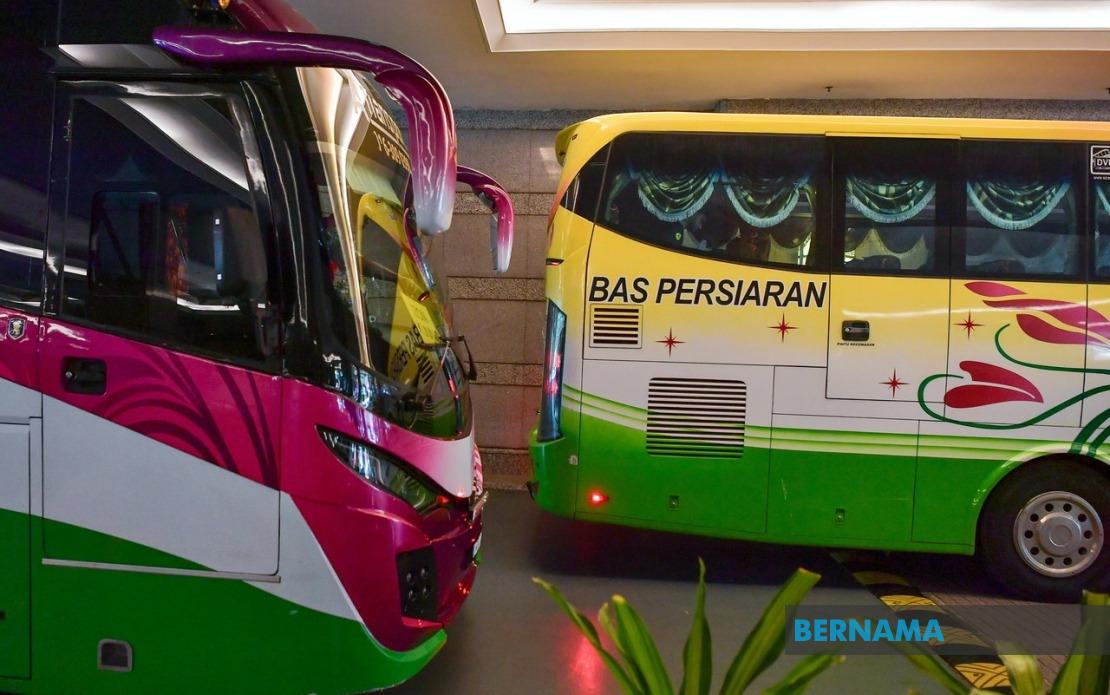
Malaysia's tourism sector has entered into a pointed dispute with the Finance Ministry over the recent decision to exclude licensed tourism transport operators from the national diesel subsidy programme. The Malaysian Association of Tour and Travel Agents (MATTA) has publicly challenged the rationale behind the exclusion, contending that the policy rests on a mischaracterisation of who benefits from subsidised diesel costs in the tourism transport segment.
MATTA president Nigel Wong directly contested remarks made by Finance Minister II Datuk Seri Amir Hamzah Azizan, who had suggested that extending diesel subsidies to tourism operators would primarily benefit international visitors. Wong's rebuttal centres on a fundamental point: licensed tourism vehicles in Malaysia serve a substantially mixed clientele that extends well beyond foreign tourists. The association's statement underscores that domestic travellers—including Malaysian holidaymakers, school groups, corporate participants, pilgrims, and community programme attendees—constitute a significant portion of the passenger base for these operators.
The practical implications of the subsidy removal represent a material concern for the industry. Tourism transport operators face immediate pressure to absorb rising fuel costs or pass them along to customers through higher fares and costlier travel packages. For Malaysian travellers in particular, this cost inflation threatens to dampen domestic tourism demand at a time when the government is actively promoting the Visit Malaysia 2026 (VM2026) campaign. The subsidy withdrawal thus creates a policy contradiction: the government promotes tourism growth while simultaneously removing a cost control mechanism that keeps travel services affordable for ordinary Malaysians.
Wong's argument extends into the economic ripple effects that tourism activity generates across the broader Malaysian economy. When more affordable transportation options exist, they facilitate increased tourism spending that flows downstream to hotels, restaurants, attractions, retail establishments, and other businesses. This multiplier effect strengthens local communities and employment prospects. Conversely, higher transport costs create friction that reduces tourism participation, particularly among middle-income Malaysian families for whom discretionary travel spending remains price-sensitive.
The subsidy exclusion also introduces a perverse incentive that warrants consideration. Higher costs for licensed operators may push price-conscious customers towards unlicensed alternatives that operate outside the regulatory framework. This outcome would undermine safety standards, reduce government oversight, and paradoxically work against the formal tourism economy that the government seeks to expand. The policy thus risks creating unintended consequences that contradict the intended effect of budget discipline.
MATTA's counter-proposal involves framing the diesel subsidy not as an ongoing expense but as a strategic investment in Malaysian economic competitiveness. This reframing reflects a broader understanding that tourism infrastructure—including reliable, affordable transport—functions as foundational capital that enables larger economic activities. Tourism transport operators, under this logic, represent essential enablers of domestic mobility rather than mere beneficiaries of budgetary largesse.
The association has formally urged the Finance Ministry to reconsider its decision, whilst simultaneously calling for collaborative engagement with the Ministry of Tourism, Arts and Culture (MOTAC) and relevant stakeholders. This multi-ministry coordination approach acknowledges that tourism policy cannot be designed in isolation from fiscal considerations; rather, it requires genuine dialogue between agencies with distinct but complementary mandates.
The dispute also illuminates structural tensions within Malaysia's policy apparatus. Finance-focused decision-making sometimes proceeds without sufficient input from sector-specific expertise, leading to outcomes that satisfy budget criteria while undermining broader development objectives. The exclusion of tourism transport from diesel subsidies may represent precisely this dynamic: a fiscally disciplined decision that inadvertently weakens a nationally-prioritised growth initiative.
For Malaysia's positioning within Southeast Asian tourism competition, the subsidy removal carries strategic implications. Regional competitors—particularly Thailand, Indonesia, and Vietnam—continue to invest in tourism infrastructure and cost management. When Malaysia unilaterally removes cost supports from its tourism transport sector, it potentially weakens its value proposition relative to competing destinations. International visitors compare package costs across borders, and transport subsidies represent one component of that competitive equation.
The timing of this policy disagreement proves particularly consequential given the VM2026 campaign's ambitious growth targets. The initiative requires not only marketing resources but also foundational infrastructure that enables people to move affordably throughout the country. Tourism demand responds to price; when transport costs rise, marginal consumers exit the market entirely. The Finance Ministry's exclusion decision thus threatens to work at cross-purposes with the government's own tourism promotion strategy.
Looking forward, the resolution of this dispute will signal how effectively Malaysia's government can coordinate between competing policy objectives. A purely fiscal approach might maintain the subsidy exclusion; a development-focused approach would recognise that tourism's broader economic contributions justify targeted support for critical enablers like transport. The ideal outcome would involve substantive engagement between MATTA, MOTAC, and the Finance Ministry to develop a mechanism that balances fiscal responsibility with sectoral needs—perhaps through time-limited support, performance conditions, or alternative efficiency measures that achieve cost control without eliminating the subsidy entirely. How this institutional conversation unfolds will reveal much about Malaysia's capacity for integrated economic policymaking.

