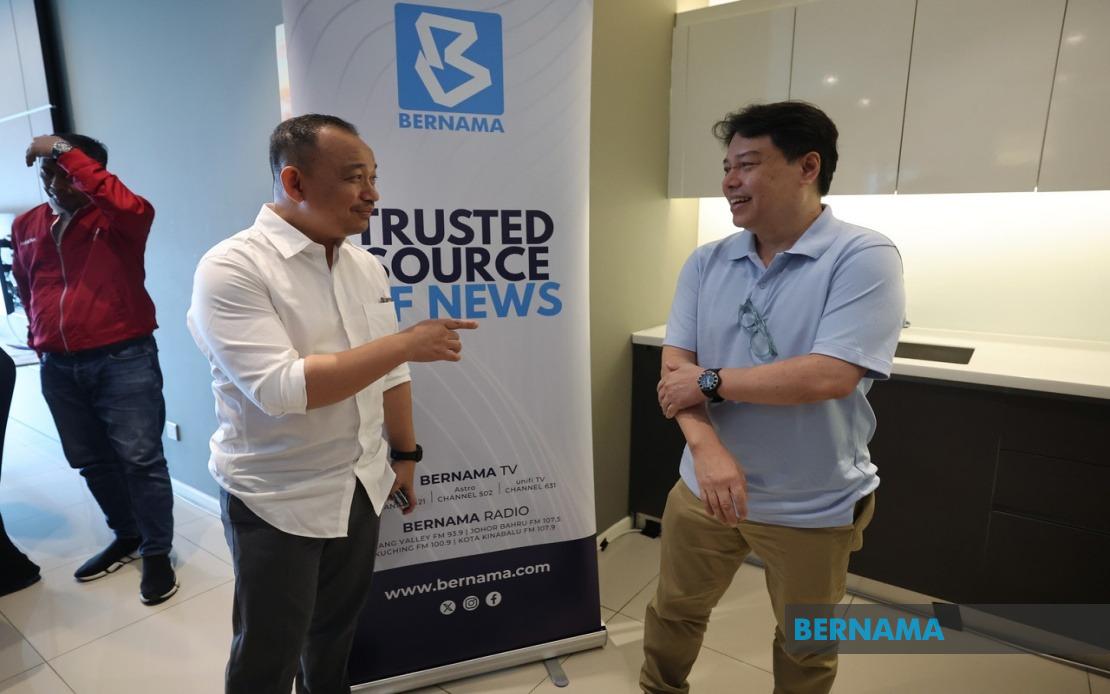
Dr Maszlee Malik, the Pakatan Harapan candidate contesting the Puteri Wangsa state seat in Johor, took to the roads in a Perodua Myvi on June 29 to personally confront the infrastructure complaints that have dominated online discussions among constituents. The challenge, initiated by netizens questioning whether politicians truly understand ground-level problems, saw the former education minister navigate the route from Kampung Melayu Tebrau through Pandan and Kangkar Tebrau to Ulu Tiram, retracing his path back to the city centre to absorb the full extent of the infrastructure deficit.
Maszlee's decision to undertake this unconventional form of constituent engagement reflects a broader recognition among politicians that digital feedback often signals genuine grievances that require visceral understanding. By deliberately subjecting himself to the same vehicle-jolting experience that ordinary motorists endure, he sought to move beyond abstract policy discussions into the physical reality of daily commutes. His observation that the sensation resembled "riding a boat in Tanjung Surat" captures the desperation residents feel when deteriorating asphalt transforms routine journeys into uncomfortable, time-consuming ordeals.
The infrastructure challenges facing Johor's urban corridors stem fundamentally from a planning mismatch between rapid residential and commercial development and the road networks designed for a different era. Areas including Taman Daya, Taman Pelangi Indah, and the sprawling developments around Tebrau have absorbed thousands of new residents, yet the arterial routes connecting these zones remain inadequate. This phenomenon, familiar to Malaysian voters across Klang Valley, Penang, and Ipoh, creates a cascading traffic system where congestion during peak hours becomes predictable rather than exceptional.
Maszlee's analysis that resolving infrastructure problems demands "more comprehensive urban planning and closer inter-agency cooperation" identifies the institutional fragmentation that typically prevents effective solutions. In Malaysia's federal system, state governments hold authority over certain roads, while the federal Public Works Department (JKR) oversees national highways. Local authorities manage municipal roads, and private concessionaires operate tollways. This administrative division often leaves gaps where accountability dissipates and coordination falters. The politician acknowledged this complexity, indicating that successful intervention would require breaking down silos between JKR, urban planning departments, and other stakeholders.
For Malaysian voters across the country, Maszlee's emphasis on listening to constituents before establishing priorities carries particular resonance given widespread frustration with top-down governance approaches. In Johor and elsewhere, residents repeatedly report that infrastructure decisions appear disconnected from actual commuting patterns or congestion realities. A politician willing to personally experience road conditions rather than relying on staff reports or consultant studies signals a potentially different decision-making model, even if such gestures cannot substitute for substantive policy implementation.
The electoral context sharpens the significance of this engagement strategy. The Puteri Wangsa seat, featuring a five-cornered contest between Maszlee, MUDA's Rashifa Aljunied, Barisan Nasional's Teow Chia Ling, Parti Bersama Malaysia's Nicholas Paul Vincent, and independent candidate Wang Wee Siong, represents the competitive fragmentation increasingly characteristic of Malaysian state elections. With 128,723 registered voters, the constituency is substantial enough that infrastructure quality directly influences voting behaviour, particularly among younger, more digitally engaged residents who drive daily and share experiences online.
Maszlee's prior experience as Simpang Renggam Member of Parliament and federal education minister provides him with institutional knowledge that he explicitly positioned as an asset. Understanding bureaucratic processes and navigating inter-agency dynamics constitutes genuine political capital, particularly for candidates promising infrastructure improvements. However, voters historically discount such promises unless candidates articulate concrete timelines, budget allocations, and accountability mechanisms. Maszlee's public commitment to collaborative problem-solving requires follow-up specificity regarding which roads will be upgraded first and within what timeframe.
The Myvi challenge also functions symbolically within Malaysian political discourse. The Perodua Myvi, deliberately chosen as the "King of the Road," represents the vehicle of ordinary Malaysians—affordable, reliable, and ubiquitous across the nation's roads. By selecting this particular car, Maszlee aligned himself rhetorically with the everyday experience of working-class and middle-class voters. This contrasts implicitly with politicians perceived as insulated from daily transportation challenges, commuting in air-conditioned motorcades along priority routes. Such symbolism matters in electoral politics, particularly in suburban constituencies where residents associate poor road conditions with political neglect.
Johor's infrastructure struggles reflect patterns visible across Malaysian urban areas experiencing rapid expansion without corresponding investment in foundational systems. Traffic congestion costs Malaysia's economy billions annually through lost productivity, increased fuel consumption, and environmental degradation. Beyond economic metrics, chronic traffic congestion affects public health, reduces quality of life, and erodes confidence in governmental competence. Political candidates addressing these grievances substantively, rather than dismissively, tap into legitimate public frustration that transcends partisan divisions.
The Johor state election scheduled for July 11, with early voting on July 7, occurs within Malaysia's broader political realignment. Voter preferences increasingly reflect performance-based assessments of infrastructure, service delivery, and governance effectiveness rather than historical party loyalties. Candidates who demonstrate awareness of constituent challenges through actions like Maszlee's Myvi drive position themselves as responsive and grounded. Conversely, politicians who remain detached from ground realities risk appearing out of touch, particularly among younger voters accustomed to holding elected officials accountable through social media.
Looking forward, Maszlee's infrastructure commitments will require detailed elaboration to translate symbolic engagement into substantive policy. Constituents need clarity on which specific roads will be rehabilitated, what quality standards will be applied, and how timelines will be enforced. The challenge of governing infrastructure in a complex federal system means that individual state representatives must coordinate across multiple governmental layers. Early visibility on such coordination matters considerably, as does transparent communication about constraints and realistic improvement timeframes.
Ultimately, the Myvi challenge represents a minor but meaningful gesture toward reconnecting political candidates with the lived experiences of voters. In an era of digital politics and curated public appearances, a politician willingly subjecting himself to the same discomfort as ordinary commuters signals humility and genuine interest in constituent concerns. Whether this translates into electoral success or substantive policy change depends on follow-through, accountability, and the candidate's ability to navigate complex institutional environments. For Malaysian voters observing this election and others, the real test lies not in symbolic gestures but in measurable improvements to infrastructure and services in the years following polling day.

