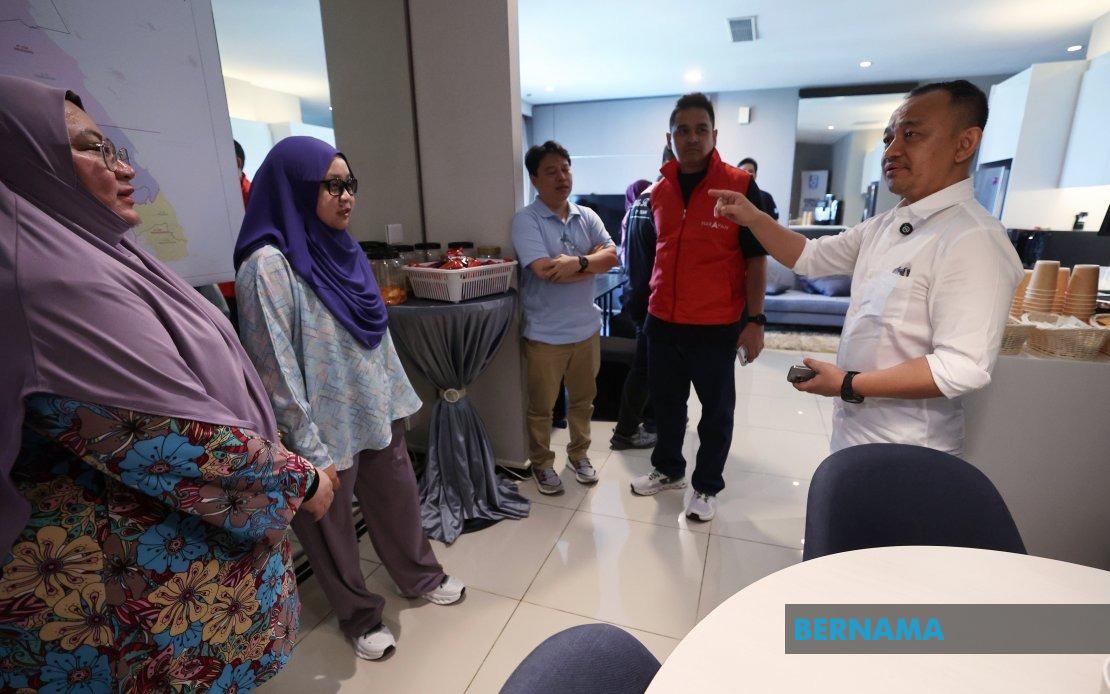
Pakatan Harapan candidate Dr Maszlee Malik is positioning himself as a tech-savvy alternative in Johor's upcoming state election, pledging to deploy a purpose-built mobile application that would fundamentally reshape how his constituency reports and resolves local grievances. The former education minister, contesting the Puteri Wangsa seat on July 11, argues that the sprawling electorate—which encompasses both upscale residential zones like Austin Heights and rural Felda communities—demands innovation beyond traditional constituent engagement methods. His digital platform represents a strategic modernisation of grassroots democracy, enabling residents to lodge service requests and complaints directly rather than navigating bureaucratic channels or waiting for town halls.
The application concept extends beyond simple complaint management. Maszlee envisions the system as an identification tool for marginalised populations who fall through administrative cracks: single mothers, persons with disabilities, and other vulnerable groups potentially eligible for government assistance but unaware of their entitlements or unable to access conventional application processes. This targeting mechanism addresses a persistent Malaysian governance challenge where social safety nets fail to reach their intended beneficiaries due to information asymmetries and procedural complexity. By digitising identification and eligibility assessment, Maszlee suggests his administration could proactively connect support services with citizens who need them most.
The candidate's inspiration draws from international urban governance models, specifically citing New York City Mayor Zohran Mamdani's community engagement methodology. Maszlee emphasises that Mamdani's integration of dedicated applications with social media platforms creates direct communication channels between elected representatives and constituents, bypassing traditional intermediaries and institutional delays. This cross-pollination of international best practices into Malaysian electoral politics reflects a broader trend among opposition candidates attempting to differentiate themselves through technological sophistication and operational transparency. By explicitly referencing an international comparison, Maszlee also signals his vision for modernising local governance structures that have remained largely unchanged for decades.
However, the Puteri Wangsa campaign acknowledges that digital outreach presents inherent limitations. Social media algorithms and echo chambers—phenomena that have become central to understanding modern political communication—naturally fragment audiences and restrict message penetration. Rather than dismissing these constraints, Maszlee's team has designed a deliberately segmented communication strategy, recognising that voters across different demographic and socioeconomic strata access information through distinct channels and respond to tailored messaging. This segmentation approach reflects sophisticated political marketing, treating the constituency not as a monolithic bloc but as intersecting communities with distinct priorities and communication preferences.
The campaign's targeting framework addresses several key voter cohorts often overlooked by conventional ground operations. Generation Z voters, characterised by digital-native behaviour and limited availability for face-to-face engagement, represent a growing electoral segment whose political preferences remain malleable. Malaysians employed in Singapore—particularly those within Chinese communities—occupy a unique position as overseas-based constituents with persistent interests in their home constituencies despite geographic distance. These cross-border workers typically cannot participate in walkabout campaigns or attend town halls due to employment obligations, making digital platforms their primary political engagement mechanism. Urban professionals likewise face scheduling constraints that render traditional campaigning inaccessible, necessitating asynchronous communication methods that respect their time constraints.
Rural and semi-urban residents outside major population centres present another strategically significant audience requiring customised outreach. While urban-centric campaigns often concentrate resources in high-density precincts, dispersed populations require different engagement models. Maszlee's team recognises that messaging designed for suburban voters may alienate rural constituents with fundamentally different economic interests and service priorities. Agricultural communities, informal settlements, and semi-urban housing precincts each possess distinct grievance profiles and political consciousness, demanding communications acknowledging these differences rather than broadcasting uniform messages.
The substantive content strategy underpinning these demographic segments recognises that socioeconomic background, ethnic identity, and generational positioning substantially influence political priorities. Working-class communities prioritise employment security, public transportation, and housing affordability. Middle-class voters emphasise education quality, healthcare accessibility, and property values. Ethnic communities navigate specific concerns including religious accommodation, educational opportunities for diaspora populations, and representation in government contracting. Rather than attempting comprehensive messaging addressing all constituencies identically, Maszlee's approach explicitly accepts that political persuasion requires acknowledging these competing priorities and articulating positions resonating with particular groups' material interests.
The campaign infrastructure supporting this strategy represents significant organisational sophistication. Executing segment-specific messaging at scale requires content creation capacity, audience analysis capability, and coordinated delivery across multiple platforms. This operational complexity surpasses traditional campaign models relying on centralised messaging distributed uniformly across all channels. Maszlee's team is essentially building a data-driven political operation mimicking corporate marketing practices, where different products receive distinct promotional strategies targeting receptive consumer segments. This corporatisation of campaign methodology marks a notable departure from conventional Malaysian political approaches, where party messaging typically emphasises unity and consistency rather than segmentation and differentiation.
The five-candidate contest in Puteri Wangsa—involving Maszlee, Malaysian United Democratic Alliance's Rashifa Aljunied, Barisan Nasional's Teow Chia Ling, Parti Bersama Malaysia's Nicholas Paul Vincent, and independent Wang Wee Siong—reflects the competitive fragmentation increasingly characterising Malaysian state elections. No single candidate appears positioned to command overwhelming support, suggesting victory margins may be determined by relatively narrow voter persuasion efforts rather than broad-based appeals. In this environment, targeted digital engagement offers tactical advantages, allowing campaigns to concentrate messaging efficiency on persuadable voters rather than dispersing resources broadcasting to uncompromised partisans. Maszlee's technology-forward positioning attempts to establish differentiation in a crowded field where traditional political rhetoric and party affiliation may prove insufficient to decisive victory.
The underlying governance philosophy embedded in Maszlee's mobile application proposal suggests a vision of constituency representation characterised by responsiveness and accessibility. Rather than positioning the elected representative as an authority figure dispensing patronage, the app framework presents politicians as service coordinators managing constituent requests and troubleshooting governmental dysfunction. This democratic decentralisation—where power flows upward through constituent feedback rather than downward through administrative hierarchy—represents a meaningful philosophical departure from command-and-control governance models. Whether such technological infrastructure would genuinely redistribute power toward constituents or merely create more sophisticated mechanisms for political control remains a question that extends beyond Maszlee's electoral promises into fundamental questions about technology's role in democratic governance.
The Johor state election on July 11, with early voting on July 7, will test whether voters respond to Maszlee's technology-centred campaign narrative and modernisation promises, or whether traditional political allegiances and established party machinery prove decisive. The emphasis on digital engagement and vulnerability identification touches on genuine governance challenges affecting Malaysian constituencies across urban and rural contexts. However, translating campaign pledges into functional governance infrastructure requires sustained implementation commitment extending well beyond electoral competition. The extent to which Maszlee or victorious candidates in comparable seats actualise these technological promises will substantially influence whether digital governance innovation represents substantive democratic reform or merely updated electoral marketing.

