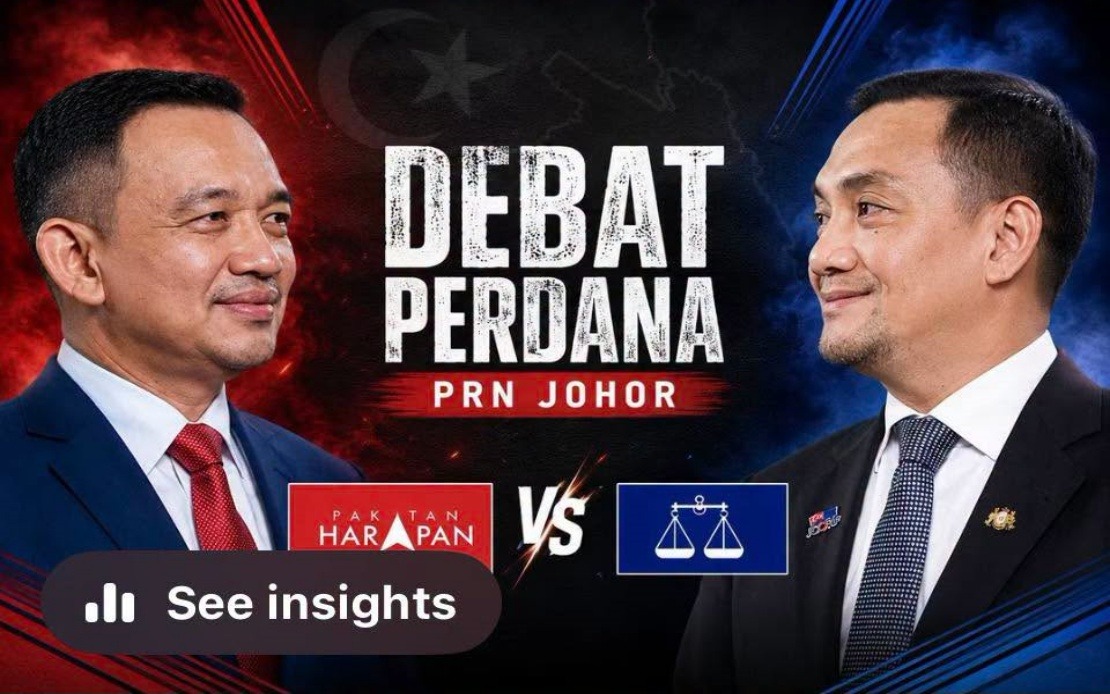
Former Education Minister Maszlee Malik has formally accepted an invitation to debate with Johor Menteri Besar Onn Hafiz Ghazi as the state gears up for its imminent election cycle. The development marks a significant moment in the pre-election campaign period, signalling a willingness from the Pakatan Harapan (PH) camp to engage in public discourse with state leadership on the electoral platform.
Maszlee, who secured the party's endorsement to contest the Puteri Wangsa seat under the PH banner, framed his acceptance around principles of democratic engagement and political maturity. In a Facebook statement, he emphasised that accepting the debate challenge reflected his commitment to democratic values and his conviction that such forums could meaningfully contribute to elevating the standard of political discourse among voters. The former minister's decision to participate underscores a calculated strategy by the opposition coalition to demonstrate confidence and openness to direct confrontation with the ruling administration.
The proposed "Johor State Election Grand Debate" originated from social media influencer Muhamad Harris Nasril, whose call for a structured debate subsequently gained traction when shared on the Redaksi.com Facebook page. The proposal emerged in the immediate aftermath of PH chairman Anwar Ibrahim's announcement of all 56 coalition candidates contesting across Johor, generating considerable grassroots interest and media speculation about whether the main political protagonists would commit to participating. This grassroots momentum appears to have persuaded both camps of the political value in staging such an encounter.
Maszlee's acceptance reflects broader strategic calculations within PH's Johor campaign. The coalition is fielding a substantial slate of candidates distributed across its constituent parties, with PKR contributing 20 nominees, Amanah fielding 19, and DAP providing 17 candidates. This distribution demonstrates PH's attempt to maintain internal balance while maximising electoral competitiveness across the state's diverse constituencies. The debate presents an opportunity for Maszlee and the broader coalition to articulate their political vision directly to voters who remain undecided ahead of the formal polling process.
The Electoral Commission has established a compressed timeline for the state election proceedings. Nomination day is scheduled for this Saturday, with early voting set for July 7 and the main polling day fixed for July 11. This tight schedule compresses the campaign period into just over two weeks, making high-visibility events such as the proposed debate even more strategically significant. Both candidates and party strategists are acutely aware that media attention during this condensed window will substantially shape voter perceptions and potentially influence electoral outcomes in closely contested seats.
Maszlee's willingness to engage reflects a broader PH approach of countering perceptions of weakness or reluctance to confront the government directly. By accepting the debate challenge with gracious language emphasising democratic principles, the former Education Minister positions himself and PH as the faction committed to substantive political engagement. This rhetorical positioning carries particular weight in Malaysian electoral contests, where voters frequently assess candidates not merely on policy positions but on their perceived confidence and communication prowess.
Onn Hafiz's initial debate proposal itself carries political weight as an incumbent administrator. The Menteri Besar's willingness to extend the challenge suggests confidence in his ability to articulate the state administration's accomplishments and vision for Johor's future development. For the BN-aligned government, the debate provides an opportunity to defend its record while simultaneously demonstrating openness to democratic processes, a messaging priority for any ruling coalition seeking to maintain legitimacy and public confidence.
The public resonance of the debate proposal indicates substantial voter interest in substantive political discourse. Multiple inquiries directed toward Maszlee seeking confirmation of his participation demonstrate that segments of the Johor electorate view direct confrontation between senior political figures as a valuable mechanism for evaluating candidates. This public appetite for debate reflects broader regional and global trends toward greater demand for transparent, accountable political engagement and away from purely propagandistic campaign messaging.
For Malaysian observers and regional analysts, the Johor election carries implications extending beyond state boundaries. Johor remains a politically bellwether state whose electoral outcomes frequently signal broader national sentiment and shifts in voter preferences. The scale and visibility of the proposed debate will likely influence how both major coalitions frame their respective campaigns, potentially establishing precedents for debate engagement in future Malaysian electoral contests. Should the debate proceed successfully, it may encourage other state-level contests to adopt similar formats.
The debate represents a test case for whether Malaysian political culture can accommodate higher standards of substantive public discourse without degrading into personal attacks or rhetorical excess. Both Maszlee and Onn Hafiz will face pressure to demonstrate not only political acuity but also civility and respect for democratic processes. Malaysian voters, increasingly sophisticated and demanding, will likely evaluate both candidates on their ability to articulate coherent policy positions while maintaining professional decorum throughout the exchange.