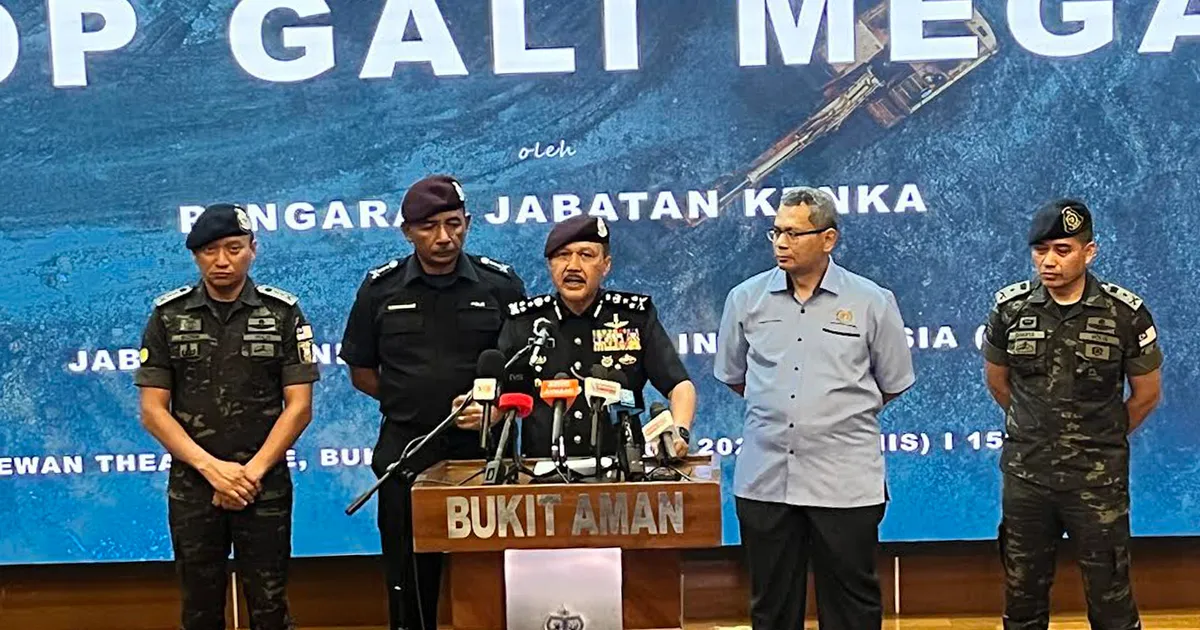
A sweeping crackdown on illegal mining operations across Malaysia has resulted in the arrest of 99 individuals and the seizure of assets valued at RM119 million, marking one of the more substantial enforcement actions against the underground extraction industry. The intensive operation, which ran from August 19 to August 23, represents a coordinated effort by authorities to combat the persistent problem of unregulated resource extraction that continues to plague the country.
During the five-day campaign, enforcement teams recovered approximately 33,000 tonnes of natural resources that had been extracted illegally. The confiscated materials encompassed a diverse range of commodities commonly targeted by illegal operators, including coal, quarry stone, earth and sand, with the seized stocks alone valued at RM21 million. This substantial haul underscores the scale and profitability of illegal mining operations, which continue to attract significant criminal investment despite regulatory efforts.
Illegal mining represents a multifaceted challenge for Malaysia, extending far beyond simple resource theft. The practice inflicts environmental damage through landscape degradation, water pollution, and habitat destruction that often requires years to remediate. Communities located near extraction sites frequently suffer from dust pollution, noise disruption, and groundwater contamination, creating substantial public health concerns that persist long after mining operations cease.
The economic implications of illegal mining are equally troubling. These unregulated operations undercut legitimate quarrying and mining businesses that comply with licensing requirements, environmental standards, and tax obligations. When illegal operators bypass these regulatory costs, they gain an unfair competitive advantage that distorts market pricing and erodes government revenue that would otherwise fund infrastructure and social services.
The August operation reflects intensified enforcement coordination among relevant agencies, suggesting a recognition that fragmented approaches have proven insufficient to address the problem comprehensively. Such coordinated sweeps, when sustained over extended periods, can disrupt criminal networks that depend on operational continuity and asset accumulation to remain profitable and resilient.
For Malaysian businesses operating in the legitimate mining and quarrying sectors, enforcement actions such as this provide some counterbalance to unfair competition from illegal operators. However, industry observers note that sporadic crackdowns alone cannot eliminate the problem without complementary strategies, including enhanced border monitoring to prevent cross-border trafficking of illegally extracted materials, particularly in states bordering Thailand and other regional neighbours.
The seizure of RM119 million in total assets—substantially higher than the RM21 million value of the raw materials themselves—suggests that authorities targeted not only the extracted resources but also the operational infrastructure of mining networks, including vehicles, equipment, and financial assets. This approach proves more disruptive to criminal operations than simple confiscation of commodities alone.
Regional cooperation presents another critical dimension. Illegal mining networks frequently operate across state boundaries and sometimes extend into neighbouring countries, exploiting jurisdictional gaps and cross-border smuggling routes. Southeast Asian nations increasingly recognise that effective countermeasures require information-sharing, coordinated enforcement protocols, and mutual legal assistance agreements that allow pursuit of suspects and assets across territorial boundaries.
The timing and scale of this operation also signal renewed political commitment to addressing environmental and economic crimes that have long been treated as lower priority compared to drug trafficking or organised crime. Policymakers appear to be gradually recognising that environmental degradation and resource loss carry cumulative costs to national development that justify sustained enforcement investment.
Looking forward, sustainability of enforcement gains depends on whether authorities can maintain operational tempo and prevent the reconstitution of dismantled networks. Criminal organisations often respond to crackdowns by temporarily reducing activity, relocating operations to less-monitored areas, or restructuring organisational hierarchies to insulate leadership from prosecution risk. Without sustained pressure and systematic investigation of higher-level organisers and financiers, network disruption tends to prove temporary.
The August operation also highlights opportunities for improving prevention through technology adoption. Remote sensing, satellite imagery analysis, and real-time monitoring systems could enable authorities to detect illegal extraction sites more rapidly and reduce response times. Investment in these technologies, though requiring significant capital outlay, offers potentially superior long-term cost-effectiveness compared to labour-intensive reactive enforcement operations.
For Malaysian citizens and businesses concerned with environmental sustainability and fair competition, this crackdown represents progress, though clearly insufficient in isolation. Addressing illegal mining comprehensively requires concurrent strengthening of licensing mechanisms, genuine deterrence through meaningful penalties for operators and downstream buyers of illegally extracted materials, and strategic public awareness campaigns that reduce market demand for materials of dubious origin. Until these elements align systematically with enforcement operations, Malaysia will continue battling this persistent criminal enterprise.

