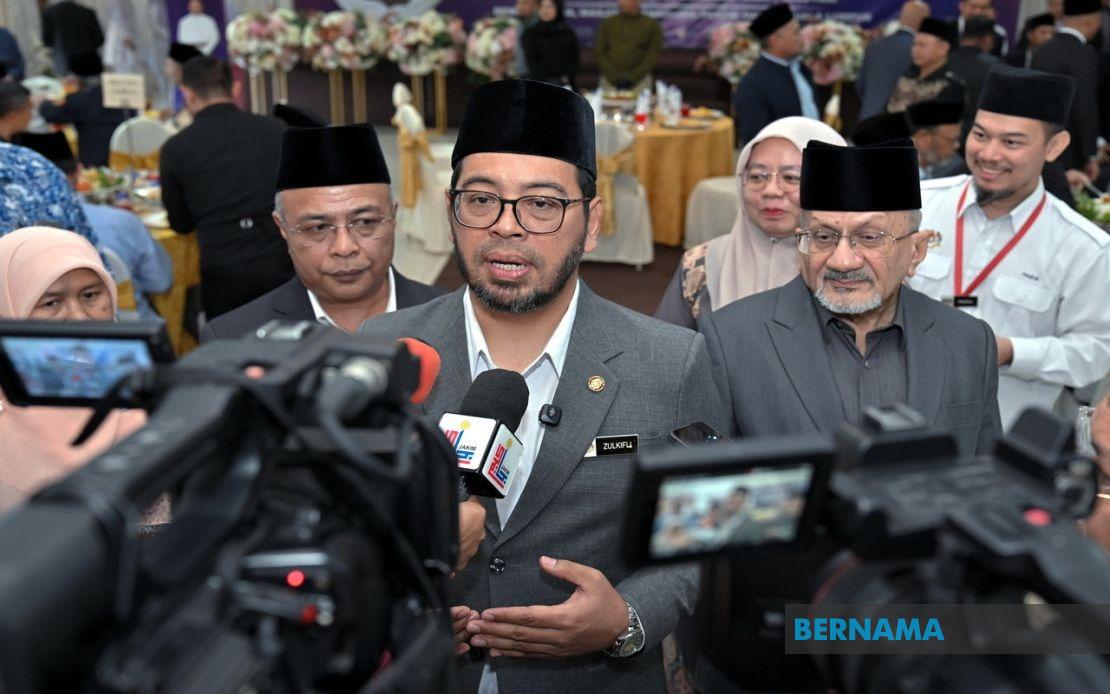
The Malaysian government has reaffirmed its commitment to building Masjid Warisan in front of the Tun Razak Exchange tower despite mounting criticism from certain quarters. Religious Affairs Minister Dr Zulkifli Hasan made the announcement in Kuala Lumpur on June 23, emphasising that the development represents a long-planned initiative aligned with the government's vision of strengthening mosques as vital community institutions. The minister's statement signals the administration's determination to proceed with the controversial project, which has attracted opposition from various groups concerned about its potential ramifications for the capital's social fabric.
The genesis of Masjid Warisan extends back several years within government planning circles, reflecting a broader strategic approach to integrating religious infrastructure within Malaysia's modern urban landscape. By situating a significant mosque project at the nexus of Kuala Lumpur's financial district, the initiative seeks to underscore the compatibility between contemporary development and religious observance. The timing of the formal confirmation, coupled with the minister's emphasis on the project's historical context, suggests the administration views this as a foundational commitment that cannot be easily deferred or abandoned without undermining stated policy objectives.
Criticism of the Masjid Warisan initiative has intensified in recent months, with detractors arguing that the project risks generating social tensions and provoking public dissatisfaction within certain communities. These objections operate at multiple registers, touching on concerns about urban planning, religious visibility in secular spaces, and the potential for heightened intercommunal friction. The emergence of organised opposition has prompted government officials to adopt a more defensive posture, even as they maintain official commitment to the development timeline. The minister's June 23 statement appears calibrated to address these reservations while simultaneously affirming the project's inevitability.
Dr Zulkifli Hasan suggested that concerns about the mosque's construction should be channelled through formal institutional mechanisms, specifically directing interested parties to engage with the Federal Territories Islamic Religious Council (MAIWP). This recommendation reflects the standard governance approach adopted by Malaysian authorities when confronted with public controversy over religious infrastructure projects. By directing critics towards the designated religious authority rather than engaging substantively with their concerns, the minister has effectively depoliticised the issue, framing it as a technical religious matter rather than a question requiring broader public deliberation or consent.
The minister's comparative observation regarding mosques in major world cities carries particular significance for understanding the government's positioning. By emphasising that Islamic houses of worship exist throughout global metropolitan centres and that the Islamic call to prayer constitutes a source of spiritual comfort rather than disturbance, Dr Zulkifli Hasan implicitly contests the premise underlying much of the opposition. This rhetorical strategy normalises the Masjid Warisan project by situating it within international precedent, suggesting that objections reflect provincial attitudes rather than legitimate urban planning considerations. The invocation of tranquillity associated with the call to prayer further reframes the project as serving broader spiritual and communal wellbeing functions.
The announcement of Masjid Warisan's continuation occurs against the backdrop of significant governance transitions within Malaysia's religious establishment. On the same occasion, the Religious Affairs Minister distributed appointment letters to members of the Federal Territories Mosque and Friday prayer surau committee for the 2026-2029 term during a ceremony at Masjid Al-Khadijah in Kampung Pantai Dalam. This represents a substantial administrative exercise involving 91 mosques and 124 Friday prayer surau across federal territories, reflecting the scope and complexity of religious institutional management in Malaysia's capital region.
The committee selection process incorporated rigorous integrity verification procedures, with the Royal Malaysia Police, Malaysian Anti-Corruption Commission, and Insolvency Department all participating in vetting candidates. Remarkably, 3,010 nominations were submitted for these positions, yielding 2,914 successful candidates after the integrity screening eliminated problematic applicants. This stringent evaluation mechanism demonstrates the government's commitment to ensuring that religious institutional leadership maintains the highest standards of ethical conduct and financial probity, considerations that acquire additional resonance given the substantial public investment typically associated with mosque development projects.
For Malaysian readers, the Masjid Warisan controversy encapsulates broader tensions inherent in managing religious identity within pluralistic urban environments. The project's location within Kuala Lumpur's financial heartland—adjacent to one of Asia's most significant economic development zones—symbolises the government's assertion that Islamic religious expression rightfully occupies space within Malaysia's modern cosmopolitan centres. The opposition the project has encountered reflects residual anxieties among certain communities regarding the visibility and prominence of religious institutions in ostensibly secular commercial districts, dynamics that remain politically sensitive across Southeast Asia.
The minister's framing of Masjid Warisan as advancing mosque's roles as centres of social harmony merits closer examination. This characterisation positions the mosque not merely as a venue for religious practice but as an institution capable of generating broader social integration and tranquillity. In the Malaysian context, where religious institutions frequently shoulder significant community welfare responsibilities and serve as focal points for intercommunal dialogue, this understanding resonates with established policy frameworks. The government's invocation of this rationale effectively converts a potentially divisive infrastructure project into a social goods provision, rendering opposition appear to work against communal wellbeing.
The confirmation that Masjid Warisan will proceed as planned carries implications extending beyond the immediate development itself. The minister's resolute stance signals to Malaysia's business and property sectors that government remains committed to integrating Islamic infrastructure within major urban renewal projects, establishing precedent for future similar initiatives. For foreign investors and international observers, the project's continuation despite vocal opposition demonstrates the Malaysian government's determination to advance religiously-informed development priorities even when confronted with organised dissent, a signal that may influence perceptions of Kuala Lumpur's governance environment.
Looking forward, the government's handling of the Masjid Warisan controversy will likely shape how future mosque projects in sensitive urban locations progress through planning and implementation phases. The precedent established through proceeding despite opposition, coupled with the institutional channelling of concerns through MAIWP rather than open public debate, suggests the Malaysian administration perceives religious infrastructure decisions as fundamentally different from standard urban planning matters. This distinction carries important implications for how religious and secular urban development intersect within Malaysia's metropolitan future, particularly as Kuala Lumpur continues asserting itself as a leading regional financial centre.