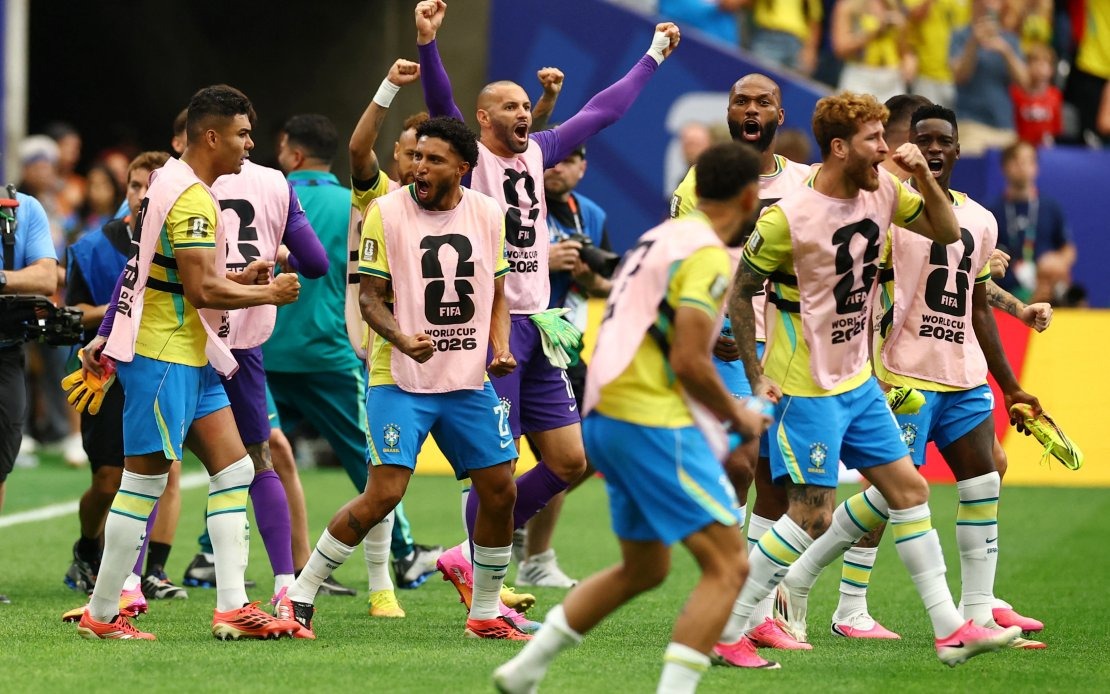
Brazil advanced to the World Cup last 16 with a dramatic 2-1 victory over Japan in Houston on Monday, courtesy of Gabriel Martinelli's stoppage-time strike that capped a performance showcasing both the intensity of knockout football and the resilience that has defined the five-time champions' tournament campaign. The match proved a compelling encounter between two unbeaten group-stage qualifiers, with neither team willing to concede ground until the final whistle. Brazil will now face the winner of the Côte d'Ivoire versus Norway fixture, having earned their progression from the round-of-32 stage with a combination of attacking flair and defensive discipline.
The contrasting journeys of both sides into the knockout phase underscored differing tactical approaches in the group stage. Brazil topped Group C with seven points, demonstrating the consistency expected of a World Cup favourite through a combination of victories and controlled performances. Japan, meanwhile, finished second in Group F with a record of one win and two draws, reflecting their more cautious approach but equally highlighting their ability to operate effectively without always requiring dominant possession. This statistical reality set the stage for a fascinating tactical examination, with Brazil's greater resource and experience tested against Japan's proven capacity to absorb pressure and strike on the counter-attack.
Historical context added another layer to the encounter. Brazil's only previous World Cup meeting with Japan had ended in a commanding 4-1 victory for the South Americans, suggesting a substantial gap in pedigree at football's grandest stage. However, that narrative carried considerably less weight following Japan's dramatic 3-2 triumph over Brazil in their most recent meeting the previous year, a result that shattered the notion of Brazilian invincibility and demonstrated that the Japanese could compete at the highest level. Such recent history meant neither team could afford complacency, and the match's unfolding events would validate those concerns.
Brazil began in characteristic fashion, dominating possession and probing for weaknesses in Japan's defensive structure. The pressure manifested in the 14th minute when Matheus Cunha forced Zion Suzuki into a one-handed save, an early warning shot that suggested the goalkeeper would face sustained examination. Yet Japan's tactical discipline held firm through the opening period, and Brazil's early dominance failed to translate into clear-cut opportunities. The samba side's possession superiority masked a lack of cutting edge that would prove consequential.
Japan's breakthrough arrived with stunning swiftness and quality in the 29th minute. A Danilo mispass presented the opportunity, but the finish demonstrated the technical excellence that characterised their tournament run. Kaishu Sano intercepted the wayward pass, surged forward with purpose, evaded Casemiro's challenge, and unleashed a powerful strike that left Alisson helpless. The goal vindicated Japan's patient approach and showed they possessed the clinical edge required to punish lapses at this level of competition. For Brazil, the deficit represented a sobering reality check that required immediate tactical adjustment.
The South American champions responded with characteristic resilience and attacking intent after the interval. Bruno Guimaraes threatened without converting, while Casemiro saw a header blocked as Brazil sought to reassert their superiority. The equaliser arrived in the 56th minute when Casemiro atoned for his earlier defensive error by powering home a Bruno Guimaraes cross. The goal represented a turning point, restoring parity and potentially unsettling Japan's belief in their ability to contain their opponents. Vinicius Junior added another moment of individual brilliance shortly after, weaving through Japan's defence with mesmerising footwork before striking the post—a near-miss that illustrated Brazil's growing dominance and mounting pressure on Suzuki's goal.
The final stages evolved into a relentless examination of Japan's defensive resolve and concentration. Brazil maintained siege-like pressure, and their persistence was rewarded in the cruellest fashion for Japan when stoppage time arrived. Bruno Guimaraes delivered a precision pass that found Gabriel Martinelli unmarked inside the penalty area, and the Brazilian attacker maintained composure to finish decisively past Suzuki. The goal encapsulated the match's narrative arc—superior possession and sustained pressure finally yielding a breakthrough at the moment when Japan's weary defenders momentarily slipped.
Japan's desperate search for an equaliser in the immediate aftermath of Martinelli's goal came to nothing, confirming Brazil's passage through. The loss represented a creditable performance from the Japanese, who demonstrated they belonged in the knockout stage and could trouble even elite opposition, yet ultimately fell short when it mattered. For Brazil, the victory vindicated their tournament philosophy: maintain intensity, create opportunities, and trust that quality will eventually prevail. The challenge ahead against Côte d'Ivoire or Norway will test whether this formula remains sufficient as the competition intensifies.
The match carried implications beyond the immediate participants. Southeast Asian football observers witnessed Japan's continued growth as a continental powerhouse, with their group-stage performance and competitive showing against Brazil indicating that East Asian football's trajectory remains upward. For Brazil, advancement represented another step toward validating their status as tournament contenders, though the narrow margin of victory suggested deeper vulnerabilities that more established opponents might yet exploit.

