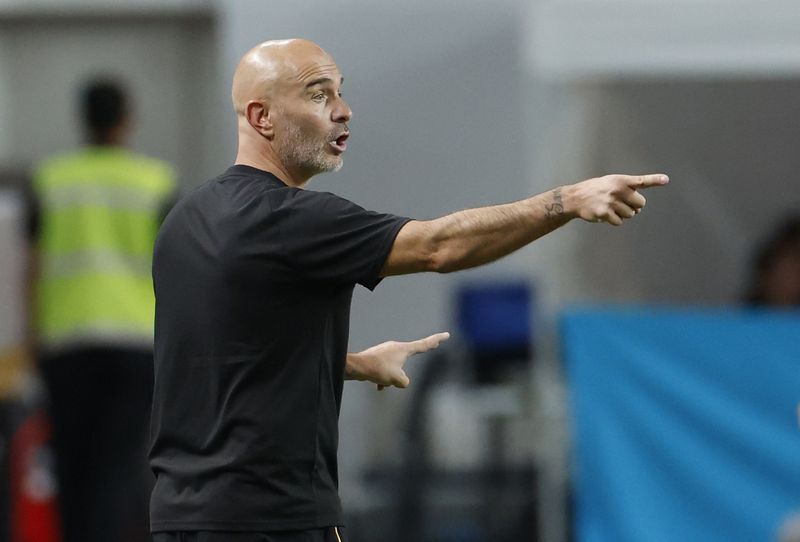
The curtain has fallen on an unprecedented era at Manchester City. After a decade of unrelenting supremacy under Pep Guardiola, the English champions have turned to Enzo Maresca to navigate the club's uncertain future. The 46-year-old Italian's appointment represents continuity rather than revolution, yet the weight of expectation remains immense as City attempts to sustain a legacy that has fundamentally reshaped English football.
Guardiola's tenure at the Etihad remains without parallel in the club's history. The Spanish tactician delivered six Premier League titles, captured the Champions League trophy, and transformed Manchester City from ambitious challengers into the sport's most consistent winning machine. His departure marks the end of an era defined by meticulous preparation, tactical innovation, and an almost mechanical approach to dominance that proved nearly impossible for rivals to counter. The standards he established—not merely winning, but winning with style and maintaining competitive hunger—have become embedded within the club's identity.
Maresca arrives with considerable pedigree and familiarity with City's methods. He served on Guardiola's coaching staff during the club's treble-winning campaign, providing him with intimate knowledge of the systems and philosophies that drove success. His subsequent managerial career demonstrates progressively ambitious achievements: restoring Leicester City to Premier League status and securing silverware at Chelsea. These accomplishments convinced City's leadership that he possessed both the tactical acumen and resilience required for this demanding transition.
The philosophical foundation of City's approach remains unchanged under Maresca's stewardship. Rather than pursuing radical tactical departure, the club has consciously selected a successor who understands and respects the positional play, ball retention, and flexible attacking patterns that defined the Guardiola years. This strategic choice reflects pragmatism; dismantling a proven system would introduce unnecessary volatility. However, it simultaneously presents Maresca with a delicate challenge: he must honour the tactical blueprint while inserting sufficient innovation and personality to assert himself as more than merely Guardiola's caretaker.
The playing squad available to Maresca remains formidable by any measure. Erling Haaland, the Norwegian striker who has dominated Premier League scoring in three of the past four seasons, provides an almost guaranteed source of goals that few coaches could squander. Rodri, the midfield lynchpin who orchestrated Spain's recent World Cup triumph and earned the tournament's Golden Ball, remains available despite Barcelona's persistent interest. These two players alone represent a foundation upon which virtually any manager could construct genuine title contention.
City's summer recruitment further bolsters their competitive position. The acquisition of Elliot Anderson from Nottingham Forest for £116 million adds dynamism and ball-winning capability to the midfield, addressing specific requirements identified by the new coaching staff. Emerging talents including Rayan Cherki and Nico O'Reilly offer fresh vitality and present opportunities for tactical experimentation that could ultimately distinguish Maresca's approach from his predecessor's.
Yet significant departures have simultaneously depleted the squad's experience and institutional memory. Long-serving figures Bernardo Silva and John Stones—players who understood every facet of City's winning culture—have moved on. These losses represent more than mere statistical adjustments; they signal the departure of leadership voices in the dressing room, figures who could translate Guardiola's demanding philosophy into peer-level accountability. Replacing such intangible qualities proves infinitely more challenging than acquiring technical ability.
Guardiola's final season encapsulates the extraordinary standards now ingrained at City. A domestic cup double—achievements that would constitute resounding success at most elite clubs—felt pyrrhic when Arsenal's Premier League triumph rendered it secondary. This uncomfortable reality illustrates precisely why Maresca's task extends far beyond stylistic considerations. The club's hierarchy, supporters, and media establishment will judge him primarily through the lens of trophy accumulation, particularly Premier League supremacy. Second place or cup competitions alone will be perceived as underperformance regardless of tactical beauty or developmental progress.
Maresca's most significant challenge may ultimately transcend tactical or technical dimensions. Guardiola's influence permeated City's organisational culture, affecting everything from training ground philosophy to media relations to how players understood their individual responsibilities within a collective framework. This cultural architecture took years to construct and remains deeply embedded. While Maresca's prior familiarity with these systems provides genuine advantage compared to an outsider, he must transition from being Guardiola's respected lieutenant to becoming an autonomous leader capable of making independent decisions that some veteran players may initially resist.
The adjustment process will necessarily accelerate given current circumstances. Multiple players will arrive late for pre-season following World Cup commitments, compressing preparation time for the season's opening fixture against Bournemouth on August 23. Nevertheless, City remain genuine contenders across every competition. The club's financial resources, squad depth, and institutional competence provide protective insulation against catastrophic failure.
Maresca's path forward requires synthesis of competing demands. He must preserve the tactical principles and winning habits that define Manchester City while simultaneously establishing sufficient autonomy and innovation to emerge from Guardiola's considerable shadow. Should he accomplish this delicate balance—maintaining continuity while injecting sufficient tactical refreshment to convince the squad they serve a distinct leader rather than a caretaker—City could swiftly return to their familiar position atop English football. The alternative, where players and staff remain psychologically anchored to the previous era, represents the genuine threat to his tenure.

