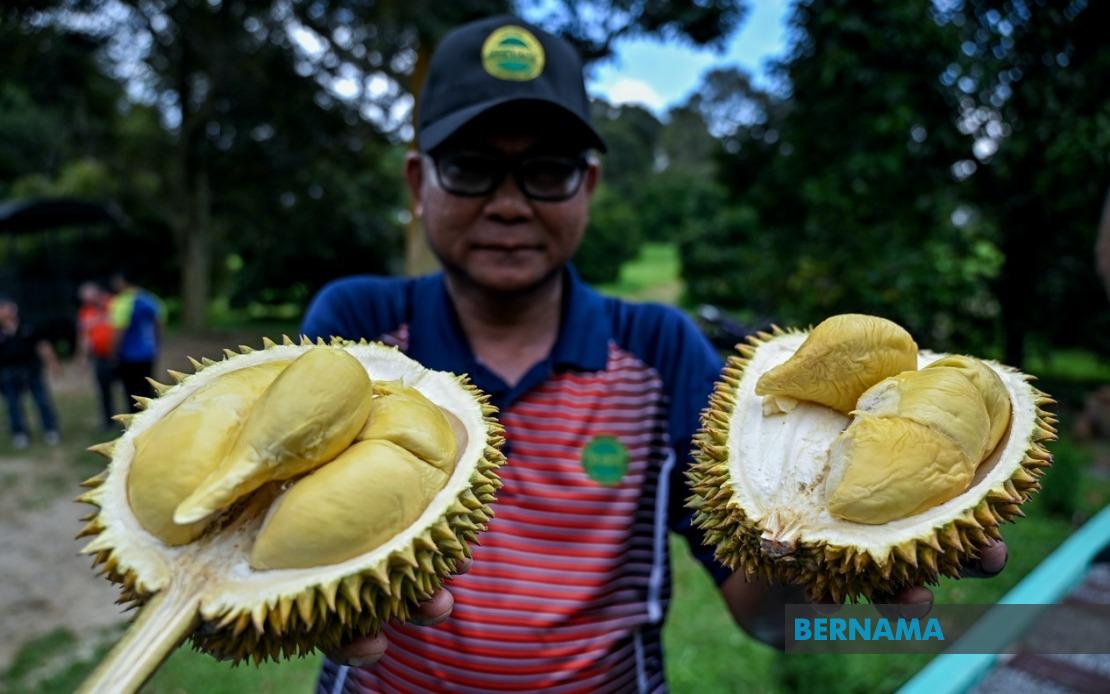
Malaysia's premier agricultural research body has achieved a significant milestone in its ambitious durian breeding programme, with the Malaysian Agricultural Research and Development Institute (MARDI) reporting the successful establishment of around 25,000 MS88 hybrid durian trees across the country. Datuk Dr Mohamad Zabawi Abdul Ghani, the institute's director-general, disclosed this achievement while speaking to media representatives during a Duriotourism event at the MARDI Agrotechnology Park in Kuala Kangsar on July 5, emphasizing the institute's commitment to strengthening Malaysia's position as a major durian producer and exporter.
The plantings occupy approximately 242 hectares of agricultural land, with the heaviest concentration in Selangor and the several east coast states, positioning MARDI to establish a robust geographical distribution network for its premium variety. This strategic geographical spread reflects a conscious effort to diversify cultivation across suitable agroclimatic zones, reducing production risks and enabling year-round supply to domestic and international markets. The MS88 represents one of MARDI's flagship contributions to the nation's agricultural innovation portfolio, developed during an era when Malaysian durian breeding began gaining international recognition.
Within the broader context of MARDI's durian research legacy, the MS88 joins an established lineage of proprietary varieties that have gained credibility among commercial growers and quality-conscious consumers. Alongside the MDUR78 and MDUR79 varieties, which continue to command strong market preference among durian aficionados throughout Southeast Asia, the MS88 forms part of a diversified product offering that began taking shape in the early 2000s. This portfolio approach demonstrates MARDI's sophisticated understanding of market segmentation and the varying preferences that different consumer demographics and regional markets express towards premium durian cultivars.
Beyond current achievements, MARDI is actively engaged in the next generation of durian improvement, with the institute's scientists currently evaluating three additional hybrid varieties destined for introduction as premium offerings into commercial production. These candidates are undergoing rigorous assessment protocols designed to evaluate multiple performance dimensions simultaneously. The evaluation framework encompasses sensory characteristics and commercial viability, ensuring that any new release will meet both consumer expectations and practical farming requirements.
The selection process for these prospective new varieties remains meticulous and deliberately extended, with Datuk Dr Mohamad Zabawi emphasizing that MARDI refuses to accelerate timelines at the expense of quality assurance. Each potential candidate must demonstrate consistent fruit quality attributes, generate positive consumer reception in taste testing and preference surveys, and prove technically compatible with existing cultivation practices that Malaysian farmers already understand and employ. This cautious approach reflects institutional learning from agricultural programmes globally, where premature releases of new varieties have occasionally resulted in disappointing field performance or lukewarm market adoption.
The deliberate withholding of names for the three emerging varieties underscores MARDI's strategic communications planning and marketing sophistication. By orchestrating the formal introduction of new durian varieties to coincide with Malaysia's annual durian season, the institute creates opportunities for consumers to experience the fruits firsthand, participating in comparative tastings that generate organic consumer interest and industry discussion. This carefully timed unveiling strategy maximizes publicity while allowing genuine consumer feedback to inform final commercialization decisions, rather than relying solely on laboratory data or limited expert assessments.
For Malaysia's broader agricultural sector and rural economy, these developments carry substantial implications. The durian industry represents a multi-billion-ringgit component of Malaysian agriculture, with export revenues providing critical foreign exchange earnings and employment for thousands of farming families, particularly in Pahang, Johor, and other premium growing regions. Domestically bred premium varieties offer Malaysian farmers a competitive differentiation mechanism, allowing them to command premium prices in discerning regional markets that increasingly value provenance and consistent quality. In an industry historically dominated by Thai producers, Malaysian proprietary varieties represent intellectual property assets that can establish long-term competitive advantages.
Moreover, MARDI's sustained investment in durian improvement reflects recognition that consumer preferences continue evolving. Contemporary consumers increasingly seek specific flavor profiles, flesh textures, and aroma characteristics that older varieties may not deliver consistently. By maintaining an active pipeline of new breeding lines under development, MARDI positions Malaysia to respond to these shifting preferences rather than remaining locked into existing variety portfolios. This adaptability becomes particularly critical as durian consumption expands beyond traditional Southeast Asian markets into emerging economies across Asia, where consumer preferences differ markedly from established markets.
The geographical concentration of MS88 plantings in Selangor and east coast states also reflects pragmatic horticultural considerations. Selangor's proximity to major urban consumption centers and export logistics infrastructure enables efficient supply chain coordination, while east coast locations benefit from specific soil and climatic conditions that optimize durian cultivation. These regions have historically supported successful durian farming communities with established knowledge networks and supporting agricultural services, facilitating technology transfer and farmer support for newly introduced varieties.
From a policy perspective, MARDI's durian research programme exemplifies how public sector agricultural institutions can generate substantial economic value through targeted breeding investments. Unlike commodity crops where variety development may benefit a diffuse global population, durian improvement directly enriches Malaysian farming communities and national agricultural competitiveness. The relatively concentrated geographical production base for premium durian varieties means that quality improvements and yield enhancements translate directly into enhanced returns for Malaysian stakeholders.
Looking forward, the progression from 25,000 MS88 trees to commercial scale production will require coordinated expansion of nursery capacity, farmer training programmes, and market development initiatives. Consumer acceptance of newer varieties cannot be assumed; successful commercialization demands sustained marketing and careful positioning within existing market channels. MARDI's developmental pipeline of three additional varieties suggests confidence in the institute's breeding capabilities and expectation of continued industry demand for novel premium offerings.
The initiative also underscores Malaysia's broader aspirations within agricultural biotechnology and crop improvement science. In an era when many developing nations depend on imported crop varieties, MARDI's successful development of proprietary premium durian cultivars demonstrates endogenous innovation capacity. This achievement carries symbolic significance beyond durian itself, signalling that Malaysian agricultural science institutions possess sophisticated capability to conduct competitive research that generates commercially valuable intellectual property.

