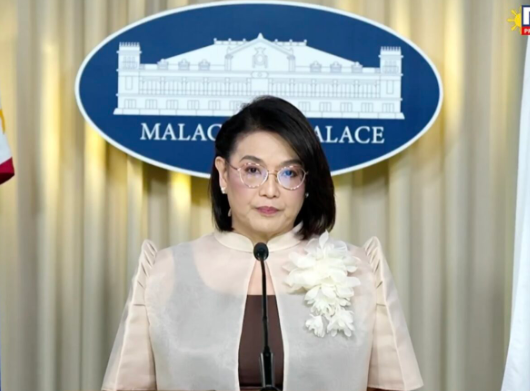
President Ferdinand Marcos Jr has reaffirmed his confidence in the Armed Forces of the Philippines, even as the National Bureau of Investigation disclosed that active military officers rank among those being scrutinised in connection with an alleged plot to kill the nation's leader. The revelation, made by NBI Director Melvin Matibag during Vice President Sara Duterte's impeachment proceeding on July 22, has intensified scrutiny over institutional loyalty and security vulnerabilities at the highest levels of government, yet the presidential palace moved swiftly to contain potential fallout by emphasising the President's unwavering faith in the military establishment.
Matibag's testimony painted a disturbing picture of the alleged conspiracy's reach, extending beyond fringe elements into the formal security apparatus. Among those flagged for investigation is an individual assigned to Duterte's personal security detail, suggesting potential coordination between high-level political figures and armed forces personnel. The disclosure raised uncomfortable questions about whether institutional safeguards designed to protect national leaders remain effective when suspicions of internal conspiracy emerge. Such revelations typically trigger waves of institutional anxiety across government security hierarchies, yet the palace's response prioritised reassurance over acknowledgement of systemic vulnerability.
Palace Press Officer Claire Castro articulated the administration's carefully calibrated position during a press briefing, stating that while the President maintains absolute confidence in the armed forces as an institution, those individuals who may have strayed from their constitutional mandate must face identification and accountability. This formulation allowed Marcos to preserve institutional legitimacy while signalling that wrongdoing by rogue officers would not be tolerated. Castro's remarks emphasised that the investigation represented a security sector responsibility rather than a presidential prerogative, effectively delegating the investigation's political consequences to military leadership while insulating the chief executive from direct involvement.
Castro further elaborated that the palace views the alleged conspiracy through a broader lens of institutional integrity. She noted that individuals planning to violate the law in order to protect or advance particular political interests must be exposed and neutralised. This characterisation implicitly linked the alleged assassination plot to factional political interests, suggesting that the conspiracy represented not merely a security threat but a challenge to constitutional order itself. The statement reflected growing tensions within the Philippine political establishment, where questions of loyalty and institutional autonomy have become increasingly fraught amid competing presidential ambitions.
The palace declined to initiate any loyalty verification programme or internal security review, Castro confirmed, positioning such matters as the exclusive domain of armed forces leadership. This decision reflected both confidence in military command structure and pragmatic recognition that overt presidential interference in internal military affairs could itself destabilise civil-military relations. The armed forces, having weathered numerous institutional crises over preceding decades, presumably possessed sufficient capacity to investigate and police its own ranks without external political pressure. Castro's assurance that the President knows precisely whom to trust suggested an inner circle of validated officers upon whom the chief executive relies for protection and counsel.
Vice President Duterte's dramatic statement during the same proceeding added volatile personal dimensions to the institutional security questions. She revealed having issued explicit instructions regarding succession in the event of her assassination, naming Marcos, prominent businesswoman Liza Araneta, and House Speaker Martin Romualdez as co-targets in her contingency scenario. This extraordinary declaration, made with repeated emphasis on its seriousness, suggested that Duterte perceived genuine mortal danger extending beyond rhetorical political conflict. The specificity of her naming convention implied careful consideration of who might benefit from simultaneous removal of multiple high-ranking officials.
Duterte's testimony underscored deepening personal animosity between the Vice President and the President, transforming what might have remained an institutional security matter into open acknowledgement of existential political rivalry. Her willingness to publicly discuss assassination contingencies during an impeachment proceeding reflected both the extraordinary polarisation within contemporary Philippine politics and her apparent conviction that conventional restraint no longer applied. The statement's positioning during Duterte's own defence against impeachment charges suggested a strategy of elevating security concerns to counterbalance political vulnerabilities she faced in that proceeding.
Subsequent NBI efforts to compel Duterte's cooperation through subpoena proved unsuccessful, as the Vice President declined to comply with investigative demands. This non-compliance reflected wider constitutional ambiguities surrounding investigative authority over sitting vice presidents and suggested that Duterte possessed either legal counsel advising against cooperation or political calculation that withholding evidence served her strategic interests. The standoff between the NBI and the Vice President illustrated how security investigations become entangled with constitutional separation of powers and rival institutional jurisdictions.
For Malaysian and Southeast Asian observers, the Philippine security crisis illuminates enduring vulnerabilities within presidential systems where institutional checks remain underdeveloped and personal rivalries overshadow constitutional procedures. The apparent involvement of active military personnel in assassination plotting, if substantiated, would represent a fundamental breakdown of civil-military relations comparable to security crises that have periodically destabilised democratic governance across the region. Marcos's maintenance of military confidence, while institutionally prudent, risks appearing naive if investigation reveals systematic rather than individual wrongdoing within armed forces ranks.
The broader context of Philippine political instability, characterised by recurring tensions between Marcos and Duterte factions, suggests that security concerns may reflect genuine threats or alternatively might represent routine political weaponisation dressed in security language. The region's experience with institutional crises, from Thailand's repeated military interventions to Indonesia's struggle to subordinate security forces to civilian authority, demonstrates how assassination allegations and military loyalty questions can precipitate constitutional emergencies. Philippines observers must grapple with whether current investigations represent serious institutional reform or temporary political theatre that leaves underlying vulnerabilities unresolved.
Moving forward, the palace's confidence in military institutions will face empirical testing through investigation outcomes. Should the NBI substantiate involvement of active military officers in assassination planning, current expressions of presidential confidence could appear derelict in retrospect. Conversely, if investigations yield no substantive evidence, the entire episode risks cementing perceptions that Philippine security institutions weaponise allegations for political advantage. Either outcome suggests deeper institutional reform requirements extending beyond individual accountability to address systemic vulnerabilities in presidential protection and military discipline that have periodically destabilised democratic governance across Southeast Asia.

