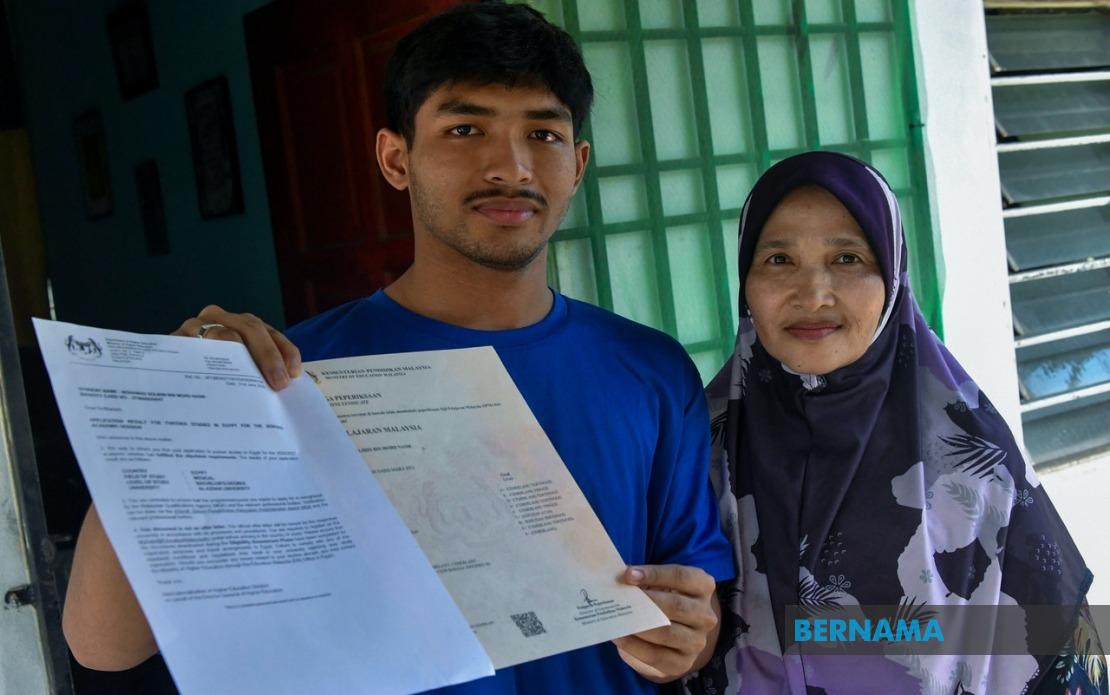
A 19-year-old Kelantan student who came close to abandoning his dream of studying medicine at Al-Azhar University in Egypt will now have the opportunity to pursue his ambition after the Majlis Amanah Rakyat (MARA) pledged to fund his education. Mohamad Solihin Mohd Nasir, a former MARA Junior Science College (MRSM) Jeli pupil, had seriously contemplated rejecting his medical offer because his family could not generate the estimated RM100,000 needed to cover tuition fees and living costs throughout the five-year programme.
Mohamad Solihin's predicament reflects a persistent challenge facing talented students from economically disadvantaged backgrounds in Malaysia: the ability to translate academic achievement into real educational opportunity. Raised by his mother Faridah Mohamad, aged 60, who manages thyroid disease and relies on support from her other children, the young student lost his father Mohd Nasir Abdul Rahman to a heart attack when he was only in Standard One back in 2014. As the youngest of five siblings with limited household resources, the financial barrier to overseas medical education appeared insurmountable despite his exceptional academic credentials.
His determination to pursue medicine, particularly with a specialisation in cardiothoracic surgery, carries deep personal significance. The death of his father from cardiac disease crystallised his resolve to enter the medical profession and potentially save lives from similar conditions. Achieving a cumulative grade point average of 3.96 at Kelantan Matriculation College, Mohamad Solihin secured the Al-Azhar placement on June 15, yet the accompanying financial reality threatened to derail what seemed destined to be a promising medical career before it could begin.
Mara chairman Datuk Dr Asyraf Wajdi Dusuki intervened by personally reaching out to the student through a video call at his home in Kampung Kubang Keranji, Kota Bharu. The MARA leadership offered two distinct pathways forward: full sponsorship to pursue medical studies at either Al-Azhar University in Egypt, inclusive of an Arabic language preparatory course to satisfy entry requirements, or alternatively, a medical degree programme at Universiti Sains Malaysia Health Campus (USMKK) under MARA sponsorship. This dual-option approach acknowledges both the student's stated preference while providing a domestic alternative that would minimise the logistical and cultural adjustments required.
Mara's intervention underscores the agency's stated commitment to identifying and supporting high-performing students from underprivileged circumstances, particularly those who have experienced parental loss. Dr Asyraf Wajdi emphasised that students matching Mohamad Solihin's profile—academically exceptional, financially constrained, and orphaned—represent exactly the demographic that MARA prioritises. This targeted approach reflects a policy philosophy that financial circumstances should not become an insurmountable barrier to higher education for Malaysia's most promising young minds, particularly when they demonstrate both academic excellence and personal resilience.
The community mobilisation surrounding Mohamad Solihin's situation also reveals the networks of support that emerge when individual circumstances gain visibility. Teachers at MRSM Jeli had already initiated fundraising efforts on his behalf, while his family had submitted assistance applications to several institutions including the Kelantan Islamic Religious and Malay Customs Council, Kelantan Islamic Foundation, and Kelantan Darulnaim Foundation. This multi-institutional response demonstrates that education stakeholders at various levels recognise the importance of preventing talent from being wasted due to poverty.
His mother Faridah expressed both gratitude and the underlying desperation of the family situation. While delighted that her youngest son had secured placement at the prestigious Al-Azhar University—an institution renowned throughout the Muslim world for its academic rigour—she frankly acknowledged the household's complete inability to finance such studies. She articulated hope that external assistance would materialise, emphasising that her son's lifelong aspiration to become a doctor made this opportunity particularly significant for the entire family unit.
Mohamad Solihin's preference remains studying at Al-Azhar University in Egypt, even if completing an Arabic language course beforehand becomes necessary. His departure for Egypt is tentatively scheduled between August 21 and 29, contingent upon funding arrangements being finalised. This timeline creates some urgency around finalising the specific sponsorship terms and ensuring all preparatory requirements are met before his departure.
The case highlights broader educational equity issues within Malaysia's higher education landscape. While the nation produces many academically gifted students from all socioeconomic backgrounds, the capacity of talented individuals from low-income families to access premium educational opportunities—whether domestically or internationally—remains constrained by financial realities. MARA's intervention in this particular instance, while commendable, also serves as a reminder that such assistance depends on individual cases gaining attention and advocacy through personal networks and media visibility, rather than operating through systematic, predictable mechanisms.
For Mohamad Solihin, MARA's commitment represents far more than financial support. It validates his academic achievements, affirms that his ambition to contribute to cardiothoracic medicine is valued by national institutions, and removes the crushing weight of impossible financial choices. The agency's willingness to facilitate either pathway—the Al-Azhar route or the domestic USMKK option—respects his agency while ensuring that financial barriers will not determine his educational destiny. Looking ahead, his journey through medical education will likely inspire other students from similar circumstances to persist with their own aspirations despite formidable obstacles.

