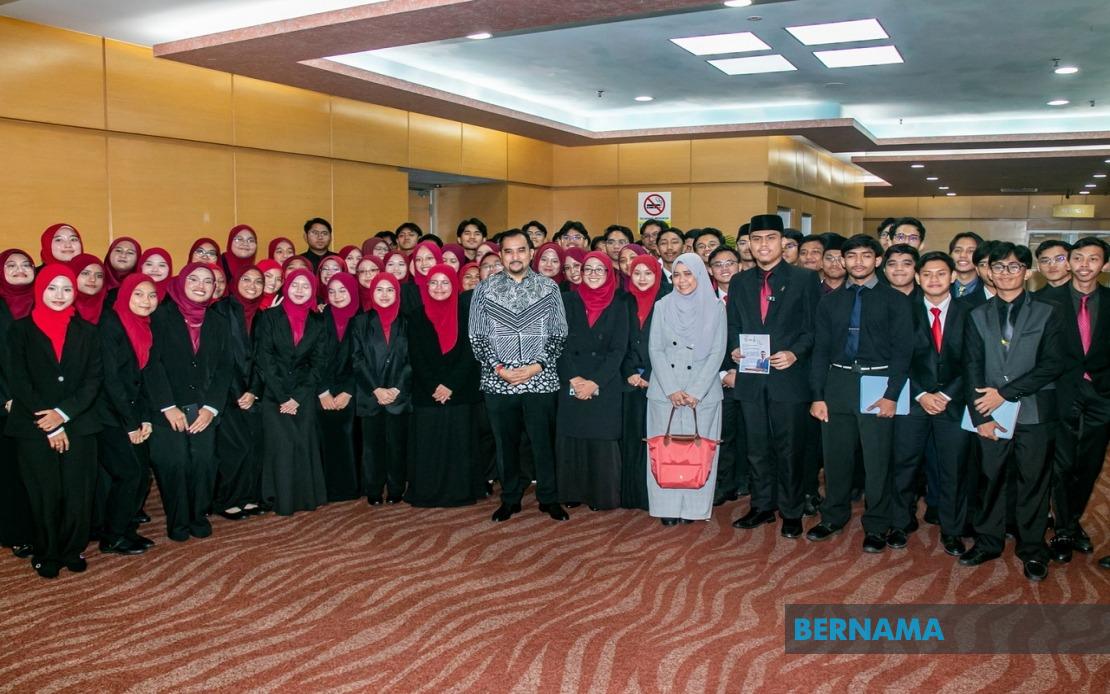
Malaysia's premier scholarship agency, Majlis Amanah Rakyat (MARA), has formally reactivated its medical education partnership with Al-Azhar University in Cairo, marking a significant milestone in the organisation's overseas training initiatives. The programme, which had remained dormant since 2019, welcomes its inaugural cohort of 78 medical students this academic year, signalling renewed confidence in Egypt's historic institution as a destination for Malaysian medical professionals-in-training.
Chairman Datuk Dr Asyraf Wajdi Dusuki announced the development after securing Cabinet endorsement, emphasising the financial pragmatism underpinning the decision. Each student's total educational investment, encompassing tuition and residential costs across the five-year medical curriculum, stands at RM350,000—a figure substantially compressed by Al-Azhar's generous 50 per cent concessional rate. This pricing remains considerably attractive when compared against domestic medical education, where institutional fees typically range between RM700,000 and RM800,000 per student, effectively doubling the Egyptian alternative.
The cost differential reflects both the partnership's strategic value and MARA's commitment to expanding affordable pathways into medicine for qualified Malaysian students. By negotiating meaningful discounts with international partners, the agency maximises its limited budget allocation whilst maintaining quality assurance standards. Such arrangements demonstrate how bilateral educational cooperation can democratise access to tertiary qualifications, particularly in high-demand fields where local capacity remains constrained.
Datuk Dr Asyraf Wajdi publicly acknowledged Prime Minister Datuk Seri Anwar Ibrahim's instrumental role in facilitating the programme's resumption, underscoring the decision's political significance and inter-ministerial coordination. This endorsement from the nation's highest elected office reflects broader government priorities regarding human capital development and the cultivation of medical professionals who can eventually augment Malaysia's healthcare workforce. The explicit attribution also signals administrative continuity and stable policy direction regarding overseas scholarships.
Beyond the medical cohort, MARA's international engagement extends considerably wider. The organisation is simultaneously dispatching 600 additional sponsored scholars to tertiary institutions across multiple continents, with departures commencing the following week in staggered batches. These students originate from MARA's three premier residential colleges—Kolej MARA Seremban in Negeri Sembilan, Kolej MARA Banting in Selangor, and Kolej MARA Kuala Nerang in Kedah—representing the cream of Malaysia's academically gifted intake systems.
The geographical distribution of destination countries underscores MARA's deliberate strategy to maintain presence across diverse academic ecosystems. Placement across New Zealand, Canada, Australia, South Korea, the United Kingdom, and Egypt ensures Malaysian scholars gain exposure to varied educational philosophies, cultural contexts, and professional practice environments. This geographic diversification enhances the cumulative human capital benefits to Malaysia's economy and institutions upon graduates' repatriation.
Notably, MARA's track record with elite institutions validates the selectivity underlying its overseas placement processes. The organisation reports that 11 of its 600 current cohort secured acceptance into Imperial College London, one of the world's premier engineering and science institutions. More broadly, 40 MARA-sponsored students gained admission to universities ranked within the global top 10, whilst 107 gained entry to top-20 ranked institutions. These figures demonstrate that MARA scholars compete successfully in the most competitive academic markets.
For Malaysia's education policy ecosystem, MARA's resumed Egyptian programme carries implications extending beyond immediate student numbers. Al-Azhar University's six-century history and continental prominence ensure that Malaysian medical graduates trained there will carry institutional credentials recognised throughout the Arab world and Islamic regions. This positions Malaysia advantageously for South-South cooperation frameworks and enhances the nation's soft power positioning in Middle Eastern contexts where educational partnerships carry strategic weight.
The seven-year hiatus that preceded this reactivation warrants reflection, as programme suspensions typically signal shifting priorities or resource constraints rather than educational dissatisfaction. The resumption suggests either stabilisation of MARA's financial position or deliberate reallocation of resources toward this particular initiative. Either interpretation signals institutional confidence and renewed commitment to diversity in Malaysian higher education internationalisation strategies.
From a regional perspective, Malaysia's continued reliance on overseas medical training speaks to persistent capacity limitations in domestic medical school systems despite expansion efforts over recent decades. While universities like Universiti Malaya and Universiti Kebangsaan Malaysia produce capable physicians, the persistent demand for foreign training opportunities indicates that qualifying applicants far exceed available domestic slots. International scholarships thus serve as essential pressure-relief valves within Malaysia's educational apparatus.
The financial sustainability model underlying MARA's Egyptian partnership—particularly the negotiated 50 per cent discount—offers instructive lessons for other Malaysian agencies or institutions seeking to maintain international engagement amid constrained budgets. Strategic partnerships yielding mutual benefit rather than transactional arrangements characterise effective overseas education programming. Al-Azhar's willingness to extend substantial discounts to a major sponsoring agency reflects institutional interest in long-term relationships rather than ad hoc student recruitment.
Looking forward, the successful placement of this initial 78-student cohort at Al-Azhar will likely determine whether the programme expands toward pre-hiatus volumes. Historical precedent and demonstrated institutional capacity suggest growth remains feasible should enrolment demand persist. For Malaysian students aspiring toward medical careers, the reopened Egyptian pathway now represents a credible, cost-effective alternative warranting serious consideration alongside domestic and other international options.

