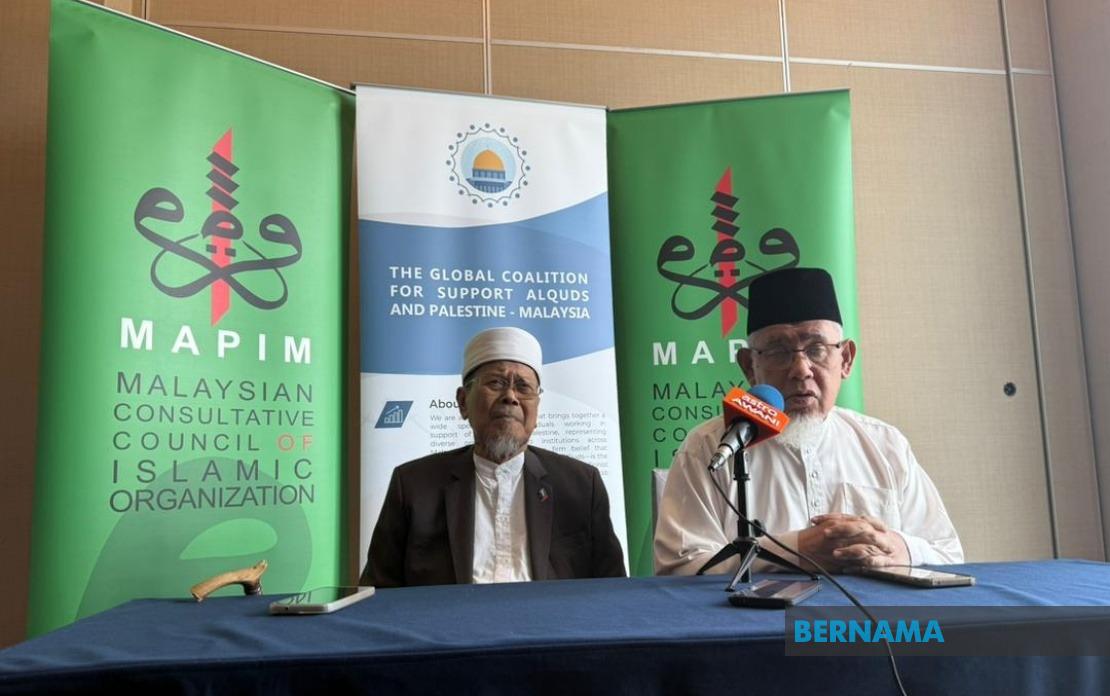
The Malaysian Consultative Council of Islamic Organisations (MAPIM) is preparing to convene a significant regional assembly beginning tomorrow in Ipoh, positioning the gathering as a pivotal moment for mosque leadership across Southeast Asia to align on shared priorities and institutional strengthening. Organised in partnership with the Perak Islamic Religious Department (JAIPk), the two-day Regional Mosque Conference 2026 represents an ambitious attempt to forge deeper connections among Islamic institutions across a fragmented region, drawing approximately 400 representatives from Malaysia and eight neighbouring nations.
The breadth of participation underscores the conference's regional significance. Delegates will arrive from Indonesia, Singapore, Brunei, Timor-Leste, Myanmar, Cambodia, Thailand and Vietnam, with additional international representation from Turkiye, Iran and Pakistan. This composition reflects MAPIM's ambition to position Southeast Asian mosques within a broader transnational Islamic network whilst maintaining regional focus. MAPIM president Mohd Azmi Abdul Hamid articulated a vision extending beyond ceremonial observance, framing the gathering as a working forum to operationalise institutional change across the mosque sector.
The timing carries symbolic weight, with the conference coinciding with World Mosque Day, observed annually on August 21 to commemorate the 1969 arson attack on Al-Aqsa Mosque in Jerusalem. This alignment suggests organisers intend to weave contemporary Palestinian concerns into the substantive agenda, transforming what might otherwise be a commemorative event into a platform for coordinated advocacy. Mohd Azmi emphasised that marking World Mosque Day should transcend annual ritual, instead catalysing genuine momentum toward revitalising mosques as anchoring institutions within Muslim communities across the region.
The conference agenda encompasses seven primary objectives, though organisers have emphasised three as foundational. Building a regional cooperation network among mosques addresses fragmentation that has historically limited institutional coordination across Southeast Asia, where mosques operate largely as autonomous community entities. The second pillar targets youth engagement and economic inclusion, acknowledging demographic realities and the necessity of adapting mosque functions to serve younger, increasingly economically active populations. The third focuses on deepening ties with Islamic non-governmental organisations, recognising that effective community mobilisation increasingly depends on collaboration beyond formal religious hierarchies.
Intellectual and practical work will structure the two days. Scheduled academic presentations will provide theological and institutional frameworks, whilst international dialogues are designed to facilitate peer learning among mosque leaders confronting analogous governance and community challenges. Dedicated discussion sessions devoted to Palestine and Al-Aqsa Mosque will likely dominate public attention, positioning these topics as central rather than peripheral to the conference's institutional mission.
Three major initiatives are slated for launch during the gathering, each designed to extend the conference's impact beyond the immediate gathering. A regional mosque coalition focused on Palestine formalises what has historically been ad-hoc coordination, creating a structured mechanism for collective advocacy. A comprehensive book documenting the evolving role of mosques in contemporary Southeast Asian societies will contribute to institutional self-reflection and knowledge-sharing. Most notably, MAPIM is introducing the MAPIM Gold Dinar, a fundraising mechanism intended to streamline public contributions toward the Al-Aqsa Mosque Fund, lowering barriers to participation by simplifying the transaction process.
The gold dinar initiative reflects pragmatic recognition that advocacy requires financial resources. By monetising commitment to the Al-Aqsa cause through accessible financial products, MAPIM extends engagement beyond rhetoric toward material contribution. This approach has precedent in Islamic finance and fundraising globally, though its application in the Malaysian and Southeast Asian context represents a notable institutional innovation designed to mobilise grassroots support through familiar financial mechanisms.
Mohd Azmi framed the conference as an opportunity to generate both declarations and actionable implementation plans, distinguishing the gathering from purely rhetorical exercises. Post-conference deliverables are intended to persist as practical guidance for participating mosques, suggesting organisers anticipate sustained engagement rather than treating the gathering as an isolated event. This emphasis on sustainability reflects acknowledgment that institutional change requires structured follow-up mechanisms and clear accountability frameworks.
For Malaysia specifically, the gathering positioned in Ipoh signals Kuala Lumpur's aspirations toward regional Islamic institutional leadership, leveraging established domestic mosque infrastructure to serve as convening authority for broader Southeast Asian coordination. Given Malaysia's significant mosque development and established religious governance apparatus, hosting this conference reinforces the country's positioning within transnational Islamic networks whilst grounding such engagement in local institutional capacity.
The conference arrives amid broader Southeast Asian religious and geopolitical currents. Muslim-majority and Muslim-minority nations across the region confront common challenges regarding religious institution relevance, youth engagement and balancing communal identity with pluralistic state structures. A coordinated regional approach to these structural questions, facilitated through mosque-based networks, potentially creates space for shared problem-solving transcending national borders. The explicit inclusion of minority-Muslim nations like Thailand, Myanmar and Vietnam alongside Muslim-majority states suggests organisers view mosque networks as valuable across diverse demographic contexts.
The Palestinian advocacy dimension warrants careful attention given Malaysia's historical position within international Islamic politics. Allocating substantial conference resources to Palestinian causes reflects domestic constituency expectations whilst leveraging the gathering's regional platform for amplifying Malaysian perspectives on this issue. The initiative also demonstrates how institutional gatherings around seemingly technical topics—mosque governance, community engagement—become vehicles for advancing broader political messaging within acceptable Islamic institutional frameworks.
As regional Islamic institutions navigate evolving social dynamics, resource constraints and demographic change, MAPIM's initiative to create structured coordination mechanisms represents a significant organisational undertaking. Whether the conference generates durable institutional changes or functions primarily as rhetorical event will depend substantially on implementation capacity and sustained commitment from participating mosques following the gathering's conclusion. The initiative's success may offer a template for other Islamic institutional networks seeking to enhance regional coordination whilst addressing community-specific local priorities.

