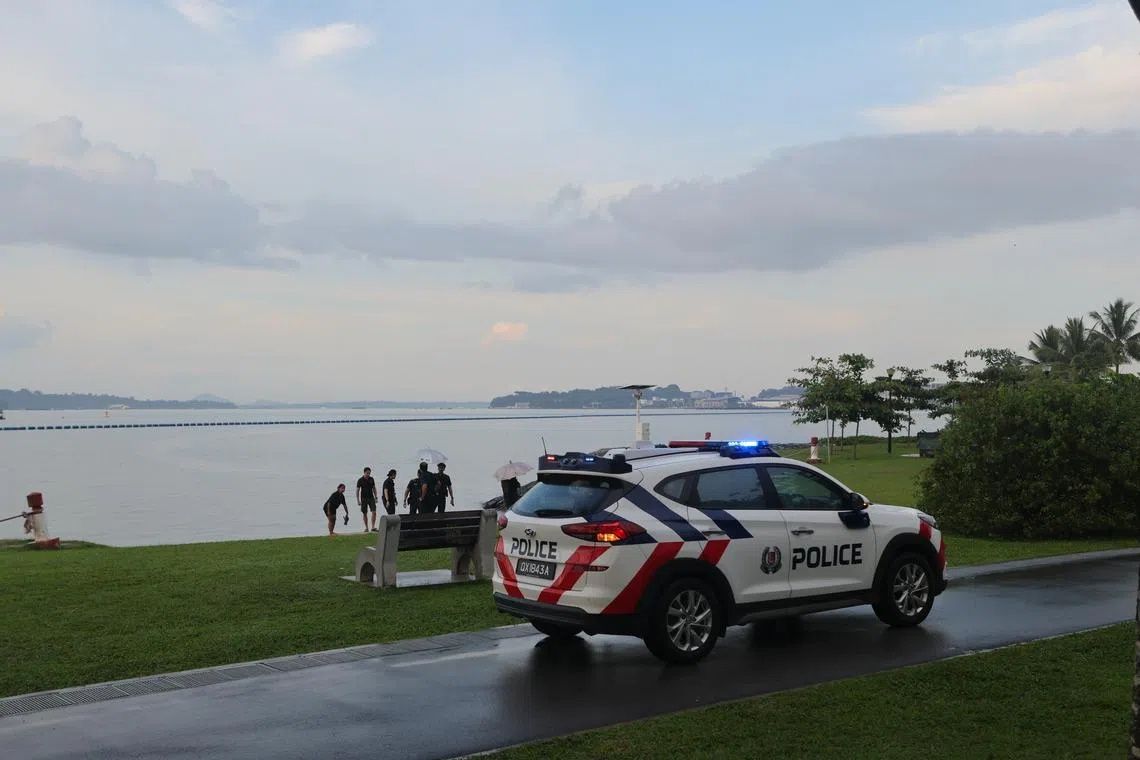
A man in his 20s was struck by lightning while engaged in water activities off Pasir Ris Beach in Singapore on Sunday afternoon, leaving him unconscious and requiring emergency hospitalisation. The incident, which unfolded shortly after 4pm, involved a group of eight water sports enthusiasts who were kayaking and paddleboarding approximately 100 metres offshore when the strike occurred. The Singapore Civil Defence Force received an alert at around 4.50pm and responded swiftly to the scene, with emergency responders performing resuscitation efforts on the victim as onlookers gathered nearby.
The full extent of the incident became apparent as emergency services transported those affected to medical facilities across Singapore. The man who was struck was conveyed unconscious to Sengkang General Hospital, where four other adults from the paddleboarding group were also admitted in conscious condition. Two children who were part of the water sports activity were transported to KK Women's and Children's Hospital, also conscious and reportedly in stable condition. In total, seven individuals required hospital treatment, though the precise nature and severity of injuries sustained by those other than the primary victim remain undisclosed.
Eyewitness accounts provide vivid detail about the harrowing moments when the lightning made contact with the water. Muhammad Fairuz, a 40-year-old delivery rider who was fishing nearby, recalled that the skies appeared clear when the strike occurred, an observation that underscores the often unpredictable nature of tropical lightning. The electrical discharge was so powerful that Fairuz felt the current travel through his fishing rod from his position on shore, demonstrating the considerable energy released by the strike. He witnessed a man lying unconscious on his paddleboard as the remaining members of the group quickly paddled back toward land in their kayaks.
Without hesitation, Fairuz and another nearby fisherman mobilised their own kayaks to reach the stricken paddleboarder and bring him back to shore. The rapid response from these bystanders may have been crucial in ensuring that emergency medical professionals could begin treatment promptly upon the arrival of SCDF personnel. Video footage captured by an onlooker at approximately 5.10pm shows SCDF officers administering chest compressions to the victim, while a Light Fire Attack Vehicle, colloquially known as the Red Rhino, and an ambulance were positioned on the pavement adjacent to the beach area. Police vehicles were subsequently observed at Pasir Ris Park near Carpark D, though the exact nature of their involvement in the incident remains unclear.
The incident highlights the considerable lightning risk that exists throughout Singapore's tropical climate. The Meteorological Service Singapore's records indicate that the country experiences an average of 176 lightning days annually, with a lightning day defined as any 24-hour period during which at least one lightning occurrence is detected at the Changi climate station. This frequency means that Singapore residents and visitors encounter significant exposure to lightning hazards, particularly during water-based recreational activities where individuals lack the protection offered by buildings or vehicles. The danger is compounded by the fact that coastal areas and open water environments offer no natural shelter, leaving water sports enthusiasts particularly vulnerable.
This incident is not the first recent fatality or serious injury resulting from lightning strikes in Singapore. In May of this year, a worker employed at a fish farm lost his life after being struck by lightning while at work. Earlier, in December 2023, three workers were hospitalised after lightning struck near their worksite, demonstrating that the hazard extends across both recreational and occupational settings. These incidents collectively underscore the persistent threat posed by Singapore's frequent electrical storms and the importance of public awareness regarding safety protocols during thunderstorms.
The circumstances surrounding the Pasir Ris Beach incident raise important questions about weather monitoring and public safety advisories at recreational beaches. Although the eyewitness account suggests that conditions appeared clear moments before the strike, such observations highlight the difficulty in predicting lightning strikes, which can occur even when rain is not visible or imminent. Many beachgoers may not be sufficiently aware of the lightning risk associated with being in open water during periods when electrical storms are developing, particularly given Singapore's rapidly changing weather patterns during the southwest and northeast monsoon seasons.
For the regional context, lightning safety during water activities remains a public health concern across Southeast Asia, where tropical climates produce frequent thunderstorms. Malaysia, Indonesia, and Thailand experience similar patterns of lightning activity, yet public education campaigns addressing water safety during electrical storms are often less prominent than those addressing other hazards such as rip currents or jellyfish. The Pasir Ris incident serves as a sobering reminder that weather awareness and precautionary measures, such as clearing beaches and water areas when lightning is detected, merit greater emphasis in maritime safety protocols throughout the region.
The response from SCDF personnel and the civilian rescuers who assisted in bringing the victim to shore demonstrates the critical importance of swift emergency medical intervention in lightning strike cases. Survival from lightning strikes is possible when immediate cardiopulmonary resuscitation is administered, making the actions of both trained professionals and alert bystanders potentially life-saving. As investigations into the incident continue, authorities may consider whether additional signage, monitoring systems, or public awareness initiatives are warranted to reduce the likelihood of similar incidents at popular beaches and water recreation areas.

