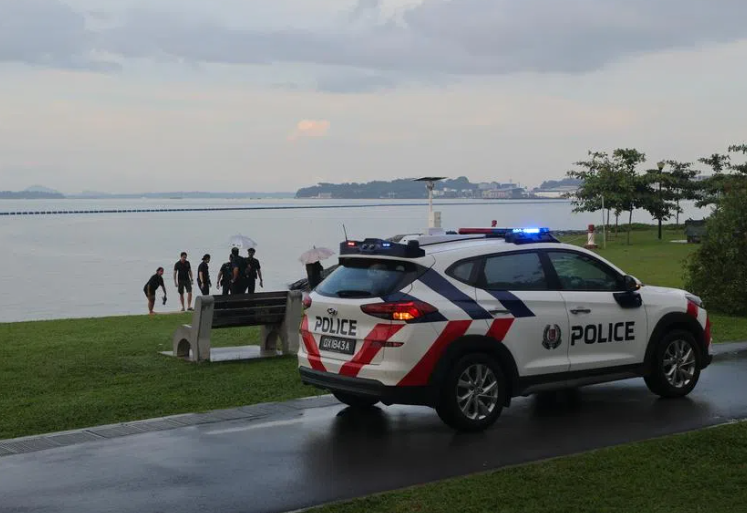
A tragedy unfolded on Sunday afternoon at Pasir Ris Beach when a recreational water sports outing turned fatal. A 24-year-old man succumbed to injuries sustained from a lightning strike while paddleboarding approximately 100 metres offshore, marking a sobering reminder of the dangers posed by sudden weather changes in coastal recreational areas. The incident, which occurred around 4.50pm on July 5, involved a group engaged in kayaking and paddleboarding activities when severe weather struck without warning.
Emergency responders rushed to the scene following the lightning strike, which occurred in what witnesses described as clear skies. Police records indicate that officers received the alert at 131 Pasir Ris Road, and by the time emergency services arrived, bystanders had already begun rescue efforts. The young man was found unconscious on his paddleboard and was immediately transported to hospital, where medical teams attempted resuscitation. However, despite these efforts, he was pronounced dead following admission. Police investigators have determined there are no suspicious circumstances surrounding the death, with investigations continuing as a matter of procedure.
The incident claimed one life but endangered many others. Six additional casualties ranging in age from 13 to 54 years were hospitalised with varying degrees of injury. The Singapore Civil Defence Force transported five individuals to Sengkang General Hospital, including one person who had lost consciousness. Two children from the group were conveyed separately to KK Women's and Children's Hospital for treatment. All six survivors were conscious or regained consciousness by the time they reached medical facilities, suggesting that prompt rescue and medical intervention may have prevented further fatalities.
Muhammad Fairuz, a 40-year-old delivery rider who was fishing nearby, witnessed the disaster unfold. He recounted how the paddleboarding group was positioned roughly 100 metres from shore shortly after 4pm when the lightning bolt struck the water with little apparent warning. The electrical discharge was powerful enough to transmit current through his fishing rod, a phenomenon that underscores the intense energy released during such strikes. Fairuz heard commotion from the group and spotted one member lying unconscious on his paddleboard while the others frantically paddled back towards land. Without hesitation, Fairuz and another nearby individual paddled out on their own kayaks to retrieve the stricken man and bring him back to shore, likely providing crucial minutes during which revival efforts could commence.
The involvement of local residents in rescue operations highlights how community awareness and quick thinking can mitigate disaster. Fairuz's decision to act immediately, rather than waiting for professional responders, may have been instrumental in getting the victim to emergency care as quickly as possible. His account also reveals the unpredictability of tropical weather patterns—the skies had been clear moments before the lightning struck, leaving no obvious warning signs for recreational users to seek shelter.
Singapore's geographic and climatic position places it in a zone of significant lightning activity. According to data from the Meteorological Service Singapore, the island nation experiences an average of 176 lightning days annually, calculated based on atmospheric disturbances detected at the Changi climate station. A lightning day is defined as any calendar day when at least one lightning occurrence is detected. This relatively high frequency of lightning events means that the risk of strikes during outdoor water activities, particularly in coastal areas during afternoon hours when convective storms develop, is a genuine concern for residents and visitors alike.
This is not an isolated incident. In May of this year, a fish farm worker in Singapore died after being struck by lightning while working, demonstrating that vulnerability to such strikes extends beyond recreational contexts to occupational settings. The previous December also witnessed a lightning-related workplace incident when three workers required hospitalisation after a lightning strike occurred near their worksite on December 28, 2023. These recurring incidents suggest a pattern of insufficient public awareness regarding lightning safety protocols and the need for enhanced preventive measures across sectors.
The tragedy at Pasir Ris Beach raises critical questions about safety infrastructure and public education in coastal recreational areas. Few beachgoers are likely aware of the statistical likelihood of lightning strikes in Singapore's climate, and even fewer understand the specific risks posed by being in open water during conditions that might appear benign. Unlike thunderstorms with dark clouds and visible precipitation, lightning can strike from what appears to be a clear sky—a phenomenon known as a "bolt from the blue"—leaving little time for warning or evasion.
Authorities and beach management operators should consider implementing enhanced safety protocols, including weather monitoring systems with real-time alerts to water sport enthusiasts, clear signage regarding lightning risks, and public awareness campaigns targeting recreational water users. Many international beach destinations have implemented sophisticated lightning detection systems that can warn users within minutes of when conditions become dangerous, potentially allowing evacuation to safety.
For the Southeast Asian region more broadly, this incident serves as a cautionary tale. Many countries in the region experience similarly high rates of lightning activity due to tropical and equatorial climates. Malaysia, with its high humidity and frequent afternoon thunderstorms, faces comparable risks. Yet comprehensive data on lightning-related injuries and fatalities across Southeast Asia remains scattered, and coordinated regional safety standards are largely absent.
The death of the 24-year-old paddleboarder represents not merely a personal tragedy but a public health concern that deserves systematic attention. As recreational water sports continue gaining popularity throughout Southeast Asia—from paddleboarding to kayaking—the community must develop better risk assessment and safety culture. Coastal communities should invest in weather-alert systems, lifeguard training in lightning response, and public education campaigns that demystify the genuine hazards posed by tropical weather.
This incident also underscores the importance of rapid emergency response and community resilience. The swift actions taken by witnesses, the coordinated response of emergency services, and the immediate hospitalisation of survivors all contributed to preventing an even greater loss of life. Nevertheless, prevention through awareness and infrastructure investment remains far preferable to relying solely on emergency response capabilities after a disaster has already occurred.

