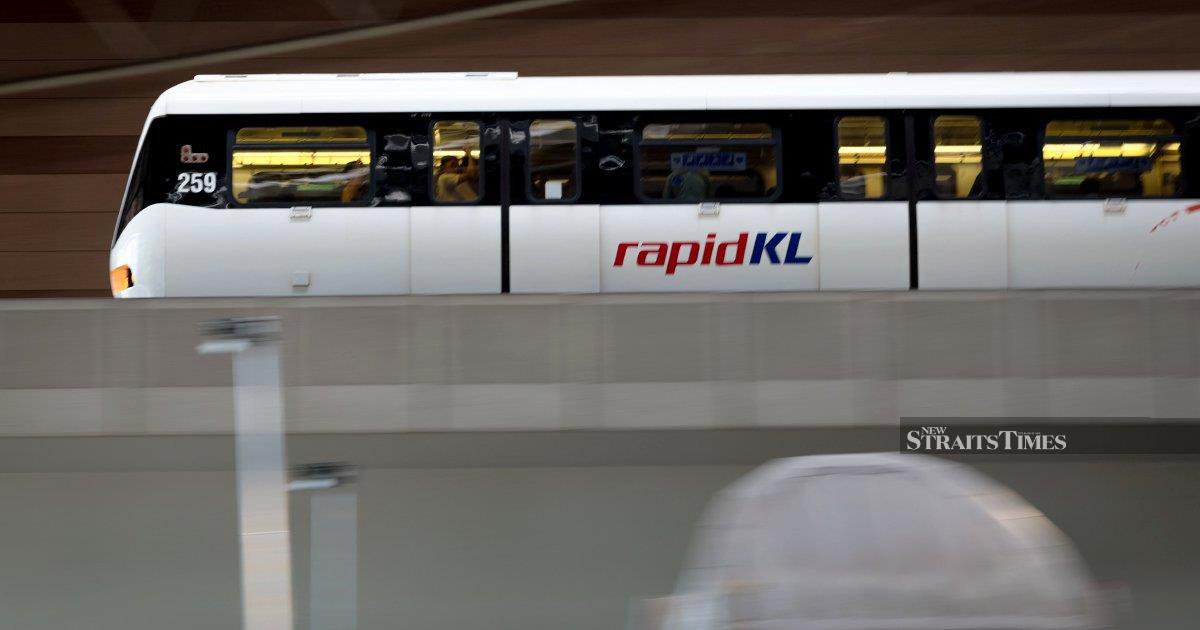
A man has been taken into police custody after breaching security barriers and accessing restricted railway tracks at Jalan Meru Station, resulting in a temporary halt to Rapid KL's Shah Alam Line operations during the morning rush period. The incident, which unfolded in the early hours, prompted transit authorities to suspend service to ensure passenger safety while authorities attended to the situation and cleared the tracks.
The trespassing incident highlights ongoing security concerns across Malaysia's commuter rail network, where track access points remain vulnerable to unauthorised entry despite physical fencing and warning signage. Jalan Meru Station, located along the Shah Alam Line corridor, serves a substantial passenger base connecting residential areas to commercial zones across the Klang Valley. The suspension of services during morning hours amplified disruption, as commuters relying on the line faced delays and forced rerouting to alternative transport modes.
Rapid KL, the primary operator of commuter rail services in the Federal Territories and surrounding areas, has sustained repeated incidents of trespassing across its network infrastructure. Track intrusions present multifaceted hazards: they endanger individual trespassers through electrocution risks and collision potential with moving trains, whilst simultaneously jeopardising passenger safety through emergency braking procedures and operational disruptions. Each incident necessitates comprehensive track inspections before normal service resumption, extending downtime and compounding commuter inconvenience.
The arrest follows established protocols for addressing railway security breaches, with law enforcement responding swiftly to detain the individual involved. Authorities have not yet disclosed specific motives behind the trespassing, nor whether the incident involved deliberate interference with infrastructure or inadvertent access. Such details remain pertinent for understanding the circumstances and determining appropriate charges, which may encompass criminal trespassing statutes and railway safety violation ordinances.
Investigations into track trespassing incidents typically examine whether individuals possessed legitimate reasons for accessing restricted areas, or whether the breach represented recklessness, malice, or confusion regarding permitted access zones. Railway operators have invested incrementally in perimeter security upgrades, surveillance systems, and staff training to mitigate such occurrences. However, comprehensive prevention remains challenging across extensive rail networks where enforcement necessarily concentrates on high-risk zones and temporal patterns of prior breaches.
This disruption underscores the Shah Alam Line's operational significance within the broader Klang Valley transit ecosystem. The line forms a critical backbone for regional connectivity, accommodating thousands of daily commuters traversing between residential hubs and employment centres. Operational interruptions cascade beyond direct users, affecting commercial establishments dependent on punctual customer arrivals, healthcare facility staffing, and educational institution punctuality. Each suspension imposes cumulative economic costs through lost productivity and congestion displacement.
Passenger safety remains paramount in Rapid KL's operational mandate, necessitating precautionary measures when track integrity or control cannot be guaranteed. Service suspensions, whilst inconvenient, reflect responsible risk management rather than excessive caution. Rail operators face considerable liability exposure should safety lapses result in passenger injury, ensuring that even brief track access incidents trigger conservative protective responses.
Railway security protocols across Malaysian transit systems have evolved incrementally following historical incidents demonstrating vulnerability to deliberate or accidental breaches. Staff training programmes emphasise rapid incident recognition and escalation procedures, whilst technological investments in intruder detection systems and closed-circuit surveillance have expanded selective monitoring capabilities. Nevertheless, preventing all unauthorised access remains operationally impractical, necessitating balanced approaches combining prevention, detection, and rapid response.
The broader policy context reveals ongoing tensions between network expansion and security enhancement within Malaysia's transport infrastructure agenda. As commuter rail networks expand to serve growing metropolitan populations, security requirements intensify proportionately. Budget allocations for surveillance technology, perimeter hardening, and staff augmentation compete with capacity expansion investments, forcing difficult prioritisation decisions that affect system resilience.
This incident contributes to accumulating data regarding railway security vulnerability patterns across Southeast Asia's developing transit networks. Regional peers, including Thailand and Indonesia, have similarly contended with track trespassing incidents affecting operational reliability. Comparative analysis of prevention strategies and enforcement effectiveness offers potential insights for Malaysian authorities seeking to enhance system security without imposing excessive operational constraints.
Rapid KL will likely review this incident as part of ongoing security audits examining Jalan Meru Station's access control architecture and surveillance coverage. Recommendations may encompass enhanced perimeter fencing modifications, additional staffing during vulnerable temporal windows, or expanded sensor deployment. Such measures require careful cost-benefit analysis ensuring security improvements justify implementation expenses.
Commuters dependent on the Shah Alam Line should anticipate continued regulatory emphasis on swift incident response and comprehensive clearance procedures before service resumption, even as authorities investigate preventive strategies reducing future trespassing probability. The investigation's findings may inform targeted security enhancements specifically addressing identified vulnerability patterns at this station location.

