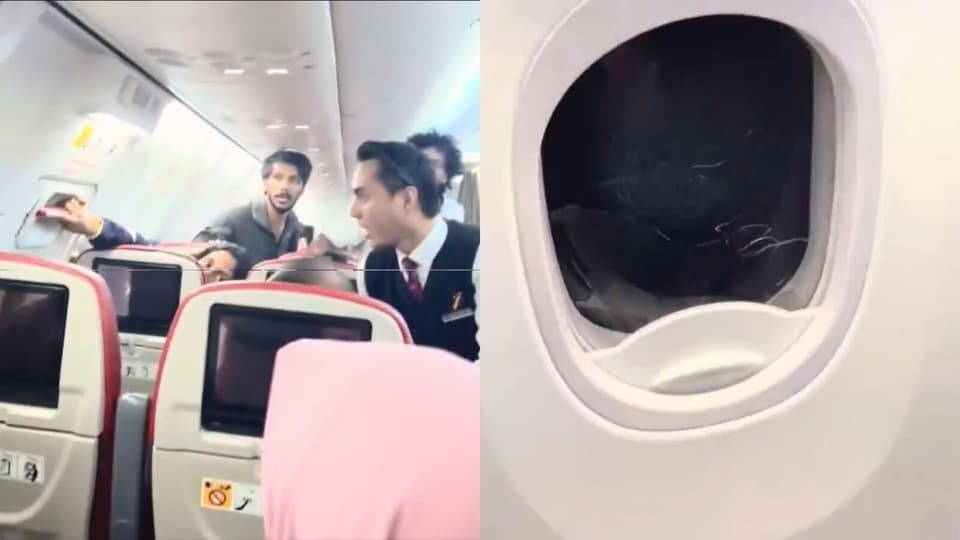
A potentially catastrophic incident was averted late Wednesday night when fellow passengers and cabin crew members on a Batik Air flight intervened to stop a man from forcing open an emergency exit door mid-flight. The aircraft, a Boeing 737 operating flight OD231 from Kuala Lumpur to Kochi, was carrying dozens of travellers when the disturbance occurred between 9:30 pm and 11:05 pm, according to police records filed in connection with the case. Jamsheer Athanikkal, 36, a resident of Sreemoolanagaram who hails from Palakkad, was taken into custody by Kerala Police upon the flight's arrival in Kochi early Thursday morning following the alarming episode.
According to the first information report, Athanikkal used his foot to damage the inner window panel of the emergency exit while simultaneously attempting to force the door open. Witness accounts indicate he also made threatening statements toward other passengers and members of the flight crew during the ordeal. The rapid response of fellow travellers and Batik Air staff proved crucial in containing what could have developed into a tragedy at altitude. The aircraft's structural design and the effects of cabin pressurisation meant the exit door itself remained secure despite the attempted breach, preventing decompression or loss of the aircraft's integrity.
Passenger Matty Mathew provided an eyewitness account through social media, recounting how most travellers had been asleep on the late-night service when the disturbance began. The sudden noise of air rushing through the cabin jolted passengers awake, triggering immediate alarm among those who understood the severity of what was happening. Mathew described how the window panel gave way under the man's assault, but explained that the physical design of modern aircraft and the pressurised environment prevented the emergency door itself from opening. He praised the quick thinking of both crew members and civilian passengers who physically restrained the man before circumstances could deteriorate further, emphasising that while the experience was deeply frightening, the collective response of those on board ensured everyone's safety.
Authorities have charged Athanikkal under multiple provisions of Indian law reflecting the seriousness of aviation security violations. The charges include Section 351(3) of the Bharatiya Nyaya Sanhita for criminal intimidation, Section 11A of the Aircraft Act for contravening safety and security protocols, and Section 118(e) of the Kerala Police Act for endangering public safety. The case was formally registered following a complaint lodged by Batik Air's Security In-Charge at Kochi airport, with police confirming that investigations into the full circumstances remain ongoing.
The incident occurs within a context of growing concerns about mid-air disruptions across the Indian subcontinent and Southeast Asian travel corridors. Just forty-eight hours earlier, Air India flight AI2379 operating from Phuket, Thailand, experienced a severe loss of altitude during cruise en route to Delhi, triggering another major aviation scare. That flight carried 137 passengers and eight crew members, and while the aircraft ultimately landed safely in Delhi, the incident resulted in the hospitalisation of thirteen passengers and four crew members for medical assessment and treatment. The airline stated it had complied with all regulatory requirements and manufacturer notifications, positioning passenger and crew safety as its paramount concern.
The Air India incident highlighted vulnerabilities within regional aviation safety protocols. The affected aircraft, a seven-year-old Airbus model according to flight-tracking data, underwent safe landing procedures despite the mid-cruise altitude anomaly. Air India management confirmed their teams maintained presence at medical facilities and coordinated closely with those who required hospitalisation, extending support to affected passengers and families throughout their recovery. The airline committed to full cooperation with ongoing investigations and to maintaining transparent communication regarding findings and any corrective measures implemented.
For Malaysian travellers and the broader Southeast Asian flying public, these consecutive incidents underscore the critical importance of robust in-flight security protocols and passenger behaviour management systems. Regional carriers operating routes between Malaysia and India must ensure crew training programmes adequately prepare staff to handle disruptive passengers and emergency situations, particularly on long-haul services where fatigue and psychological factors may increase incident risk. The coordinated response by crew and passengers on the Batik Air flight demonstrates how situational awareness and collective action can prevent tragedy, yet also reveals gaps in preventive security measures that warrant examination.
The Batik Air incident particularly resonates with Malaysian stakeholders given the airline's regional prominence and its extensive operations connecting Malaysia to destinations across South Asia. The airline operates significant traffic between Kuala Lumpur and Indian cities, making passenger safety protocols and crew preparedness matters of direct national concern. Malaysian aviation regulators may review whether additional training, screening procedures, or in-flight security enhancements are warranted for international services, particularly given the specific vulnerability of emergency exit areas.
Both incidents within a seventy-two hour window prompt reflection on systemic aviation safety challenges specific to the region. While modern aircraft design features like cabin pressurisation and redundant safety mechanisms prevented catastrophe in both cases, the underlying factors driving disruptive behaviour or mechanical anomalies warrant deeper investigation. Industry observers suggest that comprehensive reviews of passenger screening procedures, mental health assessment protocols, and crew intervention training could strengthen the protective infrastructure already embedded within aircraft design and international aviation regulations.
The arrests and investigations now underway will likely inform policy discussions among regional aviation authorities regarding standardised protocols for handling disruptive passengers and emergency situations. Malaysian authorities, having jurisdiction over one of the airlines involved, may coordinate with Indian counterparts to share lessons learned and best practices. For travellers booking flights on regional carriers, these incidents represent stark reminders of both the genuine risks of international air travel and the multiple layers of protection that typically prevent worst-case scenarios from materialising. The swift response of crew and passengers in the Batik Air case ultimately reinforced that human vigilance remains an indispensable component of aviation safety infrastructure.

