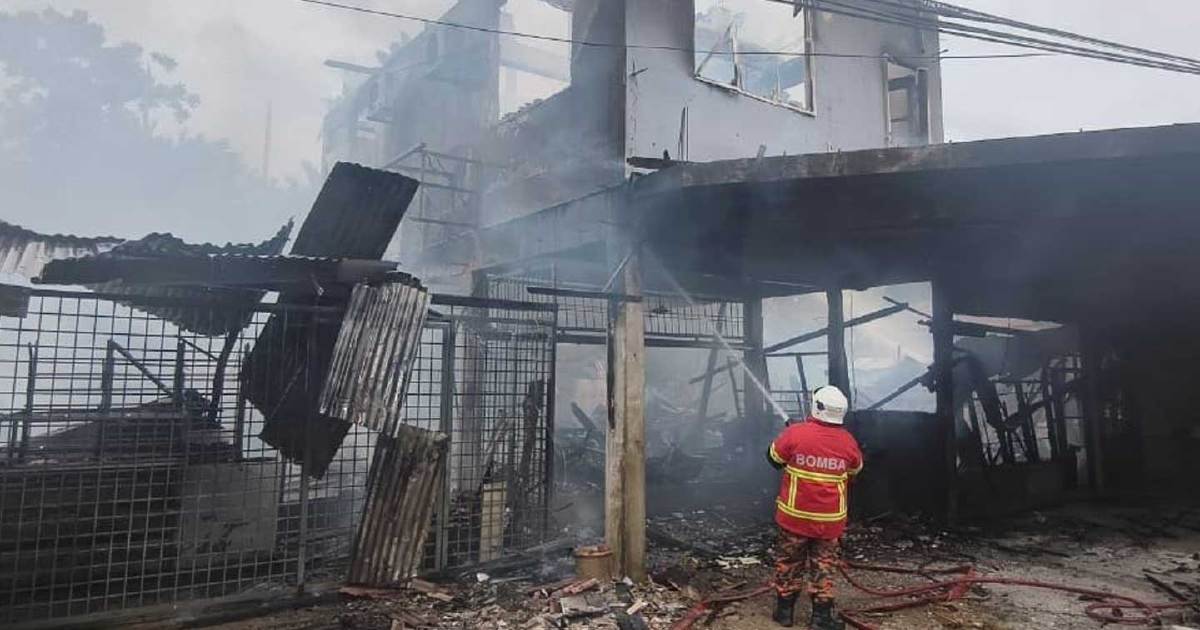
Police in Jitra have secured a five-day remand order for a 36-year-old man detained on suspicion of deliberately setting fire to his mother's house in Kampung Sungai Baru. The arrest marks another chapter in escalating domestic incidents involving property damage and arson across the northern region, raising fresh concerns about family disputes and their increasingly violent manifestations.
The alleged incident underscores the growing prevalence of arson cases linked to family conflicts in Malaysia. Over recent years, domestic disputes have occasionally escalated to the point where individuals resort to property destruction, particularly targeting family homes. Such cases present significant challenges for law enforcement and social services, as they often reveal deeper interpersonal tensions and unresolved grievances that simmer within households before erupting into criminal conduct.
Detention during investigation is a standard procedural step in Malaysian criminal law when authorities believe additional time is necessary to gather evidence, conduct interviews, and establish the circumstances surrounding alleged offences. The five-day remand period allows investigators to pursue leads, secure witness statements, and potentially uncover critical details about motivation and premeditation that might otherwise go unexplored during initial questioning.
Arson cases inherently carry serious legal consequences under Malaysian law. Deliberate fire-setting, particularly when targeting an occupied residence or one belonging to a family member, can result in charges under the Penal Code provisions governing causing damage by fire. Conviction may attract substantial custodial sentences, fines, or both, reflecting the severity with which courts regard such offences.
The familial nature of this alleged incident introduces psychological and social dimensions beyond the straightforward criminal aspects. Disputes between adult children and aging parents often stem from unresolved childhood tensions, disagreements over property matters, inheritance expectations, or conflicts surrounding caregiving responsibilities. In some instances, mental health issues, substance abuse, or financial pressures contribute significantly to explosive behaviour within family settings.
Kampung Sungai Baru, situated within the Jitra district in Kedah, reflects the demographic characteristics of many semi-rural communities in northern Peninsular Malaysia. These settlements often experience close-knit family structures where domestic conflicts, once ignited, can rapidly become matters of public knowledge and concern. The localised nature of such incidents frequently creates broader community tensions and impacts neighbourhood safety perceptions.
The involvement of fire in this alleged crime presents particular dangers. Arson in a residential setting risks not only destroying the targeted property but also endangering the lives of residents, emergency responders, and potentially spreading to neighbouring structures. Fire brigades responding to such incidents face unpredictable conditions and must operate under assumptions that the cause may be deliberate, complicating rescue and containment operations.
Investigative procedures in arson cases require specialised expertise. Fire investigators must analyse burn patterns, examine accelerant residues, and reconstruct the sequence of events leading to ignition. Forensic evidence becomes crucial in establishing whether the fire resulted from accident, negligence, or intentional act. Such technical analysis can require weeks or months to complete fully, making the initial remand period vital for securing physical evidence and securing the crime scene properly.
The broader context of family violence and property crimes in Malaysia suggests that domestic relations increasingly manifest in destructive and dangerous ways. Mental health services, conflict resolution programmes, and early intervention initiatives remain underdeveloped relative to the scale of family-related incidents. The absence of accessible counselling and mediation services means many simmering disputes never receive professional attention until they explode into criminality.
Police investigations will likely explore the suspect's mental state, grievances, recent life events, and whether previous incidents or disputes had been reported. Family members, neighbours, and acquaintances may provide contextual information illuminating the circumstances that preceded the alleged fire-setting. Property damage assessment will establish the extent of destruction and whether the dwelling remained insured, which can factor into investigative understanding of motive.
The remand period also serves to protect the public by temporarily removing the suspect from circumstances where he might repeat the alleged behaviour or escalate to other forms of violence. It simultaneously gives investigators breathing room to develop a comprehensive case file before the suspect appears before a magistrate. Subsequent remand applications or bail determinations will depend on evidence accumulated and perceived flight risk or danger to the community.
This incident reflects persistent challenges in addressing domestic violence and property crimes within Malaysian society. Better community education regarding conflict resolution, improved access to mental health services, and early warning systems for high-risk family situations could potentially prevent such incidents. For now, the investigation proceeds through established legal channels, with the five-day remand providing the investigative framework necessary to determine precisely what occurred and why.

