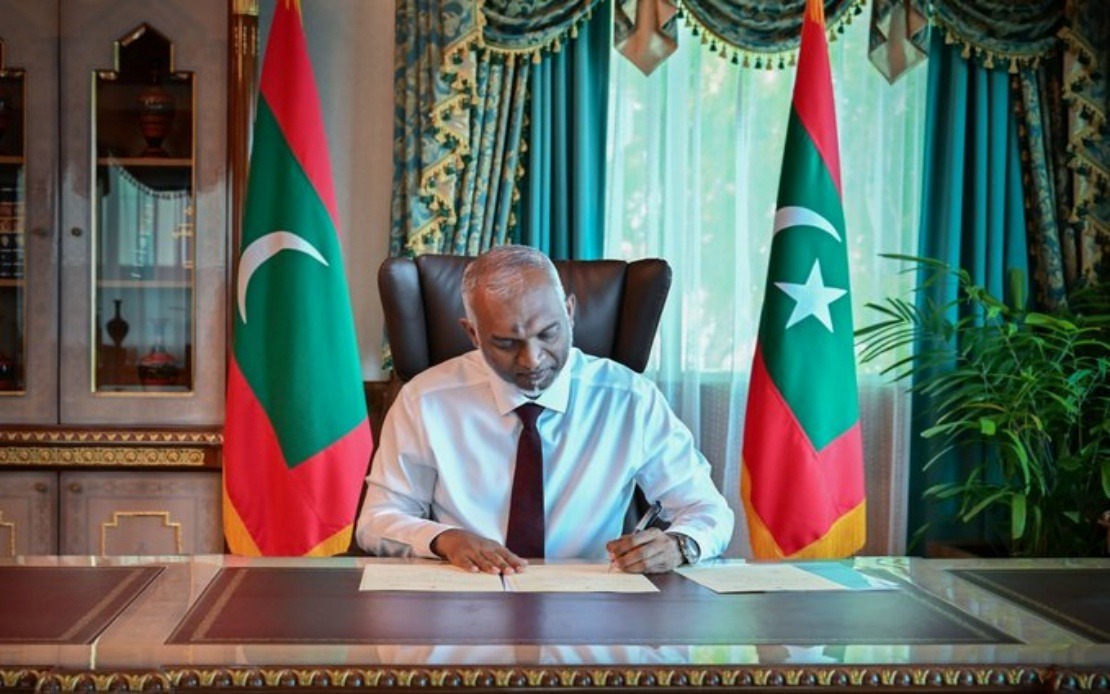
Maldives President Mohamed Muizzu has extended National Day greetings to Malaysia, underscoring the enduring partnership between the two Indian Ocean nations. In messages sent to His Majesty Sultan Ibrahim, King of Malaysia, and Prime Minister Datuk Seri Anwar Ibrahim, Muizzu emphasized the historical depth and contemporary relevance of the relationship between Kuala Lumpur and Malé, signalling the island nation's continued investment in regional cooperation at a time of shifting geopolitical dynamics in South and Southeast Asia.
In his formal correspondence to the Sultan, Muizzu highlighted how Malaysia and the Maldives have cultivated warm relations over the past five decades. The Maldivian leader framed this partnership as resting upon three foundational pillars: strong bonds of friendship, mutual respect, and substantive cooperation across multiple domains. This rhetorical emphasis on mutual respect carries particular weight given the Maldives' historical experience of external pressure and its strategic navigation of great power interests in the Indian Ocean region.
Muizzu's separate letter to Prime Minister Anwar struck a notably personal tone, characterizing the bilateral relationship as fundamentally "brotherly" in nature. This language choice reflects the cultural and religious commonalities between the two predominantly Muslim nations, and suggests an effort to ground the partnership in shared values beyond purely transactional state interests. The reference to regular high-level engagements underscores that the relationship operates through sustained diplomatic channels, with both capitals maintaining consistent dialogue at senior levels.
The Maldivian President's emphasis on people-to-people exchanges carries strategic significance for Malaysia's regional diplomacy. Such cultural and social connections create constituencies within both nations that support continued collaboration, making bilateral ties more resilient to political fluctuations. For Malaysia, which has positioned itself as a key hub for regional cooperation and development, Muizzu's recognition of these human connections validates the broader Southeast Asian approach of building regional architecture through multiple layers of engagement.
In his message to Prime Minister Anwar, Muizzu expressed confidence that the Malaysia-Maldives friendship would continue to deepen, creating avenues for expanded economic cooperation. This forward-looking statement suggests that Malé views Malaysia not merely as a diplomatic partner but as a potential avenue for economic diversification and development. Given the Maldives' vulnerability to climate change and its economic dependence on tourism, partnerships with stable, developed economies like Malaysia offer valuable opportunities for technology transfer, investment, and capacity building.
The Maldivian President's reaffirmation of commitment to advancing bilateral ties comes amid evolving regional dynamics. The Maldives has historically maintained careful balance between larger powers while strengthening ties with neighbouring countries and regional organizations. Malaysia's position as a bridge between South Asia and Southeast Asia, combined with its influence within ASEAN and the broader Islamic world, makes it a particularly valuable partner for Malé's regional and economic strategies.
Beyond the Maldivian greeting, Malaysia's National Day also drew recognition from South Asian powers. Pakistan's Ministry of Foreign Affairs extended formal congratulations through social media, expressing wishes for Malaysia's peace and prosperity while reaffirming the brotherly ties between the two Muslim-majority nations. This messaging reflects Pakistan's broader engagement strategy with Southeast Asian countries, particularly those with significant Muslim populations or shared Islamic heritage.
India's External Affairs Minister Subrahmanyam Jaishankar similarly marked the occasion by greeting Foreign Minister Datuk Seri Mohamad Hasan, emphasizing India's commitment to advancing the Comprehensive Strategic Partnership with Malaysia. The Indian minister's invocation of this elevated partnership framework suggests that New Delhi views Malaysia as integral to its Act East policy and its broader Indo-Pacific strategy. India's active engagement with Malaysia reflects recognition that Southeast Asia remains central to regional balance and that strong bilateral relationships with key regional players like Malaysia are essential.
These diplomatic gestures collectively illustrate Malaysia's standing as a significant player in regional affairs, warranting high-level recognition from multiple quarters during its National Day celebrations. The convergence of greetings from South Asian and Indian Ocean region countries underscores Malaysia's role as both a Southeast Asian anchor and a bridge to broader Asian geopolitical frameworks. For Malaysian policymakers and regional observers, these messages affirm that the nation's diplomatic investments across multiple regions continue to generate reciprocal engagement and recognition.
The timing of these National Day greetings also carries contextual relevance. Malaysia's relationship with both the Maldives and larger South Asian powers occurs within a period of heightened regional attention to maritime security, climate resilience, and economic cooperation mechanisms. The emphasis on deepening ties and exploring expanded cooperation in these messages suggests that regional capitals view Malaysia as a constructive partner capable of contributing to solutions addressing shared challenges. For Malaysia, this positions the country as essential to regional architecture and validates its multifaceted engagement approach across South Asia, Southeast Asia, and the Indian Ocean region.

